


Immersed in a Landscape: A Field Report of the Proposed Sáttítla National Monument
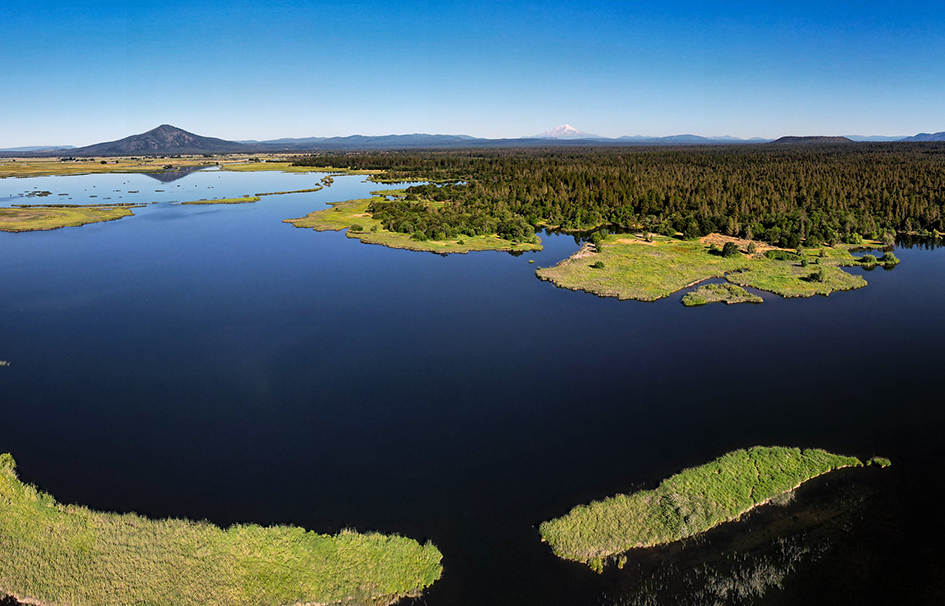
This fall, CNPS Conservation Program team members and partners joined the Pit River Nation on their ancestral homelands for a coalition-wide meeting to support the proposed Sáttítla National Monument. Karah Fisher, the Conservation Program’s new Advocacy and Outreach Senior Coordinator, captured a few highlights of this magnificent Northern California landscape and the Tribally-led movement to permanently protect these lands.
Even with the anticipated Administration change at the federal level, California’s national monument campaigns have widespread support. Just last month, more than 50 businesses and 160 scientists sent President Biden letters urging him to move forward with the designation. Read on for Karah’s first-hand impressions of the proposed monument.
Day One:
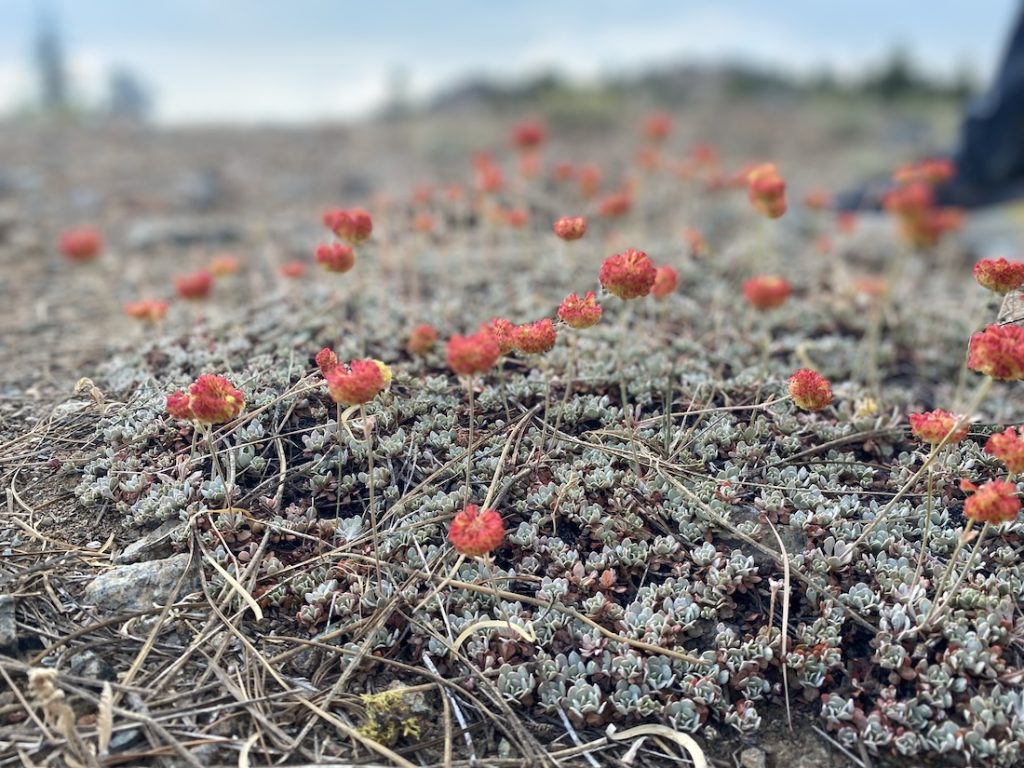
Starting a new role often comes with uncertainty about what each day might bring. But as I scrambled down a hillside with my new Conservation team colleagues, searching for Trinity buckwheat (Eriogonum alpinum) in the majestic Klamath Mountain range, I couldn’t have imagined a better—or more fitting—start to my first days with the California Native Plant Society (CNPS).
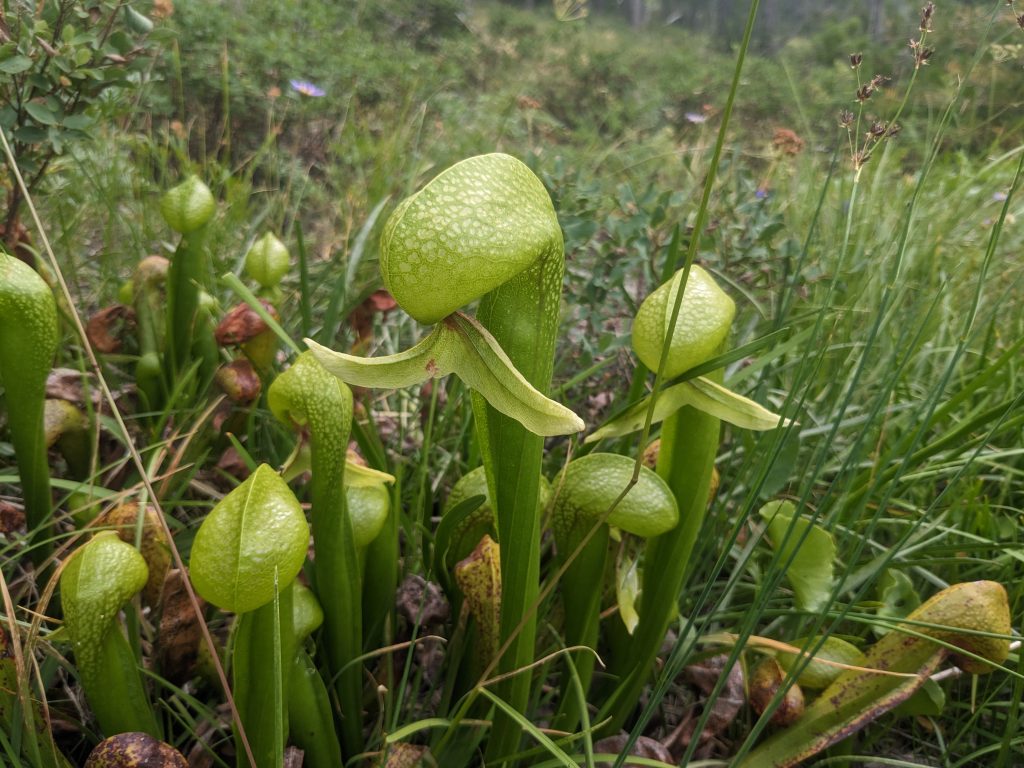
It was almost inevitable that a group of botanists and nature enthusiasts would make a quick detour on Mount Eddy to search for unique and rare native plant species on our way to the coalition meeting for the proposed Sáttítla National Monument. We didn’t hesitate to pull over at the first sight of a dense patch of California pitcher plant (Darlingtonia californica). The cascading carnivorous plant along the hillside was a stunning display and served as an important reminder: The unique conditions of the serpentine seeps that allow this plant to thrive are as rare as the plant itself. California is fortunate to have intact habitats such as these, and we must do all we can to protect those that remain.
While our pit stop was a remarkable introduction to the region, it was only a taste of the incredible experience that was to come over the next three days.
Day Two:
The trip, which coincided with my second week with CNPS, was the perfect opportunity to get to know my colleagues and meet members of the Sáttítla Monument coalition. Our journey led us to a small historical building in McCloud, just 50 miles away from Sáttítla, a spiritual center to the Pit River and Modoc Tribes.
The coalition meeting was filled with a sense of urgency as the monument’s campaign reached its final push. The focus was clear: The next 90 days would be crucial to the successful designation of this sacred landscape.
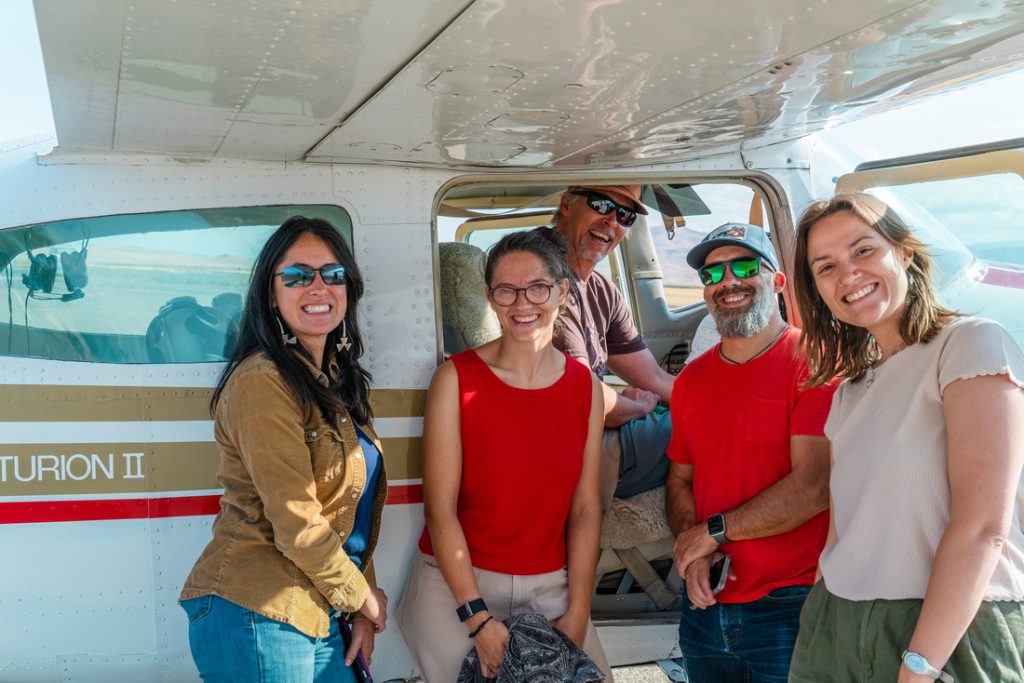
As I absorbed the details of the timeline and existing efforts and priorities, I marveled at the experience and wisdom in the room. Tribal leadership, policymakers, longstanding public lands advocates, botanists, geologists, grassroots organizers, and local community members each contributed their expertise to the shared goal of permanent protection for Sáttítla. After the six-hour meeting adjourned, coalition colleagues joked, “Did you get all that?”—a nod to my newness in this space.
While I was still learning some names and acronyms, I didn’t leave the meeting feeling overwhelmed. Instead, I felt inspired by the vast depth of knowledge that had come together under the Pit River Nation’s leadership. The gravity of our task was balanced by the strength of our collective commitment.
I felt inspired by the vast depth of knowledge that had come together under the Pit River Nation’s leadership. The gravity of our task was balanced by the strength of our collective commitment.
Day Three:
The final day of our trip held the highly anticipated tour of the proposed monument. With the knowledge and expertise of Tribal leadership guiding our visit, I was grateful for the opportunity to gain a deeper understanding of the region.
As we embarked on our journey through the winding roads of the proposed monument, we passed through a tapestry of dense mature forests and vibrant meadows—a snapshot of the diverse landscapes within the proposed monument. The surrounding pines melded into a green blur as we made our way to our first stop: Payne Springs.
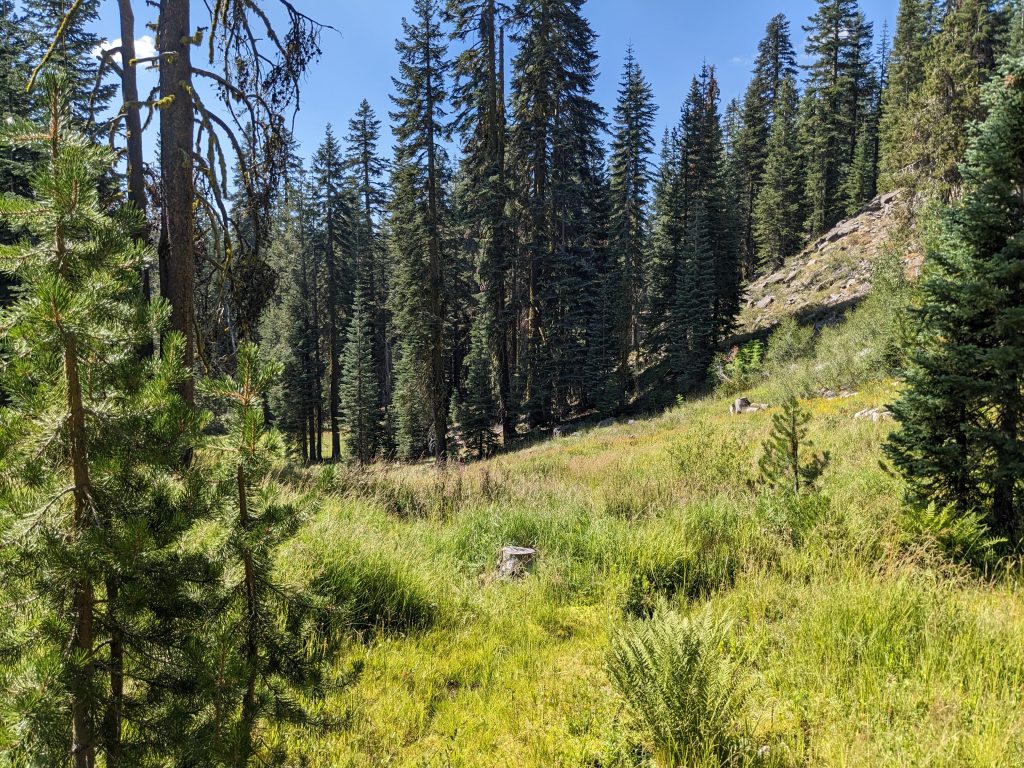
At Payne Springs, we were greeted by a serene meadow and the delicate scents of mint emanating from the scattered mountain monardella (Monardella odoratissima). I was instantly mesmerized by the tranquil sounds and the colorful display of wildflowers—yellow and magenta splashes of monkeyflower and checkerbloom. As we walked along the spring, stories of cultural and scientific significance were woven into the landscape, demonstrating the importance of bringing together best available science with Traditional Ecological Knowledge. Together, these approaches create a deeper understanding of the landscape’s rich value—one that goes beyond what can be quantified.
As we walked along the spring, stories of cultural and scientific significance were woven into the landscape, demonstrating the importance of bringing together best available science with Traditional Ecological Knowledge. Together, these approaches create a deeper understanding of the landscape’s rich value—one that goes beyond what can be quantified.
The trickle of the spring muffled the sound of our voices, and the warm sun beat down on us as we stood close to 6,000 feet in elevation. Someone pointed out the level of the wolf lichen on the surrounding trees, an easy way to identify the average snow level of the last season. The lines stood well above my head—a shocking reminder that we were exploring this area just ahead of the changing season.
As some folks wandered higher upstream, the botanists looked down, scanning for the plants that others might miss, noting the health and diversity of mosses and liverworts and hoping to spot a moonwort. Many of us crouched to cup our hands in the stream to feel its crisp and clarifying energy. Just past the meadow, we learned the forest housed the Northern spotted owl – a federally recognized threatened species and testament to the biodiversity that thrives in this region.
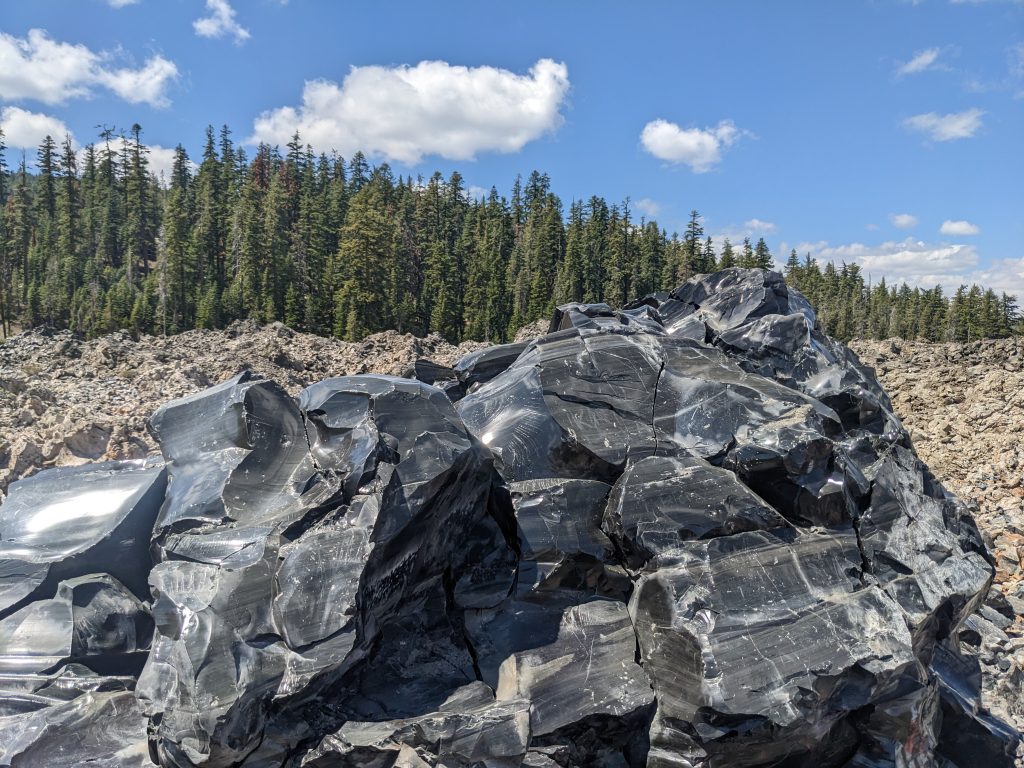
Our next stop was Glass Mountain, a volcanic flow that felt other-worldly to those of us unfamiliar with the landscape. The remarkable obsidian, shiny, smooth, and dangerously sharp, was a stark contrast to the lush environments we had just left behind. Amongst the volcanic rubble scattered individuals of Davidson’s penstemon (Penstemon davidsonii) and sticky cinquefoil (Drymocallis glandulosa) have taken hold, offering hints of color in the otherwise austere landscape.
Unfortunately, signs of harmful human impact were evident. Despite signage prohibiting the harvesting of rocks, a section of the face of the obsidian that once housed a natural chair lay disturbed and shattered on the ground—a sorrowful reminder of what constitutes informed and respectful visiting practices. This damage also underscores the urgent need for protection, oversight, and co-management of these lands, ensuring they can be stewarded and enjoyed for generations to come.
After navigating the rugged landscape of the lava flows, we were quickly transported to the peaceful shores of Medicine Lake. I was immediately instilled with a sense of stillness and calm, yet the lake buzzed with life. There was no shortage of picnic tables and gathering spaces for our coalition to enjoy lunch, while families swam close to shore and kayakers passed in the distance.
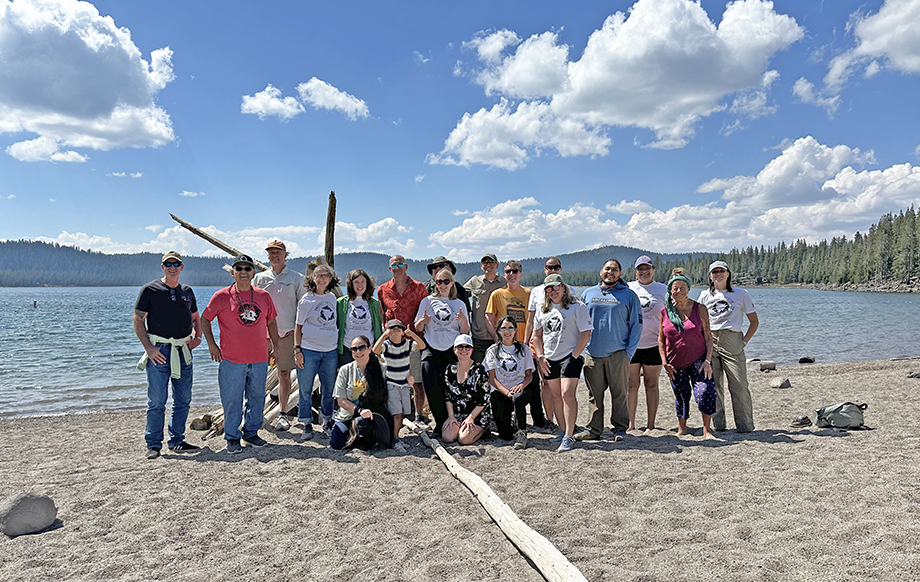
As we gathered by the lake, we were encouraged to touch, swim, and enjoy the water—a reminder of the deep connection between people and this land. Many folks from the coalition waded, and a handful of us decided to go for a swim to fully immerse ourselves in the pristine waters. The water felt smooth and velvety, and the changes in the sky were the only reminder that time was passing as we enjoyed periodic windows of sharp sun and vast clouds like a game of peek-a-boo.
In addition to housing Medicine Lake, these lands serve as critical headwaters for California, providing clean water downstream for agricultural use and millions of people. The region’s volcanically formed aquifers hold as much water as California’s 200 largest surface reservoirs and feed the Fall River, the largest spring system in the state. This water flows from Shasta Lake all the way south to the San Francisco Bay, making the protection of this vital water resource essential to safeguarding health across the state.
Before departing from Medicine Lake, our coalition circled one last time in solidarity and song. Parting words linked this campaign to the Pit River Nation’s multi-generational effort to protect this landscape from ongoing threats, leaving us with the resounding message — the time to protect Sáttítla is now.
The word “grounding” remains at the forefront of my mind following our visit. There is no substitute for immersing yourself in the landscape you are fighting to protect. While urgency permeated our conversations as the campaign entered its next phase, there was no shortage of joy and passion as we came together under Pit River Nation leadership and wisdom.
While urgency permeated our conversations as the campaign entered its next phase, there was no shortage of joy and passion as we came together under Pit River Nation leadership and wisdom.
Sáttítla is an ecological wonder, and I am grateful to have experienced a glimpse. The region’s biodiversity and scientific value are only one piece of the significance of permanent protection through monument designation. At this pivotal moment when so much is at stake, there is also a powerful alignment between the priorities of Tribal leadership, community members, environmental organizations, and the 95,000 others who’ve signed petitions in support of the monument — together, we can protect what matters most. Continued partnership is integral to the success of ongoing monument management, statewide 30 x 30 protection efforts, and the prosperity of these lands and waters for generations to come.
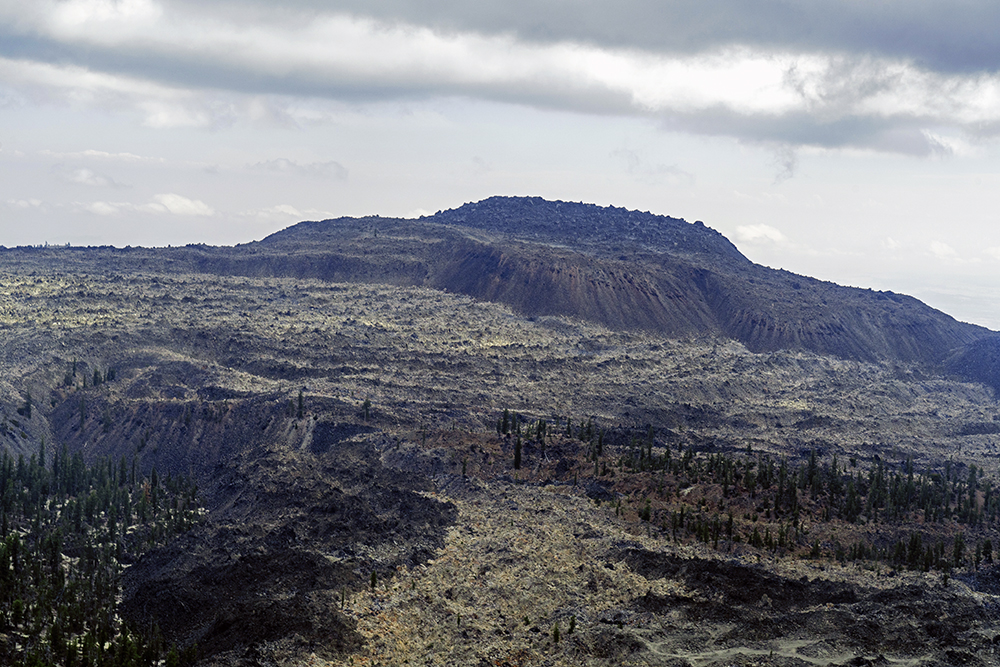
What’s next for Sáttítla?
The proposed monument continues to garner widespread support. Two weeks following the coalition trip, U.S. Senators Alex Padilla and Laphonza Butler, along with Representative Adam Schiff, introduced the Sáttítla National Monument Establishment Act in an official letter and formally requested that President Biden designate the monument through the Antiquities Act.
Support amplified last month through both the business and scientific communities. While these developments mark incredible progress, continued advocacy will be essential for Sáttítla to achieve monument designation.
Support the movement
Your support is needed now more than ever for Sáttítla to achieve National Monument designation!
- If you haven’t already, sign the petition and share it widely!
- Follow the campaign on social media to stay up-to-date on the most recent monument news: Protect Sáttítla Instagram: @protectSáttítla and Twitter: @protectSáttítla
- Before exploring Sáttítla, review best practices for respectful visiting.
 Karah Fisher is the CNPS Conservation Advocacy and Outreach Senior Coordinator. She studied Public Affairs and Environmental Studies at UCLA, deepening her commitment to ecological resilience and green space access. At SF Rec and Parks, she led equity-focused youth outreach to foster belonging in nature. Now, she brings her passion for community engagement to CNPS, strengthening the Advocacy Corps. In her free time, Karah enjoys coastal hikes, crocheting, and scuba diving.