


The official magazine of the California Native Plant Society
FLORA MAGAZINE | COVER FEATURE
 The federal administration and its congressional allies are leading an unpopular charge to privatize and exploit public lands—and they’re hoping Americans don’t notice. The good news is that it’s not too late to act, and you have more power than you might expect. Here are 24 tips, suggestions, and actions you can take to protect public lands in California.
By Karah Fisher, Isobel Nairn, and Stu VanAirsdale
Illustrations by Nicole Album
Summer 2026
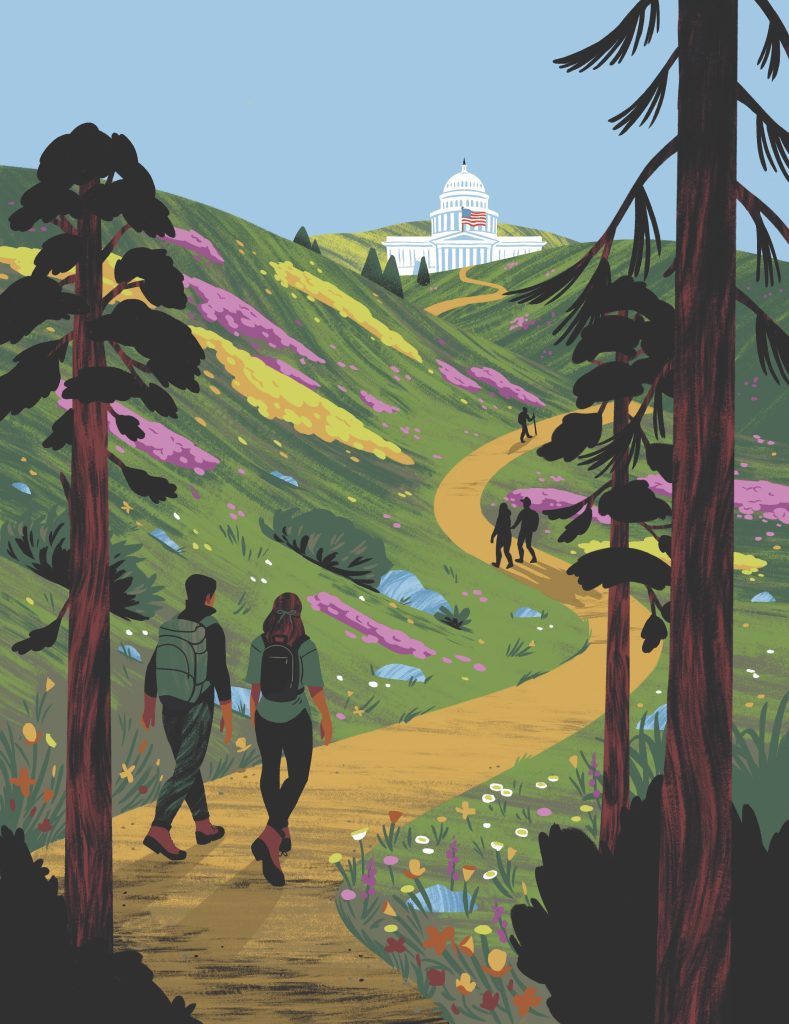
Broadly speaking, the term “public lands” applies to land owned and controlled by government entities. At the federal level, this includes everything from national parks, forests, and monuments to 247 million acres overseen by the Bureau of Land Management (BLM). These are the places we hike, camp, fish, hunt, swim, birdwatch, and botanize—as well as where we work to steward biodiversity. And they bring us together, even in divided times.
Public lands protections are far harder to dismantle quietly when people are vocal and engaged. Polling consistently shows that the overwhelming majority of people across the political spectrum want to see our public lands protected. In 2025, a Senate budget reconciliation proposal to sell off millions of acres of federal public lands sparked a widespread public backlash, reminding lawmakers just how unpopular public lands privatization is across the political spectrum.
After public pressure helped defeat last year’s sell-off provision, Reps. Ryan Zinke (R-MT) and Gabe Vasquez (D-NM) introduced the Public Lands in Public Hands Act, which would limit the sale and transfer of federal public lands without congressional approval and opportunities for public input. The legislation has continued gaining momentum, with Rep. Kevin Kiley (R-CA) recently signing on as a co-sponsor. Additionally, a new bipartisan bill called the Public Lands Integrity Act would prohibit sell-off attempts like the failed 2025 budget reconciliation maneuver.
 But despite the public’s wishes, a steady stream of connected attacks on our public lands continues. The threats range from administrative actions like layoffs of park staff and the rescission of the Roadless Rule (which protects more than 4 million acres in California alone) to a recently failed congressional maneuver to dismantle a national monument’s management plan. Each swipe is part of the current federal administration’s ongoing plan to repurpose public lands for privatization and resource extraction.
As decisions roll out from D.C., the impacts are hitting close to home in the places we know and love. People are turning out to advocate online and in person, and social media storytellers have taken up the cause in powerful ways. We see signs that public pressure is working, but consistent outreach to California’s House members will be needed. Please read on to learn how your voice and contributions can play a role in keeping the pressure on—and protecting these special spaces. — Liv O’Keeffe, CNPS Senior Director of Public Affairs

Stay Informed
First things first: If knowledge is power, then consuming—and sharing—high-quality news and information is essential for defending public lands. Here are four ways to help boost the strongest signals supporting your cause and create great messaging that helps drown out the noise.
1. Keep it real.
Disinformation is everywhere online. Stay on top of facts via rigorously edited news sources like The New York Times, NPR, ProPublica, and others.
2. Trust, but verify.
AI-generated bots, visuals, videos, and other sources of fake information are designed to stir the emotions without the burden of accuracy. Before accidentally sharing misinformation or outright falsehoods, it only takes a moment to check for specific, attributable sources for back-up. If there’s no original source, consider skipping it.
3. Be a primary source.
Wherever you engage, think about ways you can generate high-quality original information for others. Maybe it’s a picture of something you’re observing on public lands and a short, clear caption on Instagram, or a summary of a public hearing or research on Reddit.
4. Strong science, strong defense.
Community science tools like iNaturalist are critical for photographing, documenting, and sharing the plants and other wildlife you find on public lands. When we know what’s at a location, we know what needs to be protected. For instance, every observation of a rare plant in a proposed national monument would be an “Object of Interest” in the report making the case for a national monument designation.

Call or Write Your Rep—Really
Your voice as a constituent still matters enormously to elected officials regardless of party—especially on public lands issues, which consistently draw bipartisan support. Here are four ways to make your outreach simple and effective:
5. First, locate your elected representatives and their contact information at house.gov/representatives/find-your-representative.
6. In your call or correspondence, share your personal connection to public lands, especially in your district. See here for a sample message to convey specific concerns about proposed policy changes.
7. Ask them to do something specific and positive to support public lands. For example, signing on to bills like the bipartisan Public Lands Integrity Act and rejecting any large-scale attempts to sell off public lands.
4. Emphasize the environmental, economic, and cultural value of these places. Where possible, cite data from reputable sources, or other factual details to reinforce your perspective.

Join the Conversation Online
Much like communicating with your elected representatives, online discussions about public lands matter more than many people realize. Effective online storytelling and advocacy help elevate these issues beyond traditional advocacy spaces while building a broader, more connected, and more resilient community of public lands supporters. Try these four ways to use your voice online and amplify other trusted messengers:
9. Click or tap.
The easiest, most frictionless way to engage is to like, follow, share, and/ or subscribe to storytellers and organizations who advocate for public lands.
10. Follow.
Follow your congressional representatives, state, and local decision-makers, and comment directly on their pages about their involvement with public lands policy. Not only do your comments count as official public comment, but these notes are often also regarded by staff as a meaningful connection point between you and the office.
11. Be genuine.
If you feel inspired to create your own content or post, be yourself. Spontaneity, straightforward language, and authenticity go a long way toward making an impact online. Talk about your personal connections to—or experiences with—public lands and why you’re concerned. Using a very local example and tagging your representatives, supervisors, and other local officials can be especially meaningful.
12. Share
Just sharing someone else’s great content helps social media algorithms determine what’s worth amplifying elsewhere. If your message changes even one mind or compels just one other person to act, you’ve made a difference!

Posting for Good on Facebook Groups and Reddit
It may not always seem like it, but you can make a swift, sizable, and powerful impact locally by sharing details about public lands via Facebook and Reddit groups. Both platforms host countless groups, subreddits, neighborhood forums, and other spaces for sharing important perspectives and information. They’re great places to highlight connections to public lands protection, correct misinformation, and help build local support for upcoming advocacy opportunities. These groups aren’t always labeled “public lands,” either: Often, these topics come up in a wide range of interest groups, from trail running and horseback riding groups to local political forums or local event postings.
People are far likelier to care about these issues when they hear about them from their own community, and when they understand how they affect places they personally know and love. It’s a way you can have fun with advocacy in online forums where you already hang out. (See “Make Time for Face Time” below.)
Make Time for Face Time
Even brief conversations about public lands can go a long way: We can’t assume that friends, neighbors, or family members are informed about the dangers facing these precious spaces, or about the consequences of losing them. Here are five ways you can initiate—and sustain—a discussion about public lands with the people close to you:
13. Educate with empathy.
Let folks know that public lands are where we hike, camp, fish, birdwatch, botanize, and spend time with family. They are also places where people build traditions, connect with their communities, and experience the landscapes and biodiversity that make California unique.
14. Explore.
Not everyone is next to a national park, but lands managed by state agencies and/or the federal Bureau of Land Management are a short travel distance from virtually anywhere in California. Grab a few friends or family members for a field trip to the public lands in your area. Better yet, document your trip on social media and tag your member of Congress, asking for their leadership to protect public lands.
15. Take a power hike.
Invite a decision-maker and/or their staff to join you and a few like-minded advocates on a walk through nearby public lands. There’s nothing like an informed first-hand experience to make an influential ally.
16. Volunteer.
While there is no substitute for a fully intact professional workforce supervising and managing public lands, volunteers can help monitor impacts to public lands and facilitate positive connections between community members and our beautiful natural habitats.
17. Party!
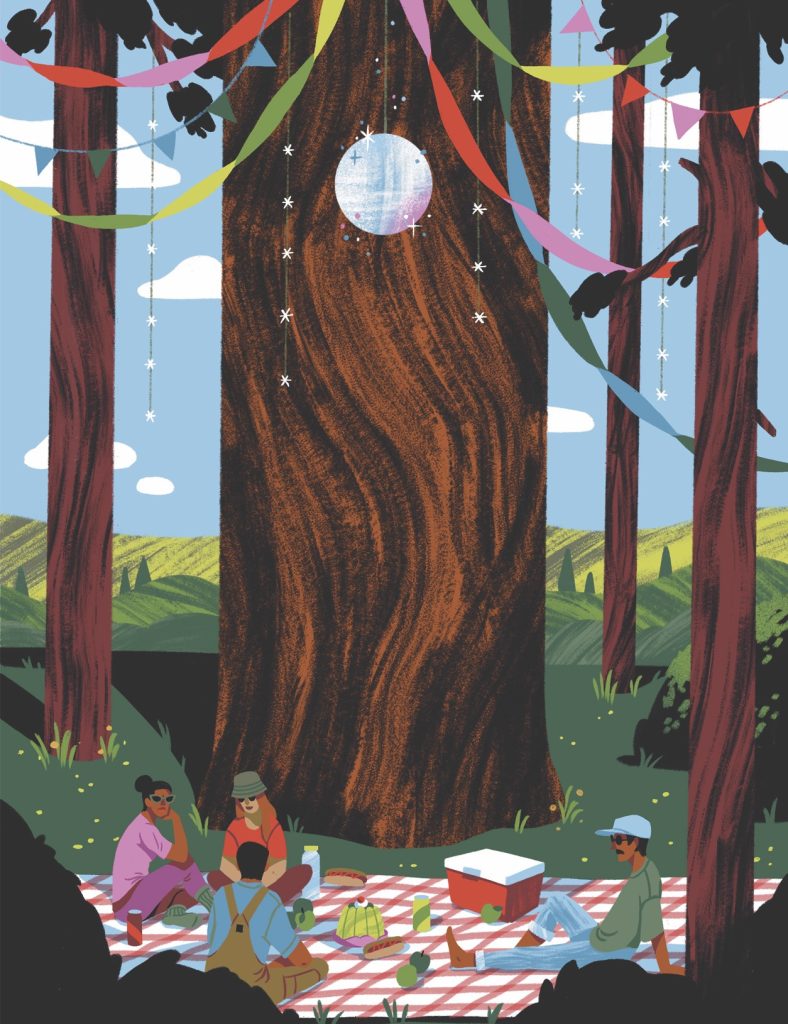
Taking action together makes conservation engaging and fun. Host a festive get-together for friends and family around the theme of public lands—a letter-writing party, for example, or a Labor Day cookout for public lands. Invite your local decision-makers to the proceedings, or ask them along on your next CNPS chapter field trip to an actual public-lands location, where you can show participants the biodiversity at stake.

Public Action for Public Lands
Public lands protections are far harder to dismantle quietly when people are vocal and engaged. Formal, in-person advocacy remains one of the most effective mechanisms the public has to push back against harmful policy changes. And, as evidenced by recent town halls, people are showing up to defend public lands. Public hearings, comment periods, rallies, and grassroots organizing efforts continue to draw strong participation, even as the pace of attacks accelerates. That work makes a difference. From advocacy training to engaging with legislators, here are seven considerations for taking public action:
18. Know your “why.”
Let folks know that public lands are where we hike, camp, fish, birdwatch, botanize, and spend time with family. They are also places where people build traditions, connect with their communities, and experience the landscapes and biodiversity that make California unique.
19. Know your “what.”
Not everyone is next to a national park, but lands managed by state agencies and/or the federal Bureau of Land Management are a short travel distance from virtually anywhere in California. Grab a few friends or family members for a field trip to the public lands in your area. Better yet, document your trip on social media and tag your member of Congress, asking for their leadership to protect public lands.
20. Seize the day.
Invite a decision-maker and/or their staff to join you and a few like-minded advocates on a walk through nearby public lands. There’s nothing like an informed first-hand experience to make an influential ally.
21. Know your audience.
While there is no substitute for a fully intact professional workforce supervising and managing public lands, volunteers can help monitor impacts to public lands and facilitate positive connections between community members and our beautiful natural habitats.
22. Lean into your perspective.
Taking action together makes conservation engaging and fun. Host a festive get-together for friends and family around the theme of public lands—a letter-writing party, for example, or a Labor Day cookout for public lands. Invite your local decision-makers to the proceedings, or ask them along on your next CNPS chapter field trip to an actual public-lands location, where you can show participants the biodiversity at stake.
23. Join an advocacy day.
CNPS organizes periodic group visits to meet with decision-makers at varying levels. Members team with CNPS staff to prepare. Follow and watch CNPS’s social platforms and emails to join the next event and press for public lands defense.
24. Join CNPS Advocacy Corps
Launched in 2025, CNPS’s Advocacy Corps is training a network of grassroots activists who are ready to act at the federal, state, and local levels during key moments. You can learn more about the effort and sign up at bit.ly/CNPS-AdvocacyCorps.
-
Into the Wild: An Interview with Meghan Hertel
Meghan Hertel makes an immediate impact for biodiversity in her new role as director of California’s Department of Fish and Wildlife
-
A Rare Plant Revelation in Central California
How CNPS botanists identified a rare plant bonanza in San Luis Obispo County
-
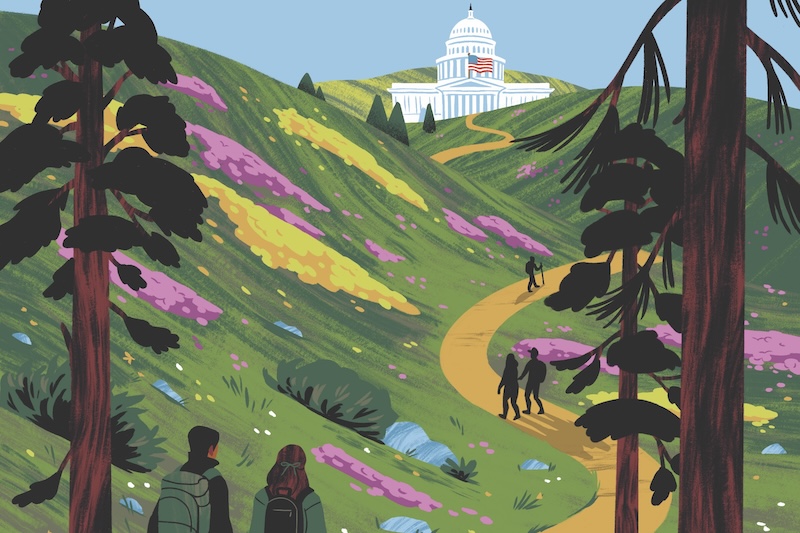
Flora Magazine’s Guide to Defending Public Lands
24 ways ordinary folks can support the fight to protect California’s embattled landscapes
Get the magazine
Become a member of CNPS and you’ll receive the quarterly print edition of the magazine.