



ARTEMISIA | Vol. 50 No. 1
Stewardship Pathways: Advancing Tribal Stewardship of All Ancestral Lands
August 2024
By Paula Sternberg Rodríguez, Audrey Carver, Althea Walker, Diane Terry, and Amber Pairis
A continuous dialogue between Indigenous-led Traditional Ecological Knowledge (TEK) and the ecological sciences centered in the academic realm has been a historical challenge. As a result, the continuous coproduction of knowledge between these groups is rare. To fully understand climate change impacts in Southern California’s terrestrial ecosystems, decolonizing academic sciences through the prioritization of Indigenous voices and the inclusion of social and environmental justice components is essential. This article outlines a specific approach to build climate and community resilience and serves as an example of how to center Indigenous perspectives in climate science. The work presented brings together knowledge systems of Southern California Tribes, and academic research through meaningful engagement and rigorous capacity-building training sessions.
Collaborating partners were able to inform and advance actions that conserve biodiversity and the ecocultural integrity of the lands of Southern California Tribes by identifying and evaluating climate change impacts on culturally significant plants. The work presented promotes cultural and ecological resilience, under climate change, helps plan for climate adaptation that serves ecosystems and Tribal communities, and respects and values the cultural importance of vulnerable plant species to Southern California’s Tribal communities through the equal valuation of knowledge systems.
BRIDGING ACADEMIC AND INDIGENOUS SCIENCE
The historical disconnect between Traditional Ecological Knowledge (TEK) sustained by Indigenous Peoples and the ecological sciences maintained by the academic sphere has prevented a comprehensive understanding of socioecological systems and the effects climate change has on them (Vinyetta and Lynn 2013; Johnson et al. 2016; Long et al. 2020). Southern California’s terrestrial ecosystems are not an exception, and to fully understand them, the incorporation of social and environmental justice components that accompany human-nature interactions into academic sciences is crucial (Leonard et al. 2020; Fischer 2015; Johnson et al. 2016). As part of advancing climate change adaptation and resilience, decolonization is a key element, and can be enriched by prioritizing the integration of Indigenous voices into research that implicates Tribal Nations and their Ancestors (Leonard et al. 2020).
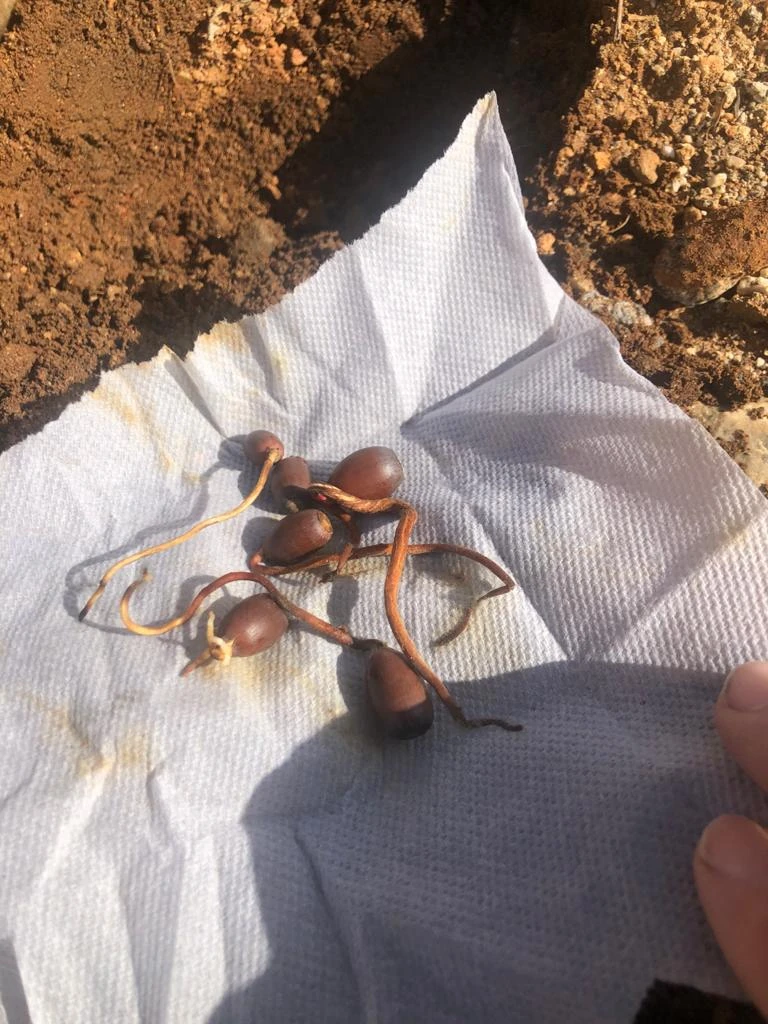
As the climate changes, Indigenous environmental stewardship practices must also change so they can continue to advance climate resilience for Tribal Nations and preserve cultural practices, ecosystems, and species that are integral to the Tribal community (Ford et al. 2020). Climate impacts such as habitat loss, drought, and temperature changes have impacted plants, animals, and gathering practices that hold cultural importance to many Indigenous communities (Lynn et al. 2013). In a similar way, increased fuel loads, the historical suppression of fire, and climate change have also affected traditional Indigenous burning practices in many Southern California Tribes that have historically relied on fire to increase the quality and quantity of plants, limit pests, enhance germination or resprouting, and promote desirable forms of growth (Lake and Long 2014; Lake and Christianson 2019). This type of fire or “cultural burning” is also referred to as “good fire.”
To support Tribal Nations and safeguard natural and human communities in the face of a changing climate, the Climate Science Alliance (the Alliance) team has sustained a commitment to deep collaborative learning while addressing foundational vulnerabilities that many communities experience. The Alliance’s work serves as a bridge between academic and Indigenous sciences, while continually advocating for the equal valuation of knowledge, co-stewardship of all ancestral lands, and the importance of Indigenous Peoples being at the forefront of land management and the environmental justice movement.
The Alliance’s work in southern California is guided by members of the Climate Science Alliance’s Tribal Working Group (TWG), who lead the identification and prioritization of environmental topics of concern based on community needs. The TWG is an intertribal collaborative of more than 20 Tribal Nations and Indigenous organizations across Southern California with ties across the southwest, including Kumeyaay, Luiseño, Cahuilla, Cupeño, Tongva, Juaneño/Acjachemen, and Chumash peoples. In early 2020, members of the TWG identified a need to develop local and culturally relevant data on climate change impacts to southern California native plant species to help inform stewardship practices now and in the future.
“Fire isn’t something you use, fire is family.”
—La Jolla Tribal member, 2023 Cultural Burn event
In addition to developing this research, members of the TWG expressed their desire for capacity-building training events for Tribal community members to elevate and nurture new or existing skills, which in the long term would aid trainees to make the most out of the newly gathered data in their respective communities. In the summer of 2020, the project Resilient Restoration: Advancing Ecological, Cultural, and Community Resilience with Tribal Nations in Southern California was launched around these specific needs through a multidisciplinary and immersive approach to natural and cultural climate resilience.
The research portion of the project aims to advance the understanding of climate change impacts on a suite of native plant species that are an important component of southern California’s biodiversity, and are critical to Tribal culture, health, and well-being. More than 80 native plants of concern were selected by the TWG that included many cultural keystone species with special emphasis on drought impacts to oak species including coast live oak (Quercus agrifolia) and Engelman oak (Quercus engelmanii). Under the direction of the TWG, researchers from the University of California, Riverside (UCR) and San Diego State University (SDSU) created models that outlined the effects of climate change on habitat suitability and population trends for the plants of interest. The model mapped the potential habitat suitability for all plants based on four different climate change scenarios, identifying whether the selected plants had an increase or decrease in their suitable habitat, and how their population trends varied. The information is currently accessible to the TWG through a data portal. The portal was created based on feedback the TWG provided on the interface, organization, and features it can offer.
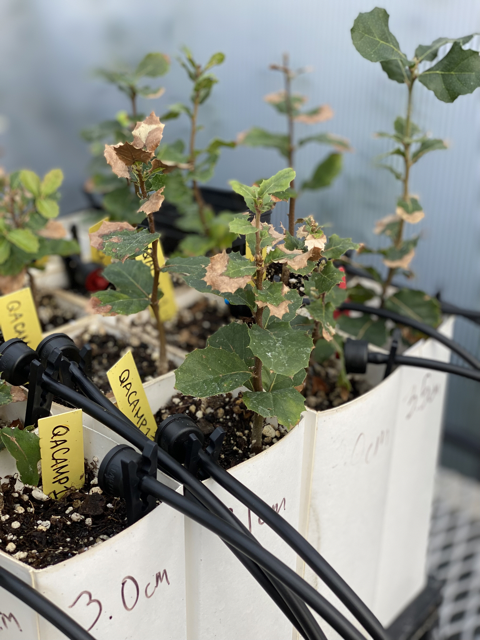
The secondary research component of this project focused on better understanding the diversity of oak species and their resilience to the impacts of climate change—namely, drought. With the permission and guidance of several Tribal Nations in San Diego County, thousands of acorns were gathered, and more than 1,700 acorns were propagated in a controlled greenhouse setting. Within the greenhouse, different oak species were studied to better understand their ability to withstand extreme drought-like conditions (Fig. 1a, 1b). Both unused acorns and propagated oaks were returned to their respective Tribal lands after the study was completed. The research conducted as part of this project can directly inform the development of strategies to advance the stewardship, conservation, and restoration of native plant communities on and off Tribal reservation lands, test and refine existing research questions, and advance coproduction of knowledge between academic science and TEK.
Due to the sensitive nature of the research project, all data, findings, and information derived from these efforts are subject to the Climate Science Alliance’s Indigenous Data Sovereignty Protocols (climatesciencealliance.org/info/data). The Climate Science Alliance team works to ensure that data for and about Indigenous partners we work and have established relationships with over time are utilized to advance their community priorities. To the Indigenous partners we work with, Indigenous data sovereignty means they have the right to govern the collection, ownership, and application of their own data. The Climate Science Alliance team honors the guidance and leadership of the TWG and has adopted the CARE Principles for Indigenous Data Governance as defined by the Research Data Alliance. As an organization, the Alliance team will only engage in partnerships that honor and respect the data sovereignty of the Indigenous partners we collaborate with.
THE STEWARDSHIP PATHWAYS PILOT PROJECT
As expressed by the TWG, to make the most of the newly developed data and information, capacity-building training sessions for Indigenous community members became an essential component of the initiative. Under the umbrella of Resilient Restoration, the Alliance launched the Stewardship Pathways pilot project, which hosted a series of training sessions that integrated academic and Indigenous sciences. The goal of Stewardship Pathways is to build capacity, support economic development, and advance co-stewardship of all ancestral lands through various training pathways. By investing in intergenerational learning, the Alliance aims to encourage the sustainment of cultural and traditional resources and practices, while also investing in Tribal youth to become leaders now and in the future.
Training sessions focus on nurturing knowledge that will support Tribal efforts to address climate change, take initiative in decision-making with non-Tribal partners, maintain traditional resources and practices in the face of climate change, increase efficiency in how services and programs are managed, and advance general climate literacy around regional impacts and solutions. The program also provides a pathway for economic development and advances community-led conservation leadership for historically excluded communities through a multigenerational approach to training for careers in natural, cultural, and agricultural resource management.
The Stewardship Pathways Training program began with two main pathways based on the TWG’s interests: Native Plant Conservation, Propagation, and Restoration; and Indigenous Fire Stewardship. The pathways coexist, and as expressed by the TWG, native plants build our connection to land while fire is an inherent and necessary feature of the landscape. The Native Plant Conservation, Propagation, and Restoration pathway aims to help participants build a career path around plant propagation, restoration, and nursery operations by bringing together climate adaptation, natural resource management, and ecological and cultural restoration as natural resource solutions. The Indigenous Fire Stewardship pathway aims to advance career paths around wildland fire management, Tribal fire stewardship, and fuels reduction through a unique combination of technical wildland fire training and certification, climate science, and TEK.
As part of the first Native Plant Propagation cohort, 24 participants were selected to be part of seven capacity-building training sessions where they learned about native plant propagation, seed gathering and preservation, running a plant nursery, and how to support native plant use for land restoration in different ecosystems. Participants visited different locations around southern California, including nurseries, reserves, and restoration sites, and learned techniques for gathering, seed saving, propagation, and restoration across a variety of ecosystems and ancestral homelands (Figure 1c).
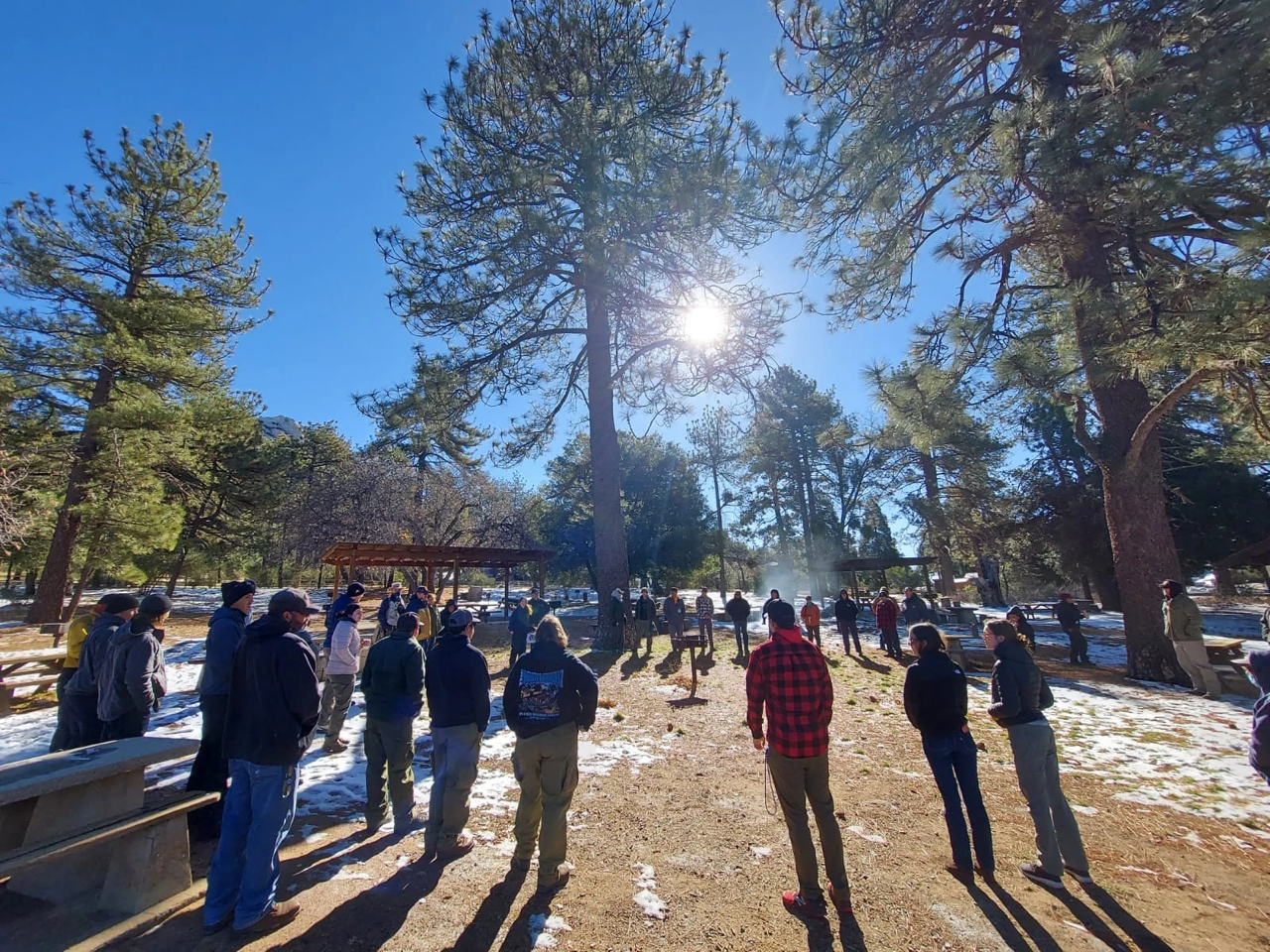
As part of the Indigenous Fire Stewardship training series, around 280 participants have been engaged in a wide array of ongoing capacity-building training opportunities. The training sessions are instructed by the Southern California Interagency Wildland Fire and Fuels Cadre, whose creation and ongoing facilitation is supported by the Alliance and the La Jolla Band of Luiseño Indians. Participants have the ongoing opportunity to take part in wildland fire behavior courses, contribute to discussions that focus on bringing good fire back to the land, and listen in on scientific lectures. The lectures speak about the impacts that climate change will have on the amount of fuel available and on fire characteristics, and how it can influence fire management strategies (Figure 1d).
The wide array of training sessions that have happened since the dawn of the Stewardship Pathways program have recently culminated in a large, Cultural Burn event held in January 2023. The inter-Tribal event was held at the La Jolla Band of Luiseño Indians Reservation, with more than 100 registered participants and facilitators present. The event included a discussion panel led by Indigenous fire practitioners, presentations by CalFire on state legislative and administrative information around prescribed fire, academic research presentations, and breakout discussion groups that talked about the need for Indigenous land management through cultural burning and what nurturing a relationship with fire meant to participants. The Alliance is committed to supporting the development of a sustained, year-round, Indigenous-led fire and fuels crew, along with supporting individuals interested in achieving Tribal burn boss certification.
Both fire and plant training sessions weave together technical learning with climate science and TEK to create pathways that support Native decision-making for actions that benefit restoration of disturbed lands and transformational adaptations that build ecological and community resilience. The demand for these training sessions exceeded our expectations, with more than 300 participants from Tribal nations across the country, more than 15 training sessions, and an enthusiastic and engaged first cohort of plant and fire trainees. The considerable success and positive feedback on the Resilient Restoration’s training component has strengthened and propelled the ongoing Indigenous Stewardship Pathways Program. Today, the Stewardship Pathways Program continues branching and growing different pathways, including the Climate Adaptation Technical Trainings and Tools, and Water Wisdom pathways.
CONCLUSION
The research and analysis conducted in this project, coupled with capacity-building training, resulted in the identification and evaluation of climate change impacts on culturally significant plants and a workforce able to utilize data to advance actions that conserve biodiversity and the cultural integrity of the lands, and biota therein, of southern California Tribes. Through a partner-driven process, our project is a model for climate adaptation planning and actions that promote both cultural and ecological resilience under climate change that serves biodiversity in tandem with conservation of culture and community. By coordinating our interdisciplinary research partnership with the priorities set forth by the TWG—and by conducting broader outreach through the expansive network and unique programs of the Climate Science Alliance—this work will help preserve and restore populations of vulnerable plant species through the equal valuation of knowledge systems that respect and value the cultural importance of these species to Southern California’s Tribal communities. Transdisciplinary work with Tribes requires consent, trust, accountability, and reciprocity (Whyte 2020). The Climate Science Alliance places Tribal needs, desires, voices, and knowledge at the forefront of collaborative climate resilience research and projects.
“We’re starting to see the smoke, eventually we will see the flame.”
—Chief Wesley Ruise Jr., La Jolla Tribal Fire Chief and Climate Science Alliance Advisor, 2023 Cultural Burn event
ACKNOWLEDGMENTS
The Climate Science Alliance acknowledges the Indigenous Peoples on whose traditional territory we work and live. We honor the continued presence and resilience of Indigenous communities and Nations today, and thank those we work with for your friendship and your goodwill in our efforts to collaborate.
A special acknowledgement and thank you to all members of the Tribal Working Group for their trust, guidance, knowledge, partnership, and dedication in helping advance climate resilience for the southern California region. We thank the Southern California Interagency Wildland Fire and Fuels Cadre for their collaboration. Thank you to all participating researchers at UC Riverside and San Diego State University. A special thank you to the Climate Science Alliance’s Indigenous Fellows who helped to review this article. We thank California’s Strategic Growth Council for funding the Resilient Restoration project.
AUTHORS
- Paula Sternberg Rodríguez, MS is a naturalist and scientist with a focus on social frameworks. She serves as the Science Communications Manager at the San Diego Natural History Museum.
- Audrey Carver is an interdisciplinary artist and environmental sciences communicator. She is the Intergenerational Education and Outreach Lead at the Climate Science Alliance.
- Althea Walker, MS is a descendant of the Nez Perce, Hopi, and Gila River people and provides leadership, vision, and support for Tribal partners. She is the Co-Director and Community Resilience Lead at the Climate Science Alliance.
- Diane Terry is a graphic designer and media specialist, and serves as the Co-Director and Creative Lead at the Climate Science Alliance.
- Amber Pairis, PhD is the Founder and Lead Advisor of the Climate Science Alliance. She is an experienced science director with a demonstrated history of working with partners to elevate and support community led and implemented projects.
Climate Science Alliance, PO Box 9220, San Diego, Ca 92169. info@climatesciencealliance.org
REFERENCES
Fischer, A.P. 2015. “A boundary-spanning organization for transdisciplinary science on land stewardship: The Stewardship Network.” Ecology and Society 20, no. 4:38. http://doi.org/10.5751/ES-08121-200438
Ford, J.D, N. King, E.K. Galappaththi, T. Pearce, G. McDowell, and S. L. Harper. 2020. “The resilience of indigenous peoples to environmental change.” One Earth 2, no. 6:532-543. https://doi.org/10.1016/j.oneear.2020.05.014
Johnson, J.T., R. Howitt, G. Cajete, F. Berkes, R.P. Louis, and A. Kliskey. 2016. “Weaving Indigenous and sustainability sciences to diversify our methods.” Sustainability Science 11:1-11. https://doi.org/10.1007/s11625-015-0349-x
Lake, F.K., and A.C. Christianson. 2020. “Indigenous fire stewardship.” In Encyclopedia of wildfires and wildland-urban interface (WUI) fires, edited by Samuel L. Manzello, 714-722. Cham: Springer International Publishing.
Lake, F.K., and J.W. Long. 2014. “Fire and tribal cultural resources.” In Science Synthesis to Support Socioecological Resilience in the Sierra Nevada and Southern Cascade Range, 173-186. Albany: Pacific Southwest Research Station, USDA Forest Service.
Leonard, K., J.D. Aldern, A. Christianson, D. Ranco, C. Thornbrugh, P.A. Loring, M.R. Coughlan, P. Jones, J. Mancini, and D. May. 2020. “Indigenous Conservation Practices Are Not a Monolith: Western cultural biases and a lack of engagement with Indigenous experts undermine studies of land stewardship.” EvoEcoRxiv. July 24, 2020. https://doi.org/10.32942/osf.io/jmvqy.
Long, J.W., F.K. Lake, R.W. Goode, and B.M. Burnette. 2020. “How traditional tribal perspectives influence ecosystem restoration.” Ecopsychology 12, no. 2: 71-82.
Lynn, K., J. Daigle, J. Hoffman, F. Lake, N. Michelle, D. Ranco, C. Viles, G. Voggesser, and P. Williams. 2014. “The impacts of climate change on tribal traditional foods.” In Climate Change and Indigenous Peoples in the United States: Impacts, Experiences and Actions, edited by Maldonado K. Julie, Colombi Benedict, Pandya Rajul: 37-48. Springer, Cham. https://doi.org/10.1007/978-3-319-05266-3_4
Vinyeta, K. and Lynn, K. 2013. Exploring the role of traditional ecological knowledge in climate change initiatives. Portland, OR: US Department of Agriculture, Forest Service, Pacific Northwest Research Station.
Whyte, K. 2020. “Too late for indigenous climate justice: Ecological and relational tipping points.” Wiley Interdisciplinary Reviews: Climate Change 11, no. 1: e603.
Read the full issue:
Artemisia, Native Plants and Climate Change: Indigenous Perspectives Part I
Artemisia, Native Plants and Climate Change: Indigenous Perspectives Part II
-
California Trees: A Field Guide to the Native Species
A field guide that blends identification, ecology, culture, and deep affection for California’s native trees.
-
Life After Ice: Vegetation Response to Glacier Retreat in the Trinity Alps
How the retreat of the last glacier in California’s Klamath Mountains is reshaping subalpine landscapes and offering unique insights.
-
California’s 30 x 30 Initiative at its Midpoint
The year 2025 marked the halfway point in the decade for achieving California’s 30×30 objectives—a natural moment to assess progress and recalibrate strategies.
Get the journal
Become a member of CNPS and you’ll receive the quarterly print edition of the journal.