


Seeing Forests
Artist Andie Thrams deciphers forests in a changing world
By David Bryant and Emily Underwood

In Forests No. 28, Foothills Sunset, 2012. Acrylic and ink on canvas over wood panel. © Andie Thrams
Whether she’s sitting quietly beneath ancient sequoias or in a streamside willow thicket, Andie Thrams becomes part of the conversation of the forest when she paints. The dialogue moves between untamed joy and grief at the changes a careful observer can’t fail to notice.
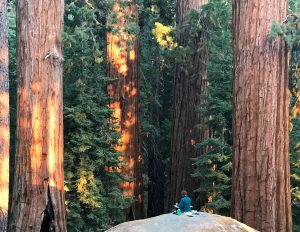
Over many years spent painting in diverse forests across California, Thrams has become attuned to changes that occur over many time scales. While she sits, a blossom may open, birds flit, leaves rustle. Returning later, she’ll notice that a tree has fallen and is now sprouting mushrooms. Over the years, she’s noticed when the pace of change—be it from drought, development, or extreme wildfire—seems to be outstripping a forest’s ability to renew and recover.
I ask scientists, ‘What is something that you’d like everybody else to know about forests, that you know?’
For Thrams, learning about forests is a natural extension of enjoying and observing them. In recent years, she’s started reaching out to forest ecologists and other scientists to help her understand the changes and processes she’s observing: “I ask scientists, ‘What is something you’d like everybody else to know about forests, that you know?’”
Some answers have challenged Thrams’s aesthetic sensibilities: “It turns out that a lot of the tangled, thickety stuff that I dearly love to wander through and paint, a lot of that is not a good thing,” she says. Much of that dense brush is the result of human fire suppression in the Sierra Nevada, which has led to a buildup of small trees and brush that contributes to catastrophic wildfires in forested areas. The scientists Thrams has reached out to have told her about the dire impacts on forests of prolonged heat waves and longer droughts from climate change. They also talk about what humans can do to care for forests, like strengthening protections for our public lands and supporting native pollinators.
Our feelings about the beauty and fate of forests are as diverse and complicated as forests themselves. Thrams’s art allows for the complexity of human experience to collide and tangle with all the experiences, sensations, and realities of living, changing forests. As you enter her forested worlds, you might find the forest is calling you, too.
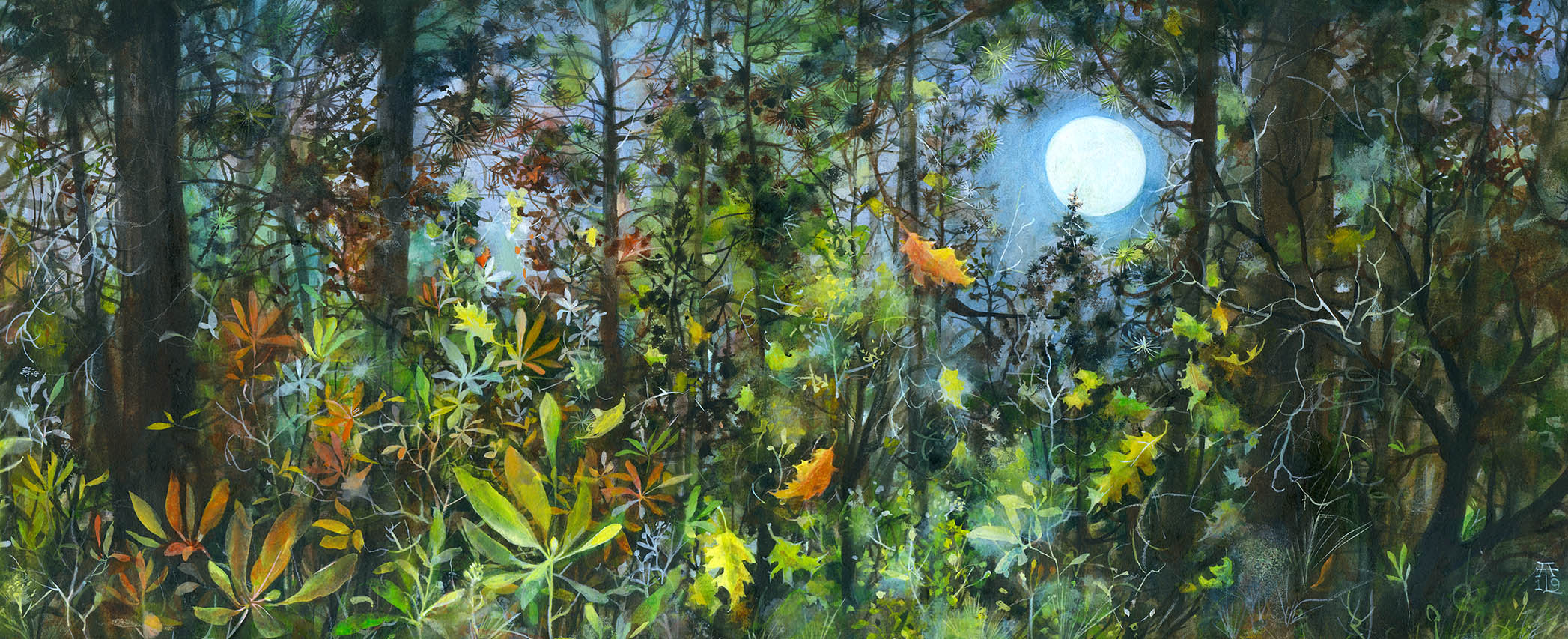
In Forests No. 46, October Moon, 2019. Watercolor, ink, gouache, acrylic and palladium leaf on paper over wood panel. © Andie Thrams
Enjoy the forest
The joy that comes from being in a forest can be a wellspring of artistic inspiration. Biophilia, defined by biologist Edward O. Wilson as “the rich, natural pleasure that comes from being surrounded by living organisms,” courses through Thrams’s work. Thrams, who has taught countless art students, recommends that you disconnect from your devices and other distractions when you go outside to draw or paint: “If you sit quietly and get still and observant, your sense of place expands, and your sense of smallness in the big, wide universe sets in.”
Observe the forest
As you observe a forest over time, you may begin to notice hidden worlds. What animals come and go? How does the sunlight shift throughout the day? What changes occur from season to season, like the appearance of flowers or fruit? Thrams teaches her students to look for many different shades of green, ranging from muted olive to bright sap green. Is a tree trunk really “brown,” or the deep maroon of a peeling manzanita? Try to define the many sounds and smells that you encounter, from different bird songs to breezes scented with bay laurel or pine, she encourages. As this sensory information becomes discernible in a forest, you can use any art form you like to celebrate the life around you.
On trips to spots she documented decades before, the pain of radically altered landscapes seeps into her process.
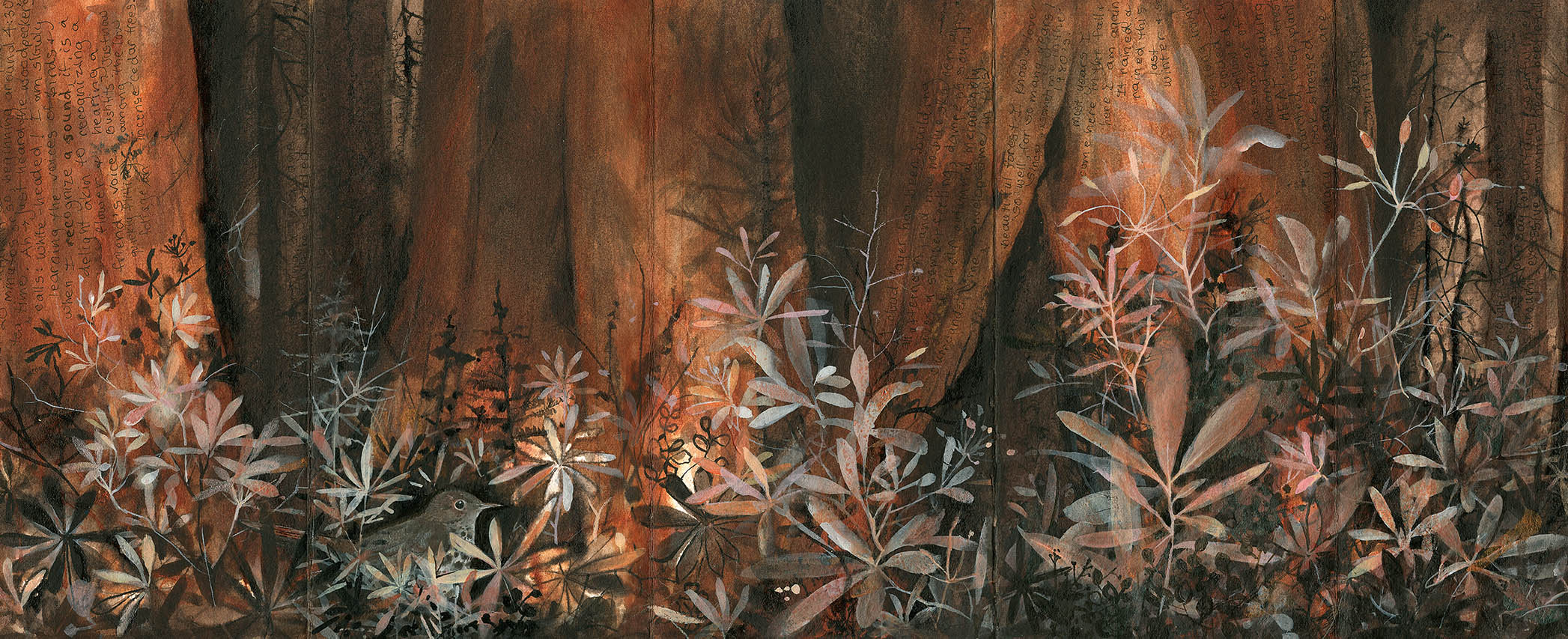
Birdsong, Redwood Mountain Grove (Hermit Thrush), 2019. Accordion-folding artist’s book with ink, tree sap, wildfire charcoal, watercolor and gouache on paper. © Andie Thrams
Learn about the forest
Thrams invites all observations and perceptions of change into her art-making, jotting down bird sightings and allowing leaves to leave impressions on the paper. Sometimes the pain of radically altered landscapes, a feeling known as solastalgia, seeps into her process. She may record her shock in written language, weaving words into her brush-strokes and marks. Her most recent works reflect her outreach to scientists, incorporating her forest experiences and ecological concepts into an outdoor installation of forest prayer flags rendered in sumi ink, found wildfire charcoal, and tree sap. Originating in Tibet, prayer flags traditionally bless the surrounding landscape or guide the wandering journeyer.

Populus tremuloides (Autumn Quiet), 2019. Accordion-folding artist’s book with watercolor, gouache, colored pencil and gold leaf on paper. © Andie Thrams
Take action
Thrams’s artwork sparks conversations, including internal dialogues that help her make sense of rapidly changing ecosystems and discussions with others about our relationships to forests in the past, present and future. This spring, the California Native Plant Society is hosting the Forever Forest Art Contest, inviting you to explore and express your connection to California forests. The competition is just the beginning of an ongoing conversation with communities and scientists about what makes a forest healthy and resilient. Until May 17, use any media to share what a forest means, feels and looks like to you and submit your work at cnps.org/forever-forests. CNPS will announce the winners of contest categories at our live award show on the International Day for Biological Diversity on May 22. Submissions will be celebrated in a Forever Forest anthology, putting forward a collective vision for healthier forests in our changing world.
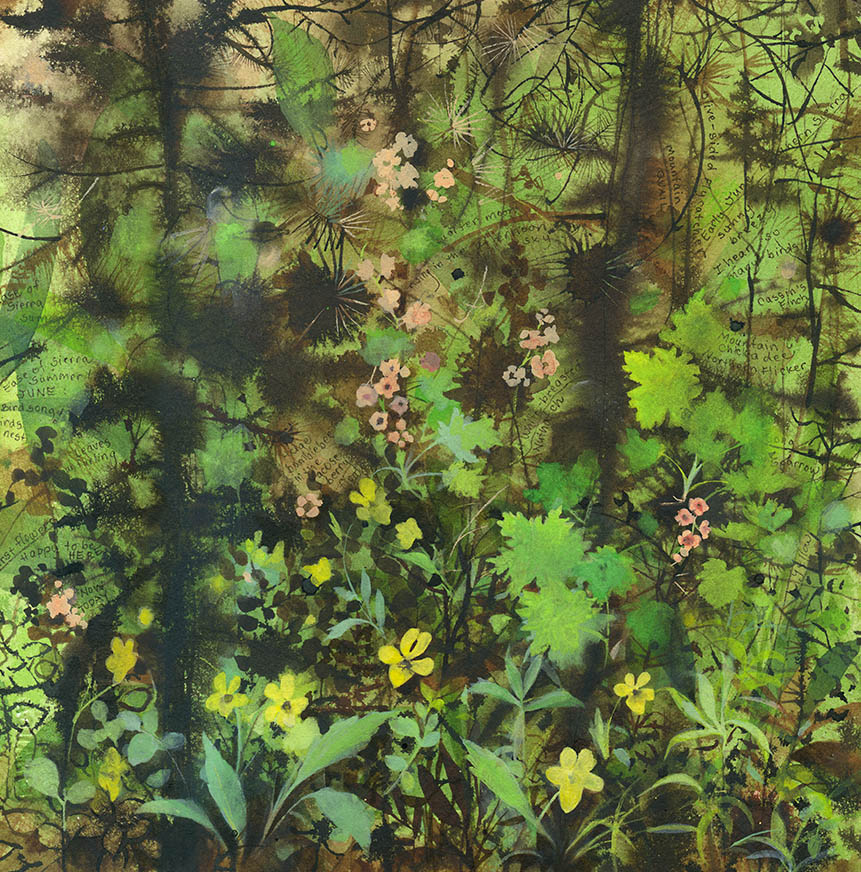
Field Study, June-Afternoon, 2019. Ink, watercolor, gouache, gold leaf, and acrylic on paper over wood panel. © Andie Thrams
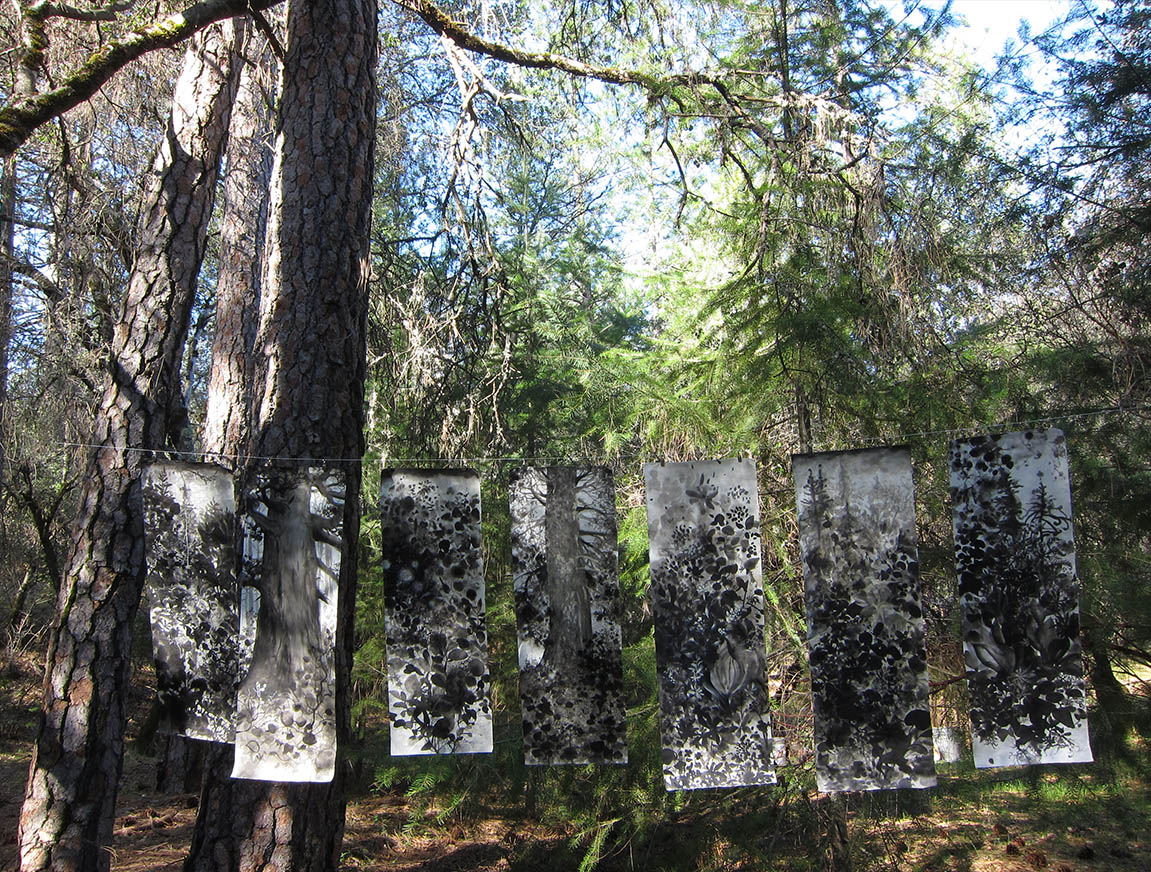
Forest Prayer Flags, 2021, Coloma, CA. Ink, wildfire charcoal, pastel, watercolor, mica, and tree sap on Kozo paper. © Andie Thrams
www.andiethrams.com
David Bryant is the Campaigns and Engagement Manager for CNPS and Emily Underwood is the Publications Editor for CNPS.