Some of the most reliable plants in my garden are California native bulbs. They bring seasonal color and variety to the garden, and give it a sense of place (“This is California!”) and a sense of time: they are the markers of spring glory.
Native bulbs are especially appealing to lazy gardeners like me. They need minimal effort at planting time (no need to dig big holes) and no effort thereafter, ever! They come up with the winter rains, and flower in spring. They disappear during summer and return in winter, year after year. To me they are the ultimate in low maintenance gardening!
To succeed with California bulbs, follow these simple rules:
- Locate them in full sun or part sun. Most bulbs need this type of exposure.
- Do not amend the soil. Do not locate them in extensively cultivated beds or vegetable patches. Mine grow in the characteristic clay soil of the Santa Clara Valley floor.
- Plant in late fall, right after the first rain. Plant each bulb 3-6” deep, root end pointing down. Shallow plantings often don’t survive.
- Do not water the beds through summer and fall. This is really important. Native bulbs need a period of rest, and will rot with summer water. The ideal spot is far away from the garden hose, sprinklers, and emitters.
- Guard against snails and slugs. Except for alliums, most California bulbs are extremely attractive to these garden pests. Use Sluggo or hand pick at night.
If you’ve never grown California bulbs, try any of the following: they have done very well in my San Jose garden.
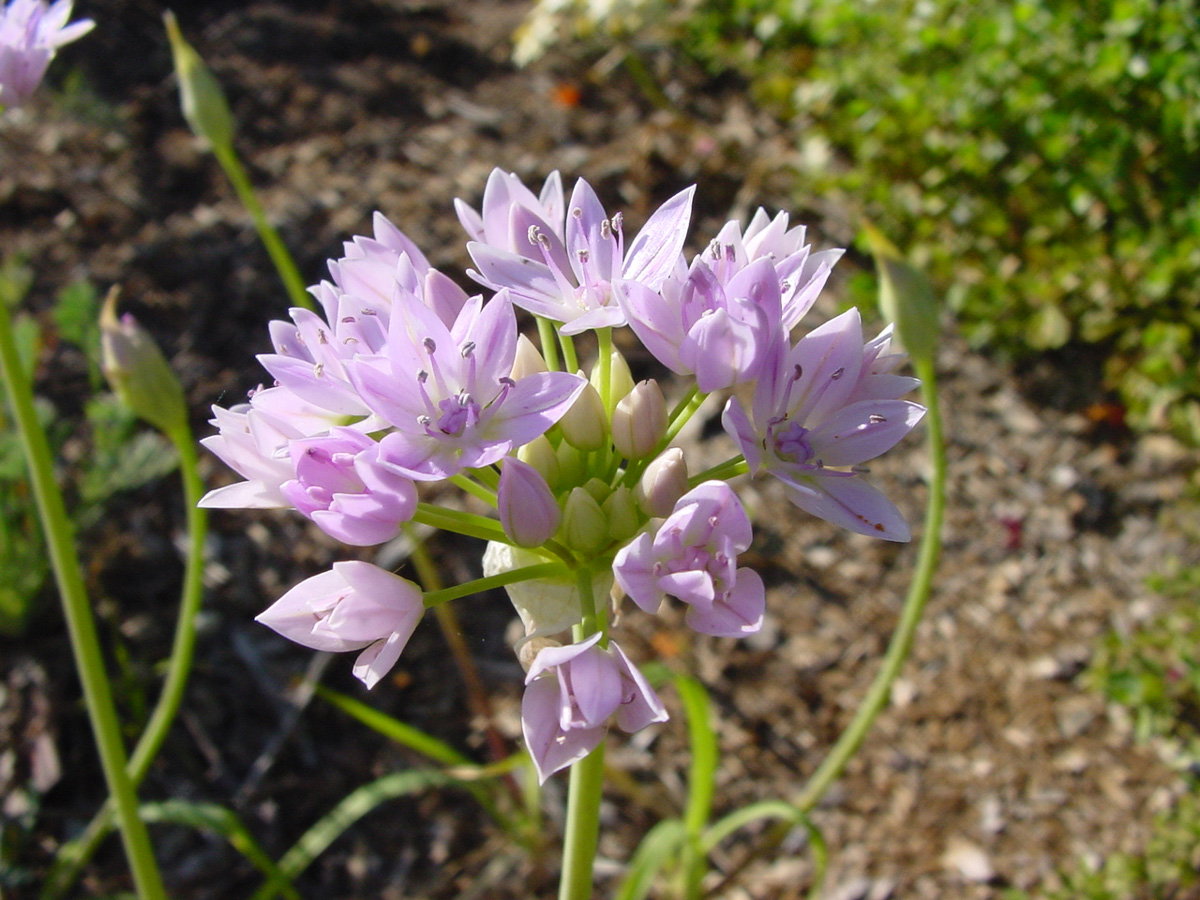
Meadow Onion (Allium unifolium) is an early bloomer, with blossoms ranging from pink to near-white. At 18” tall, it is a significant presence, and is best planted 2’ or more away from the edge of beds. With time, it will colonize and form mounds. Blooms in April.
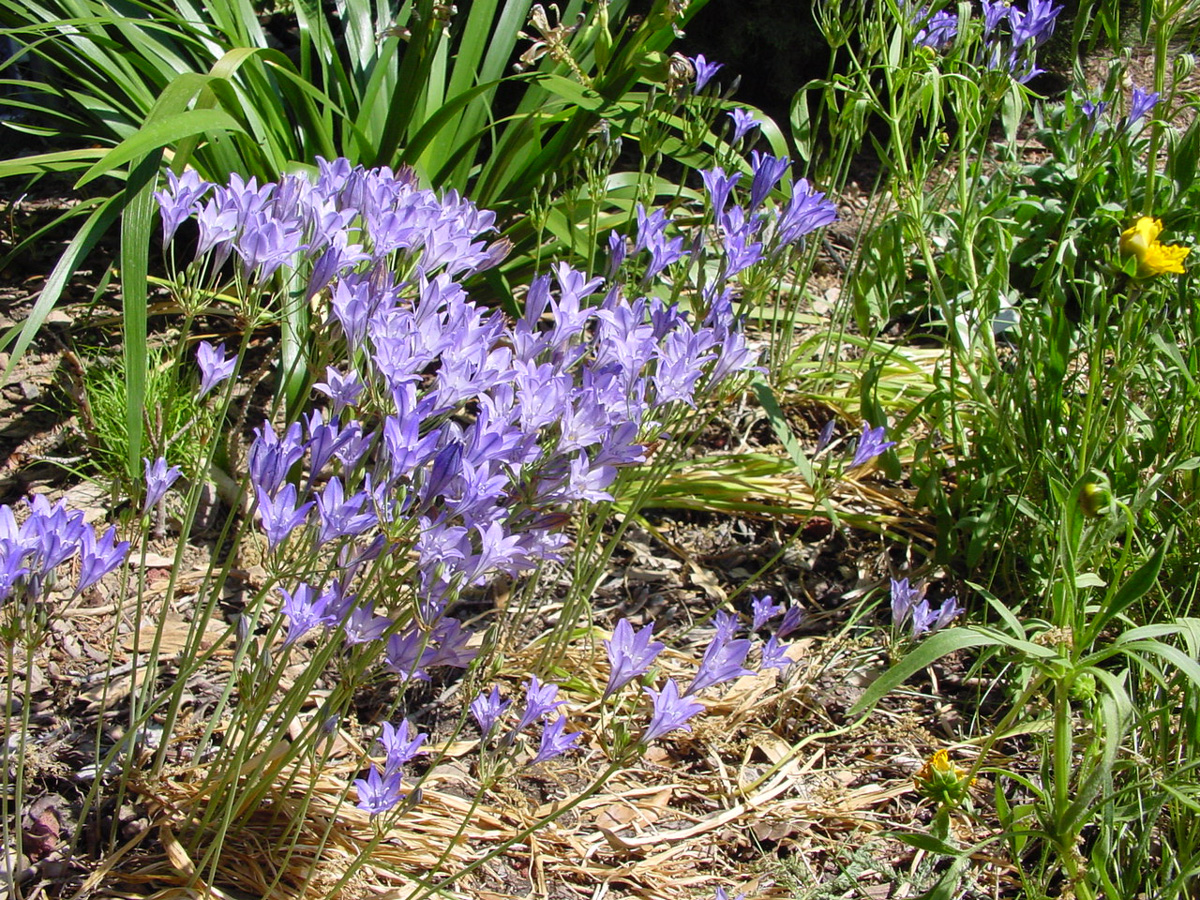
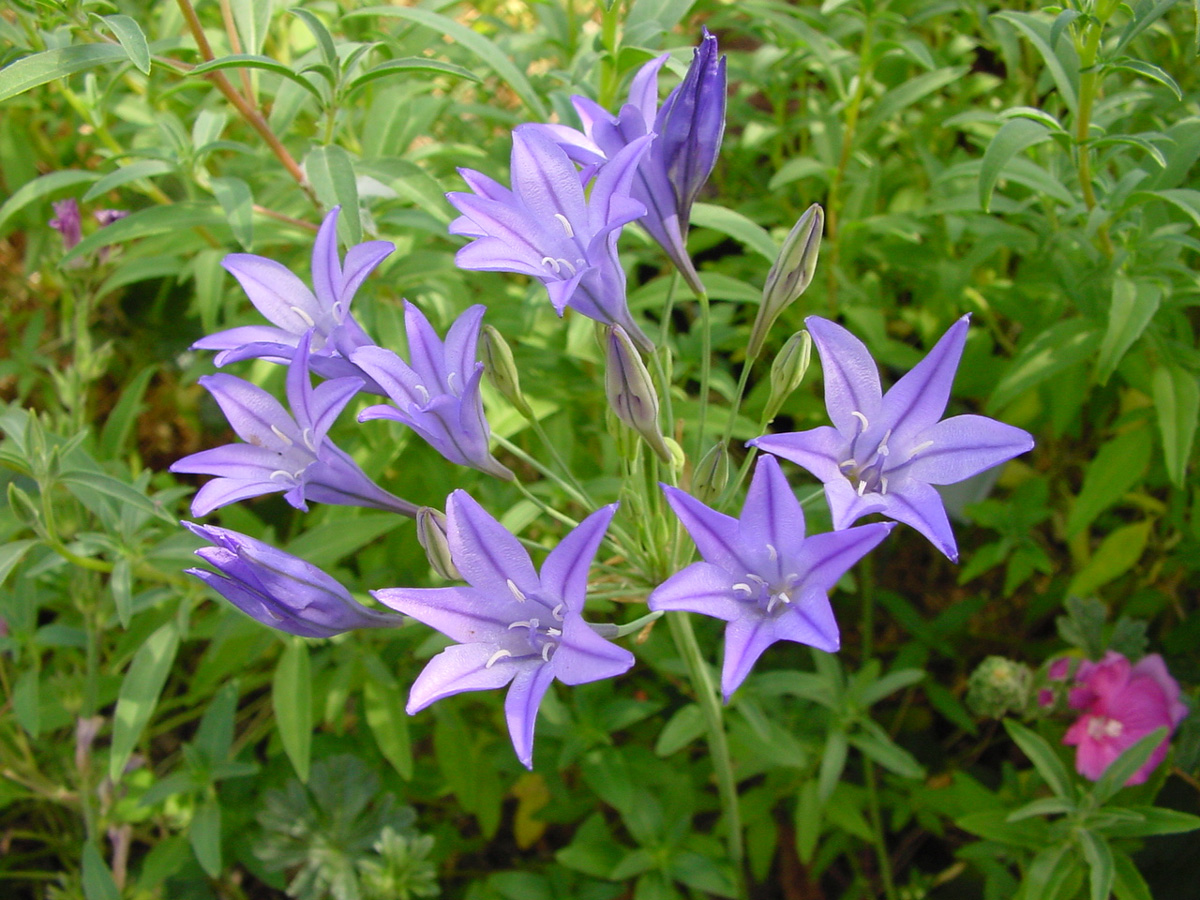
Ithuriel’s Spear (Triteleia laxa) is a common sight in the foothills in late spring, its blue funnel-shaped flowers swaying among the golden grasses. It is also one of the least fussy. Some in my garden are 5 years old, returning reliably every spring. A late bloomer, it flowers in May, when its grass-like leaves have dried up. The flowers last several weeks. ‘Queen Fabiola’ is a common cultivar. This bulb has been in cultivation in Europe since 1832, and is still widely grown!
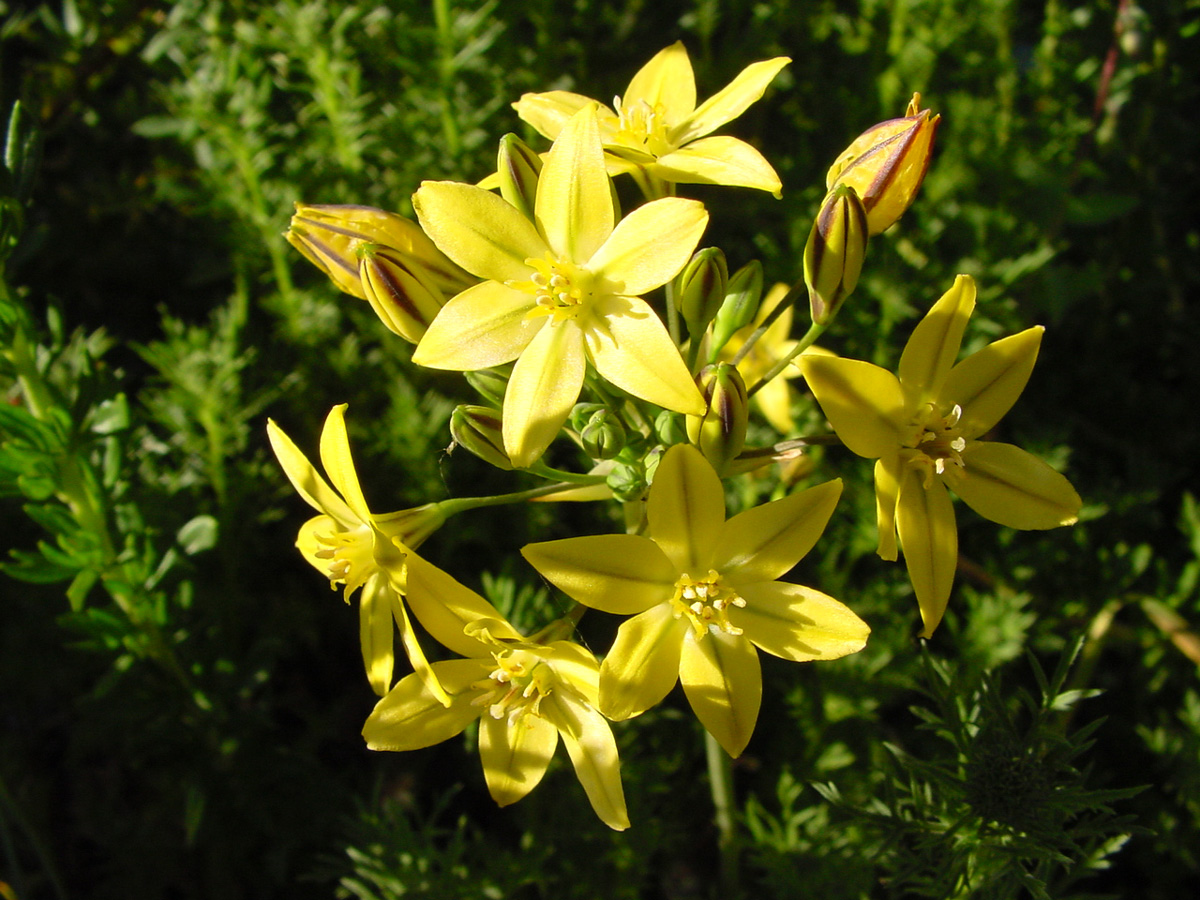
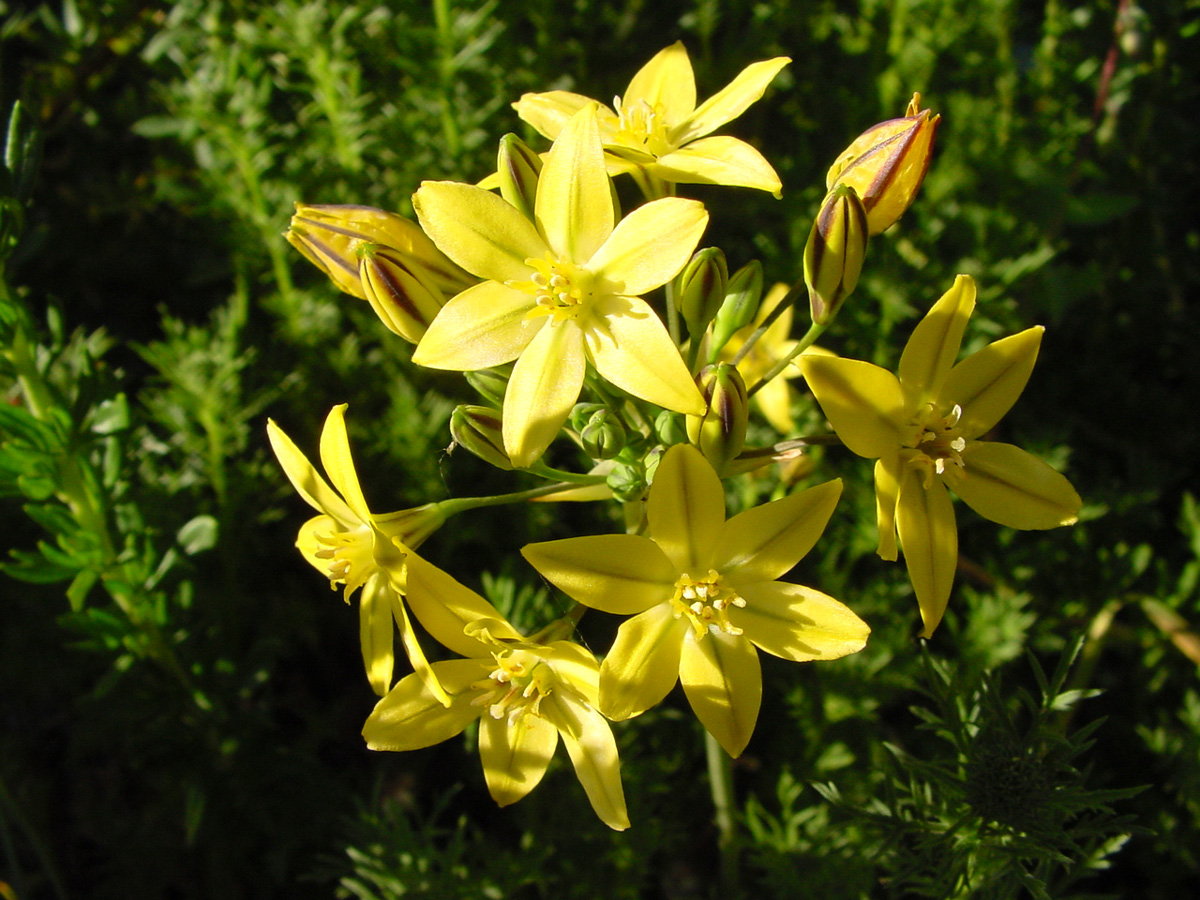
Prettyface (Triteleia ixioides) adds cheer to the spring garden with its cream-colored flowers held on long-stalked umbels. At 8”, it can be placed near paths and in front of shrubs. Combine it with a low-growing, blue-flowering ceanothus such as Yankee Point for contrast, or pair it with California poppies for warm color. This long bloomer lasts from mid-April through mid-May.
Maintenance tip:
In early summer, remove the dried stalks for neatness. Be sure to collect the seeds for propagation or for trading with fellow gardeners.
Design tip: Bulbs are invisible 6 months of the year, so place them around existing shrubs, perennials, and bunchgrasses which will command interest when the bulbs go dormant.
There are several suppliers of native bulbs such www.telosrarebulbs.com. You can find inexpensive Holland-grown bulbs through www.vanengelen.com. These bulbs are only available during late summer and early fall. Popular varieties often sell out, so place your order early, or you may have wait for the next season.