CNPS Garden Q&A with Carol Bornstein, horticulturalist, garden writer, educator, and designer

What design tips will help me avoid the “weedy” look HOAs fear with native plant gardens?
What a wonderful opportunity to bust some myths about native gardens being messy, weedy, and drab once the spring flowers fade. California is blessed with exceptional botanical diversity and therein lies the plant lover’s challenge—limiting one’s choices rather than going for a one-of-everything composition. That rarely ends well. Here are some time-honored guidelines to help you create a composition that pleases you and your HOA (homeowners association):
- Start by analyzing your site’s soils, exposures, microclimates, topography, etc. This information will help you select plants that should thrive, not merely survive, in your garden. At Calscape.org you can select native plants that grow best in the type of soil you have.
- How much time or money will you devote to tending your garden? Be realistic. If minimal is your goal, it’s best to keep the design as simple as possible and select plants that require little care once established. Remember though—a garden by definition is a tended place.
Remember…a garden by definition is a tended place.
- Decide what you want from your new garden: Habitat for wildlife? A welcoming entry for guests? A serene space to relax? Having an overarching goal will help guide the entire design process.
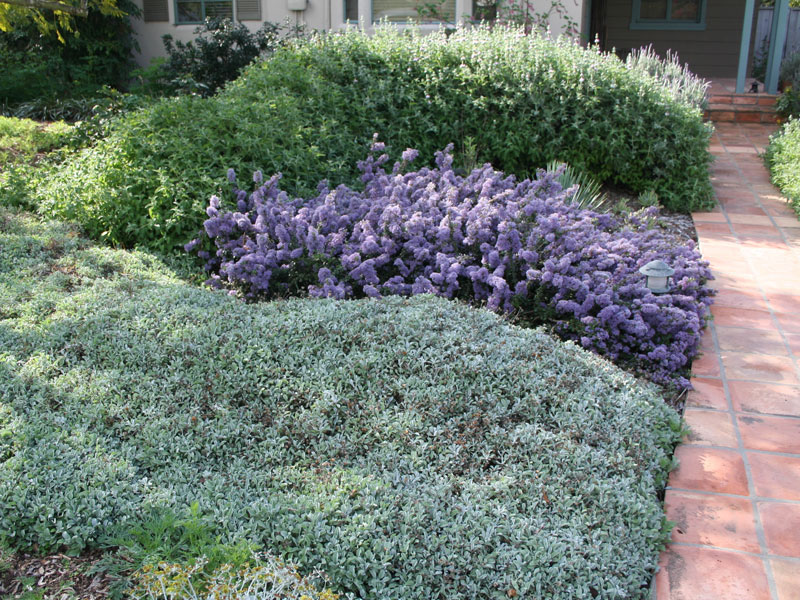
- Choose a color scheme. Whether inside or outdoors, color is a valuable organizing tool. Consider foliage, bark, and fruit colors, not just flowers. Use the colors of non-living (hardscape) elements — walls, fences, paths, arbors, furniture—to contrast or complement the plants.
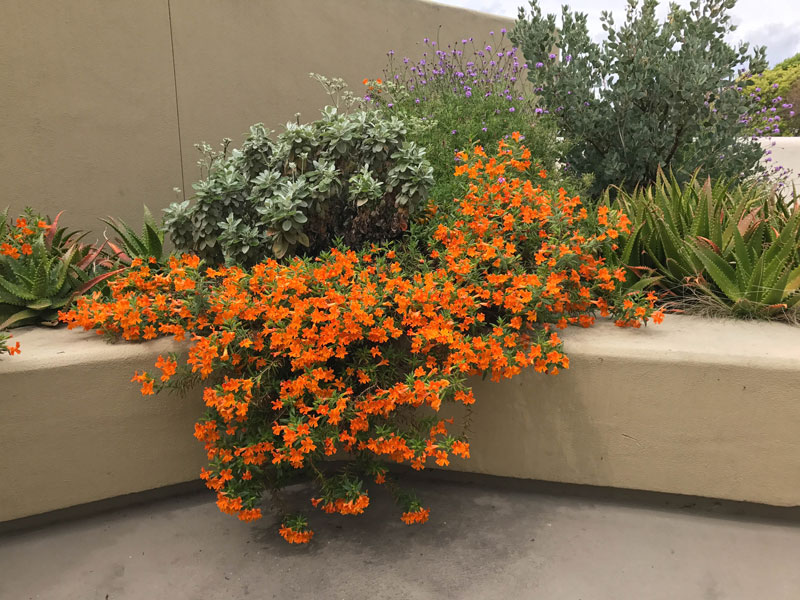
- Strive for a simple, harmonious composition of repeating forms, colors, and textures. Even a modest plant palette can change in subtle or dramatic ways with each season.
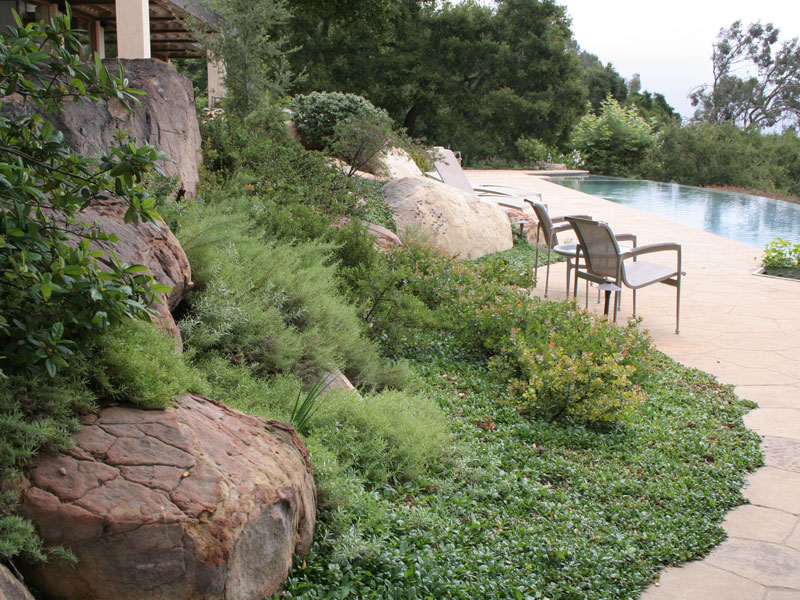
- Emphasize foliage. Plants that retain their leaves year-round provide welcome greenery through the long, dry summer months, and create a foundation or backbone for the design. And don’t forget the many silver or gray-leaved evergreens in our flora.
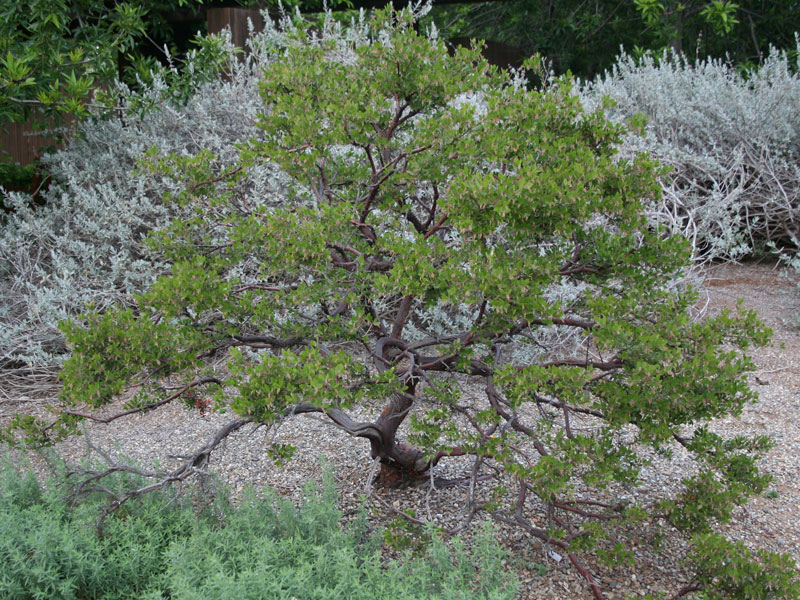
- Focus on form. The sculptural beauty of an upright manzanita (Arctostaphylos ssp.) or St. Catherine’s lace (Eriogonum giganteum), when combined with ephemeral or fine-textured plants creates a strong focal point that anchors the composition.
- Limit the use of plants with a scruffy dormant phase—or plan for it. If you must have bush monkey flowers (Mimulus aurantiacus), grow them in pots that you whisk away when they shut down. Or place them behind warm-season bunchgrasses whose flower stalks will obscure the monkey flowers’ dried leaves and seed pods.
- Incorporate some formality into the design, such as symmetry, straight lines, or a clipped hedge that frames an otherwise naturalistic composition. Your HOA will appreciate these ‘neat and tidy’ features.
- Use a garden ornament—bird bath, sundial, a colorful pot—as an arresting focal point.
- Are there any exotic plants in the HOA common areas that might fit in? If so, weave a few into your garden for continuity and familiarity.
- Know your plants. What will they look like throughout the year? What do they need to thrive? How big will they get? Above all, group plants based upon their horticultural needs and spaced according to their mature sizes. Thou shalt not skip this step!
All this thoughtful planning will pay off as your garden takes shape. You can also use Calscape’s Garden Planner to get gorgeous design templates that meet your site needs and goals. Be prepared to make changes over time—adjusting for shade and root competition as plants grow, replacing older plants as they naturally senesce, accommodating changes you want to make. Don’t be too disappointed if some plants die unexpectedly or if you aren’t entirely happy with a particular combination. Instead, seize the opportunity to try something new. That’s what makes gardening such a fascinating, dynamic, and grand obsession.