Winter 2025By Liv O’Keeffe & Stu VanAirsdale

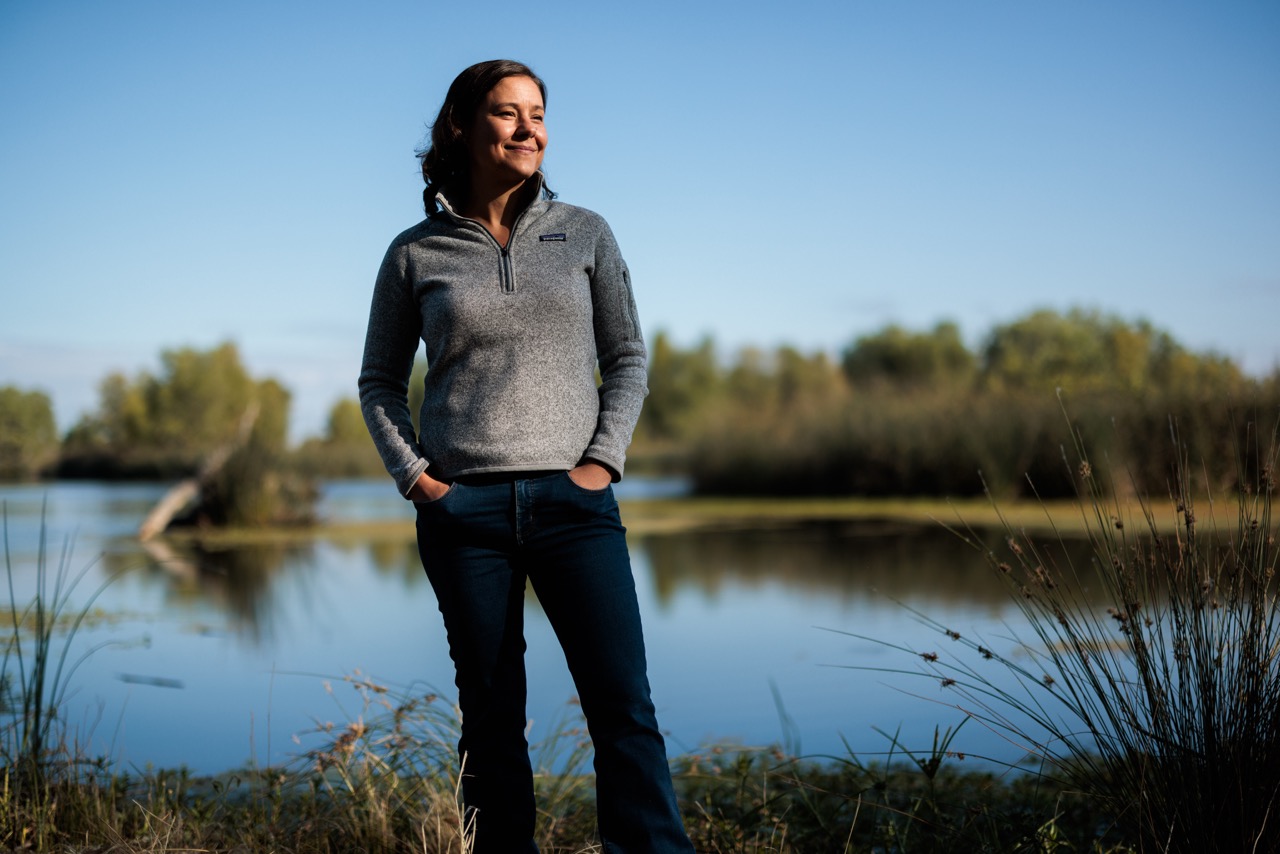
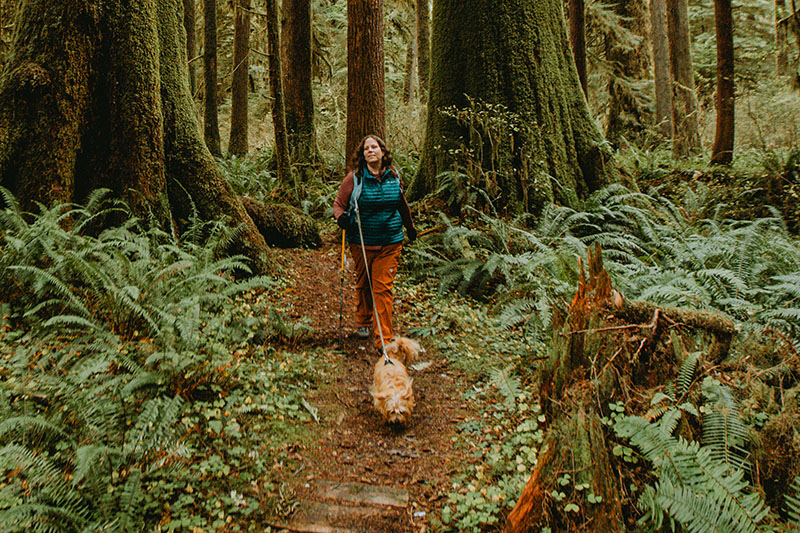
(Photo credit: Marissa Solini)
From forest trails to desert valleys and every state and national park in between, California’s big, beautiful wilderness may technically be open to everyone. But that doesn’t necessarily mean that everyone has equal access to that wilderness.
Rugged terrain is often out of the question for folks with limited mobility. Even for those visiting paved trails, accessible parking can be elusive. Audio guides are all too rare for people with visual impairments. Settings that lack clear signage and other orientation features can unduly challenge neurodivergent visitors whose experiences depend on clear, orderly navigation. Then there are the myriad guidebooks and other resources whose exhaustive, specific treatments of the outdoors extend to seemingly everything except accessibility.
Syren Nagakyrie learned first-hand the added difficulties—as well as the hazards—facing disabled people eager to enjoy the outdoors. After a particularly vexing hike seven years ago, the Washington-based activist and author (who uses they/them pronouns) issued an online cri de cœur that has since blossomed into their popular nonprofit hiking organization Disabled Hikers. Nagakyrie has also channeled their work into two hiking guidebooks focused on accessibility and inclusion: The Disabled Hiker’s Guide to Western Washington and Oregon and The Disabled Hiker’s Guide to Northern California (published in 2022 and 2024, respectively, by FalconGuides). Following the release of Nagakyrie’s latest guide, Flora spoke with them about the mission and growth of Disabled Hikers, the hikes they organize and lead around California, and some of the state’s captivating native plants.
Flora: Your guides have clearly tapped into an unmet need. What inspired you to begin your advocacy and educational work, and what sort of feedback have you received?
Syren Nagakyrie: It was March 2018, and I had moved up to the Olympic Peninsula [in northwest Washington] and was really excited to explore it. I was out in the Quinault Rain Forest. It’s a beautiful landscape—all old-growth and rocky coastlines. I had done lots of research ahead of time to make sure that this trail was going to be accessible for me, and I thought I was going to be good. I showed up and immediately encountered all these obstacles and barriers that weren’t in any of the information that I read—steep stairs and rocky drop-offs and scree-covered slopes that were really dangerous for me. I wound up at this bridge over a waterfall and was just standing there feeling frustrated and disappointed. I said, “You know, I’ve got to do something about this.”
I went home and wrote up a trail guide and put it up on a blog. Disabled Hikers was born from there. It grew quickly in ways that I never expected or planned for; I heard from so many people who thought they were the only disabled person they knew who wanted to go hiking. That was obviously not true, because there was this huge community of people who were coming together around this. It was so exciting for them to recognize there is a community here.
In a piece for The New York Times, you wrote that accessibility is not a one-size-fits-all solution for people with disabilities. Can you elaborate on that?
SN: For a long time, most people’s conceptions about accessibility in the outdoors and types of disabilities has been very narrow. When you ask people whom they envision when they think of someone who’s disabled, they often think of someone who uses a wheelchair. That’s absolutely valid; there are many people with a variety of disabilities who use wheelchairs. But physical disabilities are not the only type of disability that exist. There are sensory disabilities, intellectual disabilities, developmental disabilities—and not all types of wheelchairs are the same. Disability is not a monolith. There is not one single experience of disability or type of access need.
Can you tell us about your Spoon Rating System for hikes?
SN: Spoon theory is very prevalent within chronic illness and disability communities, where energy is represented by a number of spoons: Say you start with 10 spoons in the day, and every activity you do requires a certain number of spoons. For me, today I can clean my house and walk my dog, and tomorrow I can work on a project and take a shower. There’s not enough to do everything every day. With hiking, people often rate trails as easy, moderate, or hard, and no one ever says what that actually means. An easy trail for one person is going to be a hard trail for another. There’s seldom any consideration for accessibility in those ratings, and a lot of people who are chronically ill or disabled often have reduced energy compared to non-disabled individuals. I have to plan for how much energy and effort I’m going to require for a trail so I can know whether I’m going to be able to complete it that day or save it for another day, or whether I’m going to be safe on that trail. There have been times where I’ve started on a hike, gotten stuck halfway through, and not really had the energy to get back. So I created the Spoon Rating System for hikes, [because] to be able to plan in advance is really important. I wanted something that was objective and specific—and also culturally relevant.
Everyone deserves access to the benefits of being outdoors and that sense of connection and belonging. Disabled folks need that connection—to see themselves reflected in the outdoors.
What are some of the barriers and misunderstandings that people with disabilities face when it comes to the outdoors?
SN: A big one is this prevalent belief within outdoor recreation communities that to be a “real hiker,” you have to be out there “conquering” [14,000-foot] mountains or having these really hardcore experiences. I don’t think that’s true for the broad majority of people—even people who are not disabled. I think it’s as perfectly valid to go out and sit on a city park bench and just enjoy being outdoors as it is to go climb a mountain. So that’s a big one. Another one is that disabled people don’t want or don’t need to be outdoors—that we have other things that are more important, or that it’s just not something that we want to do. That’s absolutely not true. Everyone deserves access to the benefits of being outdoors and that sense of connection and belonging. Disabled folks need that connection—to see themselves reflected in the outdoors.
What are your suggestions for people who want to experience the outdoors in a way that’s accessible for them, particularly if they’re hesitant?
SN: First of all, it’s completely understandable to feel scared or hesitant about going outdoors when you don’t have the information or the equipment or the resources or the companionship to be able to do that. It can be really scary. I encourage people to find communities where they are, whether that’s through Disabled Hikers, or adaptive recreation programs or independent living centers or other programs in their communities and find people to go out with. Research ahead of time and find as much information as you can so that you can plan accordingly and kind of know what to expect.
CNPS chapters host field trips and on-site program meetings. What accessibility recommendations do you have for our chapter organizers and other outdoor groups planning these kinds of experiences?
SN: It’s important that the location they choose is as accessible as possible. Also, be sure to provide an opportunity for attendees to share their access needs, and be prepared to meet them. Work with people within your community and ask them: “What do you need to be in this space? What will make you feel safe and comfortable?” Review accessibility guidelines—whether it’s the Americans With Disabilities Act or the Architectural Barriers Act or Forest Service guidelines—to have a basic understanding of what kind of access needs should be considered. And recognize that those [guidelines] are still very limited and tend to focus on physical accessibility. It is also important to consider things such as pacing and rest breaks, making sure activities are sensory-friendly and provide clear instructions, and having interpreters available.
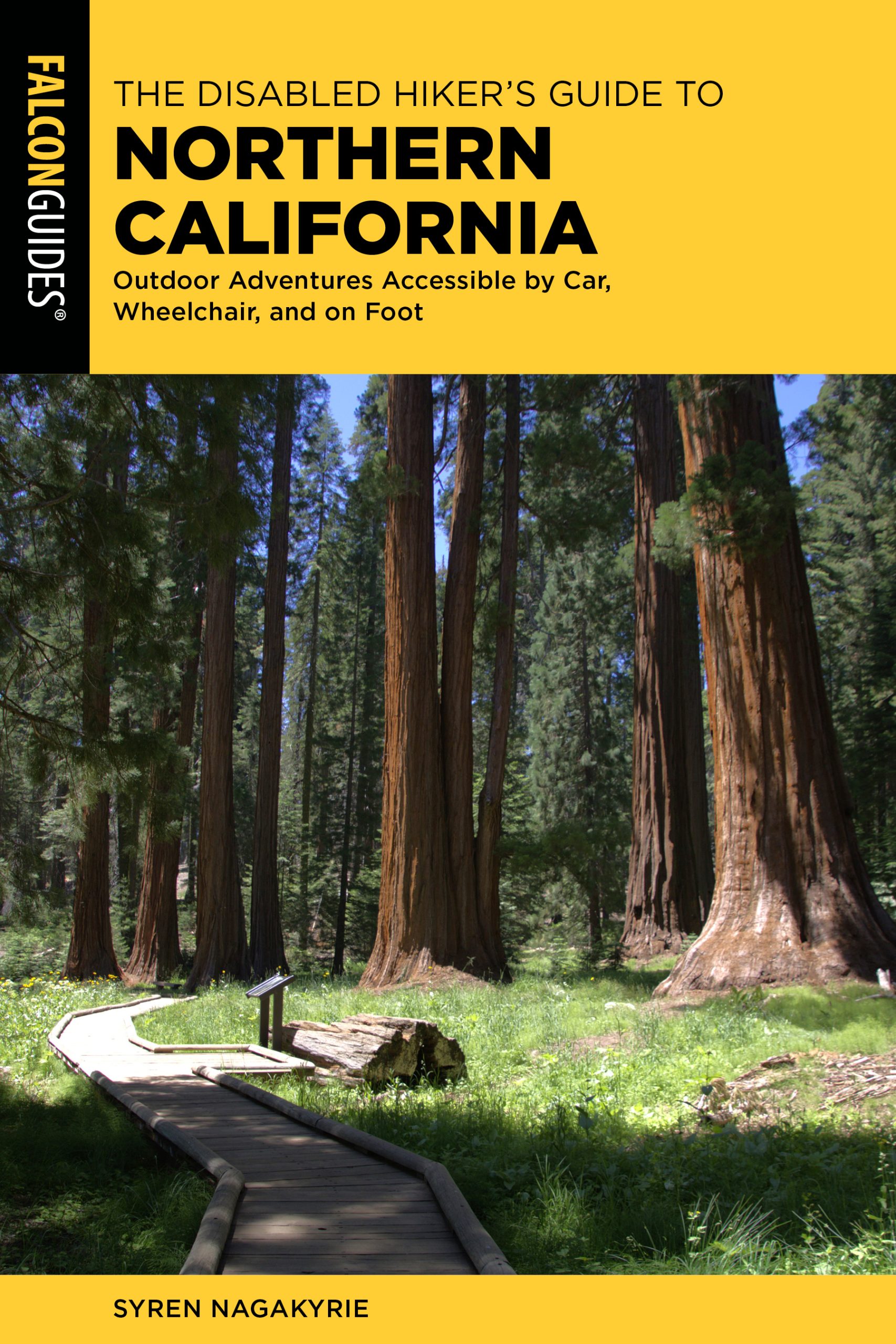
You’ve recently published The Disabled Hiker’s Guide to Northern California. What are some of the features or facilities the book spotlights when recommending hikes to your readers (e.g. boardwalks, scenic places to stop along drives, paved walkways, etc.)?
SN: The book provides detailed information on a variety of features from start to finish. It includes driving directions, parking lot accessibility, trailhead accessibility, and step-by-step or roll-by-roll description of the trail. Other features such as restrooms, water fountains, benches, tactile and audio elements are also included. The trails in the book include boardwalks, paved paths, and natural surface trails as well as scenic drives and viewpoints.
Are there any hikes in the book especially close to your heart?
SN: I was very surprised by Sisson Meadow in Mount Shasta. It’s right downtown, and it’s all boardwalk through a beautiful meadow with a nice view of the mountain. It’s really lovely. The Sonora Pass scenic drive on Highway 108, and several spots along there—like the Douglas Flats picnic area and the Columns of the Giants trail—are really nice. It’s the same geological feature as Devils Postpile [the national monument near Mammoth Mountain, showcasing 60-foot basalt columns], but it’s not as busy. It’s nicely paved; you don’t have to take a shuttle to get there or any of that nonsense. The Douglas Flats picnic area is in a recently burned area. There’s some interesting recovery going on in the forest there, as well as some nice picnic tables along a paved path and restrooms. But I especially love the north coast and the redwoods. It’s hard for me to pick just one favorite there, but I do love the Howland Hill Road scenic drive and Stout Grove.
You also lead group hikes. What can you tell us about those?
SN: These hikes are by and for the disability community. They’re only open to people who are disabled and their friends and family and caregivers. It’s being outdoors with the community of people who get it, and we can just kind of let our guard down. We know our access needs are going to be understood, and we can just enjoy being outdoors together. If and when we do encounter any access barriers, we’re going to address it together, and we’re not going to feel like a burden doing that. We also have a partnership with the California State Parks Foundation, which has provided grant funding for our hikes. We do a lot of work throughout the whole region to improve access for folks, such as working with parks to provide feedback, creating resources (such as our Guide to the Redwoods in collaboration with Save the Redwoods League), and providing training opportunities.

What’s an especially memorable moment from one of your Disabled Hikers group outings?
SN: For one of my very early group hikes, we had several people registered but only one came. I felt a little disappointed in that. But then we went out for just a very short stroll along this boardwalk, and the person told me that it was the first time they had been able to leave their house in months. Shortly after that, they were going to have a medical procedure that meant they wouldn’t be able to leave their house again for a while. Having that that time to just be with someone outdoors who “got it” was so meaningful and impactful for them. Even though we didn’t hike far, and we didn’t spend a lot of time outdoors, it was still really meaningful.
What are some of your favorite native plants?
SN: I love manzanita, just because I love the random black, twisty limbs. I love when they grow overhead on a trail. And, of course, redwoods, as I mentioned.
What are some qualities in these plants and trees and outdoor environments that might enhance accessibility—sensory conditions or characteristics, for example?
SN: I mean, I love running my hands along the tree bark and feeling the wind passing over a meadow and through my hair and across my skin. It’s an incredible experience. I think that’s one of the things that I love about plants so much: They are so supportive of that multi-sensory experience. I also love how plants offer an opportunity to reflect on disability. There is a quote attributed to [author] Alice Walker: “In nature, nothing is perfect. Trees can be contorted, bent in weird ways and they’re still beautiful.” While I wouldn’t use that exact language to refer to someone who is disabled, the sentiment is true: In nature, people seek out the “odd” and “unusual” plants and view them as unique, but the same is not true of how people perceive people with disabilities. There are other examples of disability in nature, such as fascination when genetics or injury leads to conjoined flowers. Disability is such a natural, normal experience.
This interview was condensed and edited for clarity.