Fall 2025
By Carren Jao
Justin Maciulis recalls a Marin County resident who dreamed of integrating the nearby Mount Tamalpais landscape into her backyard. The woman was especially interested in the chaparral pea (Pickeringia montana), which dots the region’s roads with beautiful magenta flowers in the spring and summer, but she couldn’t find seeds or plants available anywhere. After several years of scouring California for a supply, the woman finally located a half-dozen specimens of her horticultural grail at Nevada County Native Plants, Maciulis’ independent nursery in Nevada City.
Maciulis prides himself on having the inventory and options to fulfill quests like these, helping to ensure a more diverse native plant selection for the future, as well as buffering against the effects of climate change. As extreme weather events and wildfires worsen in the face of a warming world, there is a greater need for native seeds and plants to build resilience in home gardens and restoration projects. His dedication has earned him a reputation for specializing in plants like Indian manzanita (Arctostaphylos mewukka subsp. mewukka) or California skullcap (Scutellaria californica), which are only available in a handful of native plant nurseries around the state.
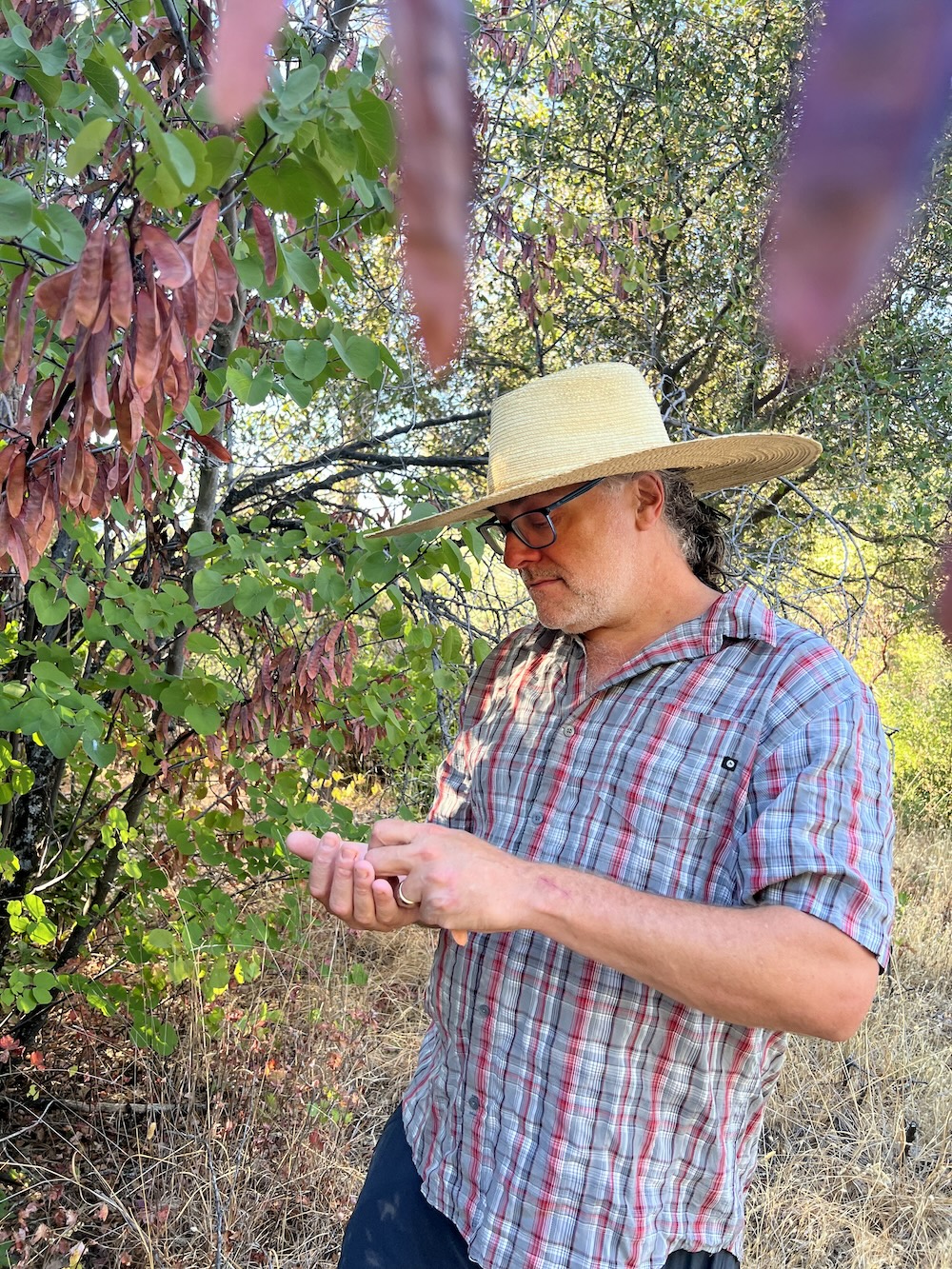
Justin Maciulis of Nevada County Native Plants (Photo by Ava Motherwell)
“We can spend so much time and energy educating people on which native plants to grow and the benefits of them, but if people can’t go out and buy the plants they want, then there is no point,” says Maciulis, whose high-touch approach to his work means propagating, cultivating, and hand-watering each plant in his 1,000-square-foot nursery.
Maciulis’ deep knowledge of—and commitment to—California native plants isn’t always easy to come by in the nursery space, where the supply of ornamental, non-native plants tends to greatly outnumber that of native plants. This imbalance has prompted CNPS to convene Maciulis and a select group of his fellow plant whisperers throughout the state to advise on the creation of online Propagation Protocols. The project, supported by the Office of Agricultural Resilience and Sustainability (OARS) at the California Department of Food and Agriculture (CDFA) and set to launch in 2027, is a database and educational resource intended for everyone from home gardeners to large-scale growers.
Patricia Bohls, who works for CDFA as a biodiversity coordinator within the agency’s Office of Agricultural Resilience and Sustainability, oversees the OARS CDFA grant funding Propagation Protocols. Bohls says the grant followed discussions with numerous constituents who wanted to grow and sustain native seed and native plants but found little reliable, publicly available information about the process.
“Hopefully this will help the supply of native plants to catch up with the demand,” says Bohls, who notes that native plants have been explicitly cited in recent California budgets as a funding priority. “More folks will be able to break into the industry with the Propagation Protocols, so that we can have more of a supply of native plants for both agriculture and the general public to utilize more—and better select—native plants for their projects.” Those projects may include anything from propagating the types of native seeds needed for restoration work to the plants that support pollinators for agriculture at farms big and small.
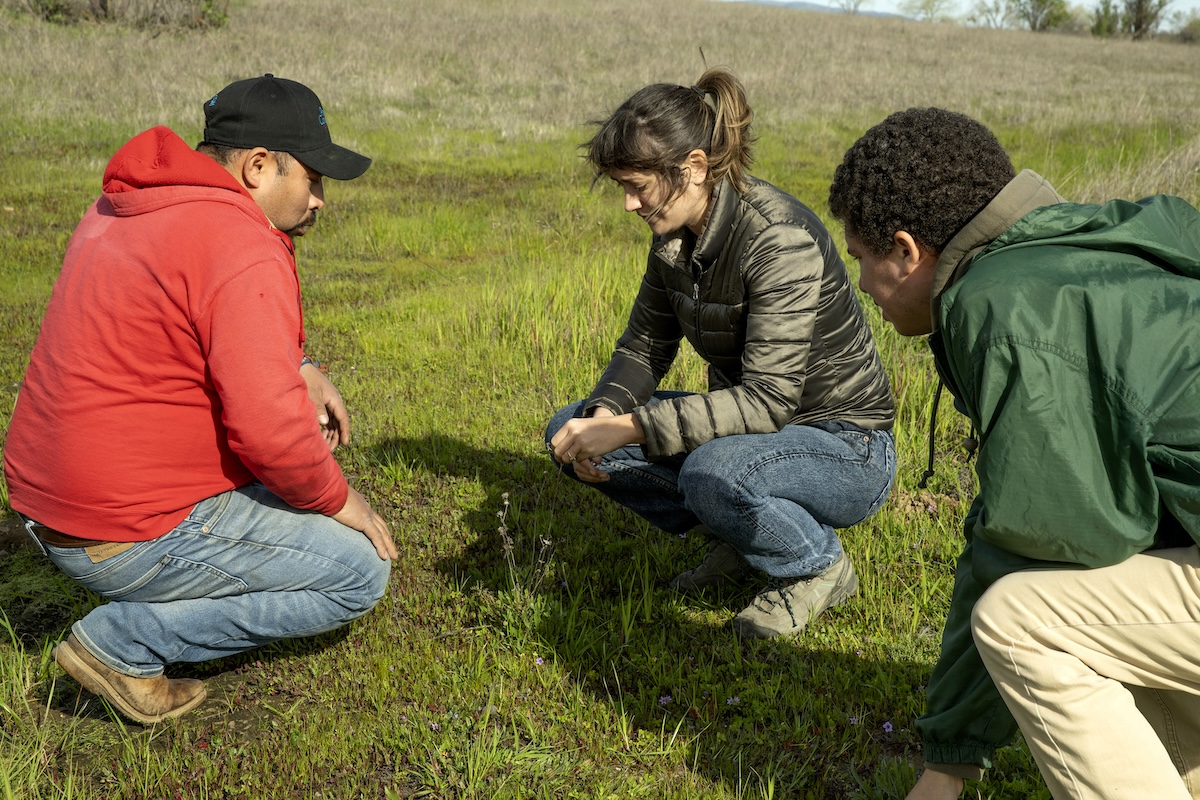
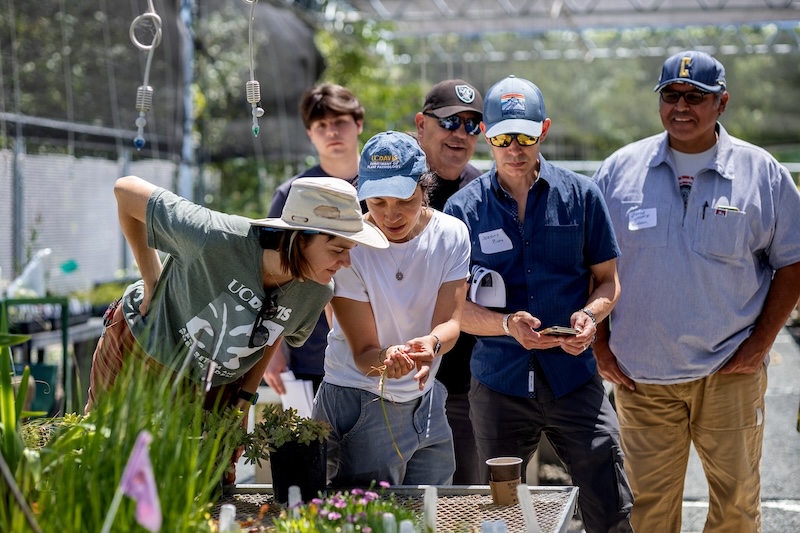
Julia Michaels (center), a restoration ecologist with Hedgerow Farms, examines Great Valley gumweed (Grindelia camporum) seed heads with fellow staffers. (Photo by Beth Savidge)
“We’re trying to pass some of that trial-and-error knowledge down to newcomers, so they don’t have to go through all the mistakes that we’ve made over the years,” says Dr. Julia Michaels, a restoration ecologist at Hedgerow Farms in Winters and also a member of the Propagation Protocols advisory committee. For instance, Propagation Protocols shares such hard-won lessons like the need for golden fleece (Ericameria arborescens) seeds to be sown immediately after collection, or how blueblossom ceanothus (Ceanothus thyrsiflorus) pods should be placed inside a paper bag at a very warm location for their seeds to pop out. This shared experience helps growers cultivate native plants more confidently and successfully, leading to increased native plant supply.
At Hedgerow Farms’ 300-acre native seed farm, Michaels and her colleagues grow native wildflowers and grasses for restoration projects across California. These include work at Capinero Creek, a 500-acre fallow dairy farm next to Pixley National Wildlife Refuge in Tulare County. To support the project, Hedgerow Farms has already provided more than 8,000 pounds of locally collected native seeds and will provide twice that amount for the next phase. In its first year, Capinero Creek was transformed into a colorful field of quick-establishing native pollinator plants including Great Valley phacelia (Phacelia ciliata) to Great Valley gumweed (Grindelia camporum). Over time, the slower-growing perennials such as big saltbush (Atriplex lentiformus) will take hold, hosting endangered kit foxes, kangaroo rats, and other grassland species.

“What we do isn’t just about trying to build up the seed supply. It’s about trying to address the disconnect between supply and demand for so many different species.”
Some projects are so large, however, that no single seed grower can handle the volume. The Klamath River restoration project near the California-Oregon border—the largest dam removal effort in U.S. history—requires about 17 billion native seeds and 300,000 young native plants to cover 2,000 acres. Massive restoration projects—and intense demand—like this take years of planning and coordination between suppliers throughout California, Oregon, and Washington. In fact, the area’s Yurok Tribe began to collect seeds for propagation in the region five years ago.
Heritage Growers, a nonprofit seed farm in Colusa, is one of the many seed suppliers involved in the Klamath River restoration. In early 2024 alone, Heritage says, it grew and cultivated 40,000 plants and 1,500 pounds of locally adapted seed for the project, including narrow leaf milkweed (Asclepias fascicularis) and Lemmon’s needlegrass (Stipa lemmonii). It’s an exacting but essential process for building native seed capacity in California. “We collect seed from the wild,” says Pat Reynolds, general manager of Heritage Growers. “We then take that material, clean it, have it tested, and then we grow that out into our farm fields. We take that pound of seed, and we turn it into 50 pounds in our amplification fields.”
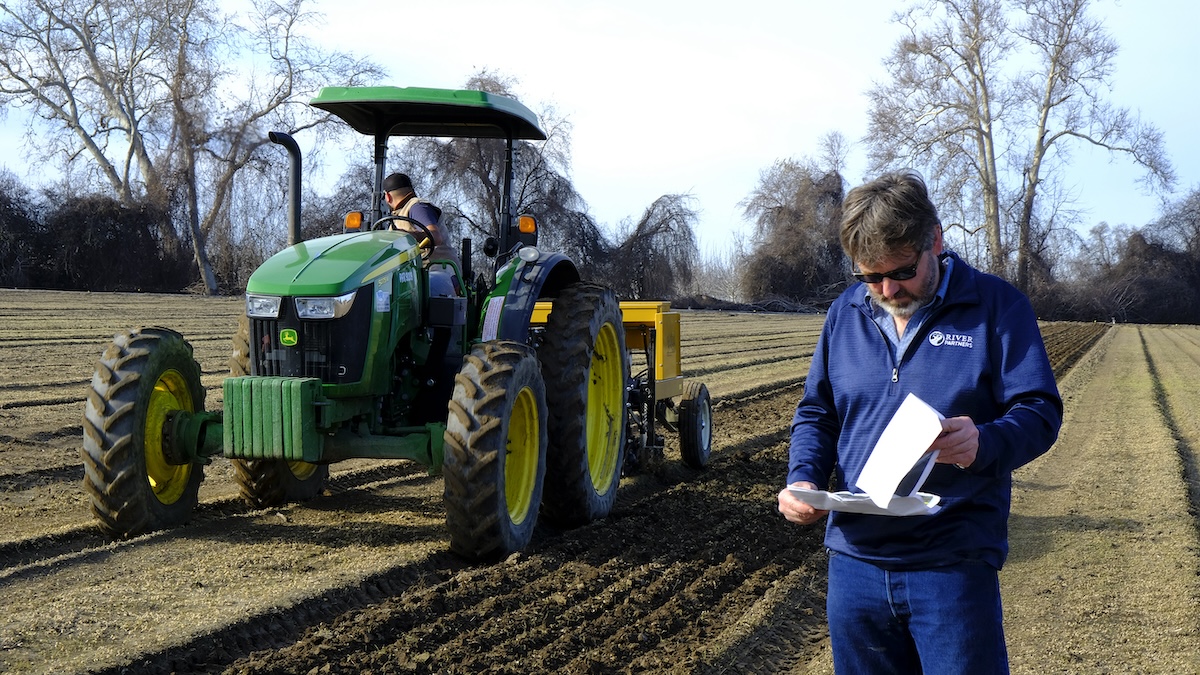
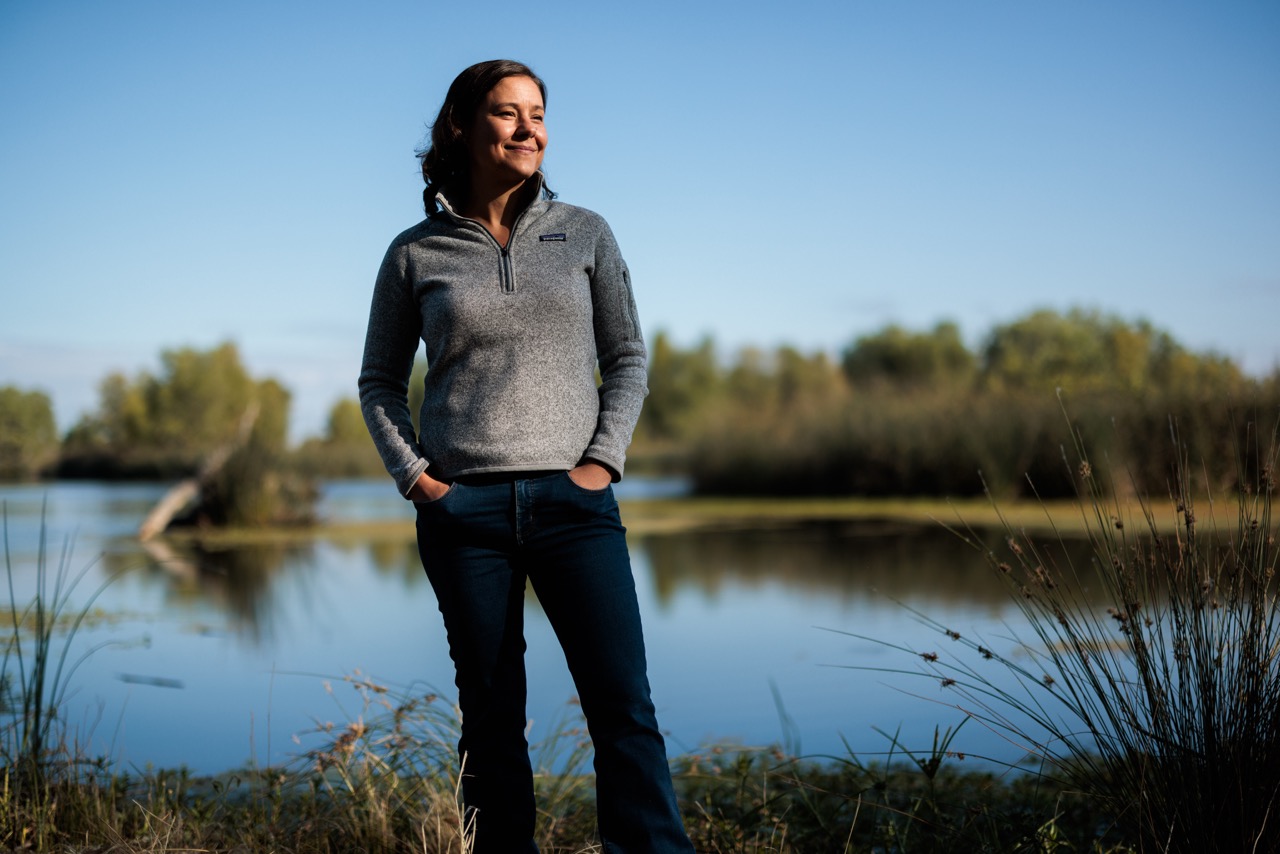
General manager Pat Reynolds reviews a planting plan for the first year of production at Heritage Growers in Colusa. (Photo by Joan Bosque/Heritage Growers)
Both Hedgerow Farms and Heritage Growers work with agencies like CDFA to forecast which seeds to produce, as well as timing the availability of specific seeds for specific projects and purposes. A special milkweed recommended by the Xerces Society, a nonprofit that focuses on conserving invertebrates and their habitats, for its monarch conservation efforts may be too niche a seed, and growers may not have enough incentive to plant it without a contract. “What we do isn’t just about trying to build up the seed supply,” Michaels says. “It’s about trying to address the disconnect between supply and demand for so many different species.”
Other experts involved with the Propagation Protocols project are contributing at the research level to buffer the native seed supply. Dr. Johanna Del Castillo Múnera’s laboratory at University of California, Davis, leads the Accreditation to Improve Restoration (AIR) Program to educate and accredit nurseries on best practices to prevent the spread of Phytophthora, microscopic organisms that devastate plant populations in nurseries, gardens, and other habitats. Del Castillo Múnera’s team has confirmed a faster way to detect Phytophthora in as little as 20 minutes, rather than the standard two or three weeks. Her team is also evaluating whether Phytophthora can be tested from water samples, not just plant tissue, which could help identify contaminated sites earlier.

Dr. Johanna Del Castillo Múnera (center) during a workshop at the UC Davis Arboretum Nursery (Photo by Matthew Chan)
“It’s a great methodology to improve the time in which diagnostics take place,” Del Castillo Múnera says. “Delivery of plant material can happen sooner, and if [nurseries] suspect plants may be infected, they can know faster whether to discard them or to implement a containment strategy.” As of August 2025, among 10 of the currently accredited nurseries in the program, none has reported cases of Phytophthora since AIR’s inception.
Sustainable native seed and plant supply—with its corresponding efforts like Propagation Protocols— is a massive, collaborative undertaking. But experts agree it is an area of change where everyone from home gardeners to large-scale seed growers can help support a more climate-resilient, biodiverse future.
“We want to build the supply so that projects are not held up by a lack of seed or choosing species that are inappropriate,” Michaels says. “It’s really about getting the right plant at the right place at the right time. That’s really what we need to do.”