Winter 2025By Stu VanAirsdale

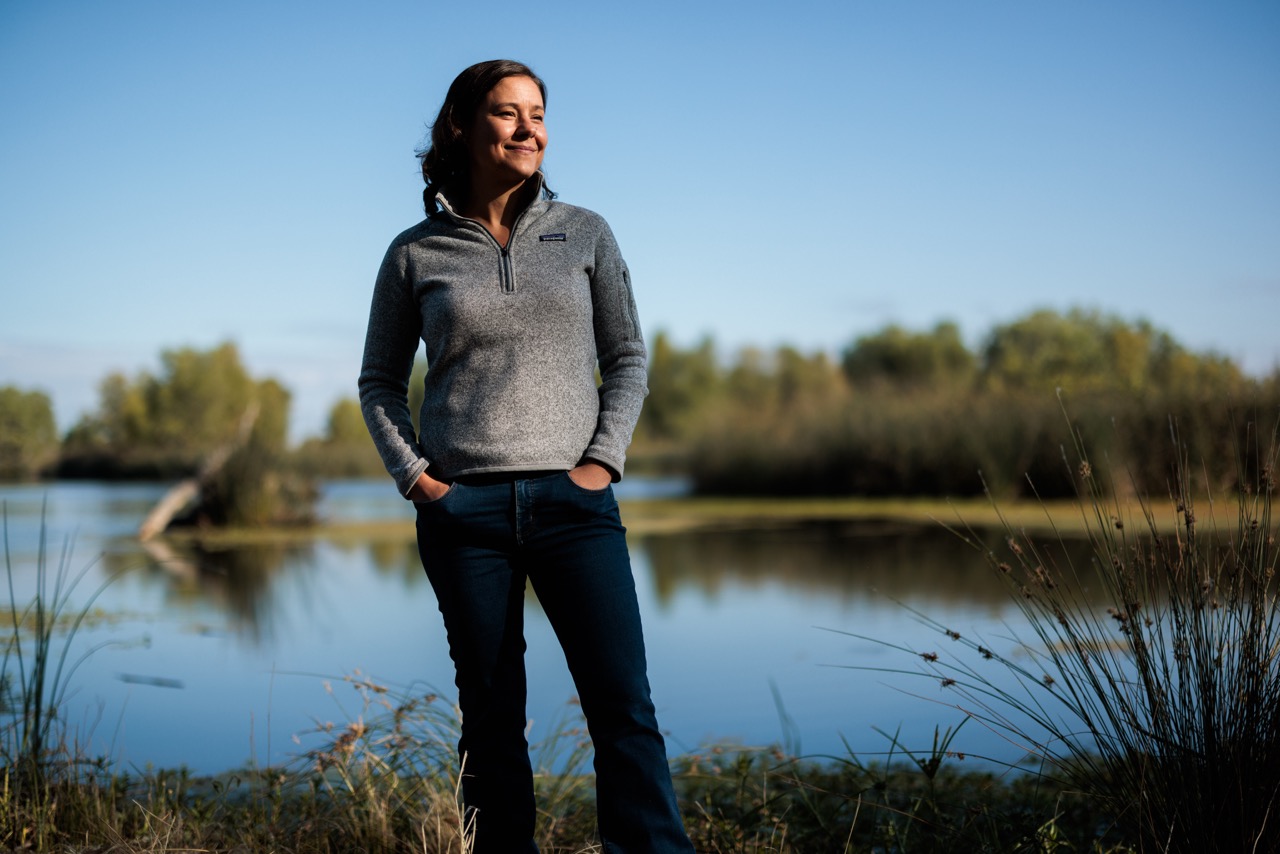
The first time Julie Clements traded a native plant, in 2011, she had just moved to Alameda with an old, potted Monterey pine (Pinus radiata) she had nicknamed Piney. She loved it, but Clements sensed—correctly—that rootbound Piney didn’t belong in her new location.
“I couldn’t just throw it away, and I didn’t want to plant it,” she recalls now from her kitchen in Sacramento, looking out on her more fully fledged native garden. Clements offered Piney to a local nursery, which proposed trading Piney for a coastal buckwheat that Clements kept until 2017, when she moved to Sacramento.
That spirit of wheeling and dealing carried over in November to the Sacramento Valley Chapter’s inaugural Seed Swap, which Clements organized at McKinley Park’s Shepard Garden Arts Center. Along with other chapter volunteers, she welcomed more than 100 people to exchange at least 2,000 seed packs, seed pods, starts, bulbs, cuttings, and other materials for around 70 species of California native plants. Part plant sale, part flea market, all enthusiastic garden geek-out, the Seed Swap made available everything from coyote mint and coffee berry to woodland clarkia and woolly sunflower for free to anyone willing to nurture a few seeds.
“The biggest objective for the Seed Swap is making native plants more accessible,” says Clements, a ceramics artist by day. “If you have a decent-sized yard, and you want to buy, let’s say, 30 to 50 plants at $13 to $17 a pop, that really adds up and makes it quite inaccessible.” With seeds, she adds, there’s just the cost of the soil and the pots—which you can recycle after putting starts in the ground, bringing costs to almost zero. “And then there’s also just wildflower seeds for annuals,” Clements continues. “So, it’ll be fun to swap species and see what people have in their own yards.”
Clements first encountered a formal CNPS seed swap in 2023, attending the CNPS Santa Clara Valley Chapter’s event that fall. She later visited a non-CNPS seed swap for fruits and vegetables in a Sacramento suburb. After that, the idea for a Sacramento Valley Chapter Seed Swap quickly gained momentum. Clements and her chapter peers established basic guidelines—only swap clean seeds for home garden planting, and take only what you can plant and tend to this season.
The results, on a blustery mid-autumn Sunday, were a hit. Folks strolled table to table with boxes and bags of seeds, cuttings and more. A man from Yuba City, north of Sacramento, wandered in with a cardboard tray stuffed full of California Dutchman’s pipevine (Aristolochia californica) seed pods. He placed it on the “Herbaceous Perennials” table, where visitors spooning tiny scoops of blue flax (Linum lewisii) and electric blue penstemon (Penstemon heterophyllus) into mini-envelopes looked on at the ping-pong ball-sized pods, gobsmacked.
Behind the table, Clements nods at the offerings before her. “That must be a giant pipevine to get that many,” she says. She’ll take some home, along with a few of her other nifty swap finds of the day—woolly milkweed (Asclepias vestita), purple milkweed (Asclepias cordifolia), and the delicate, colorful annual known as “spokepod” (Thysanocarpus radians).
But maybe the best discovery of the day for Clements? After all these years of trading, these swaps still grow happiness. “I kind of expected everybody to be really enthusiastic, but people are having a really good time,” she says. “It’s joyful.”