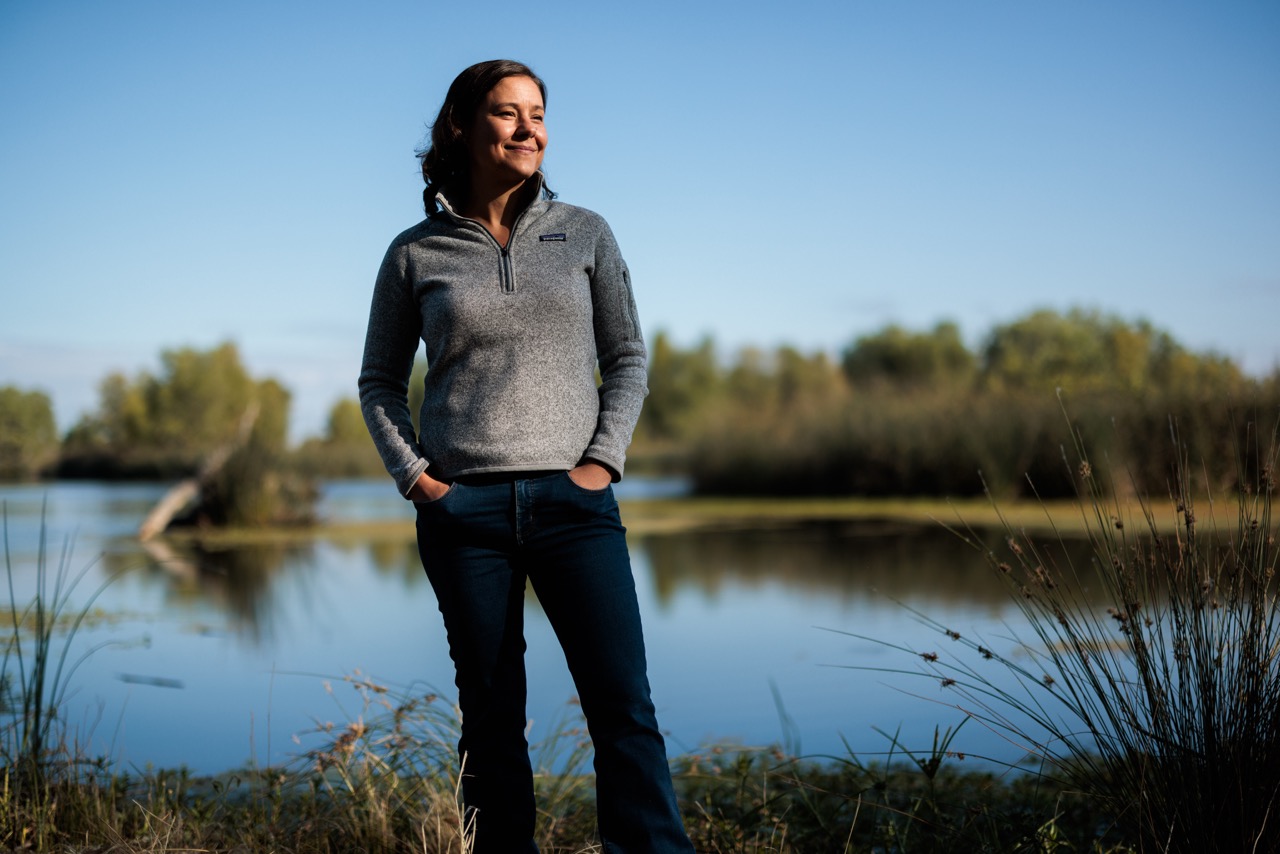
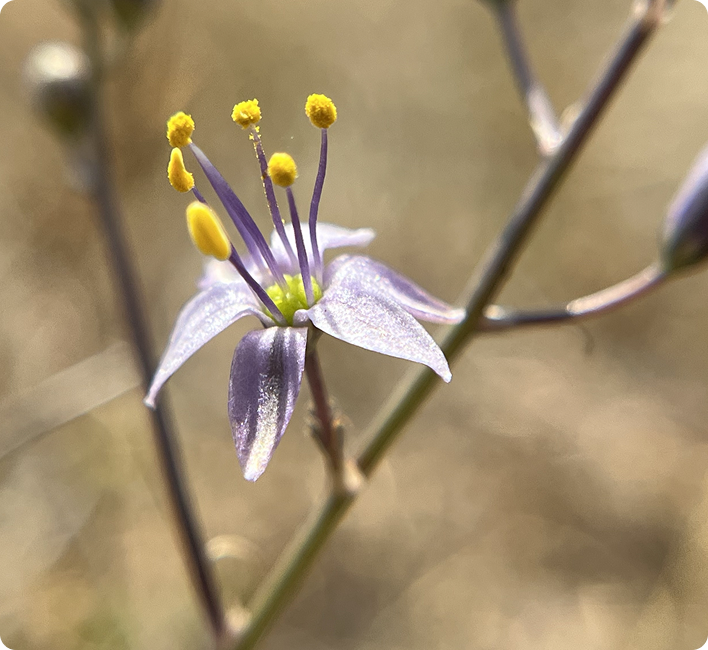
Spring/Summer 2024By Maya Argaman / Photos by Deborah HalfpennyWhen Deborah Halfpenny and her partner, Dan Eyde, retired to Chico in 2017, she had a chance to learn how to design a garden in an entirely new climate. After decades of living and working as a landscape professional along the California coast, Deborah discovered new plants, developed new watering regimes, and learned to confine planting to the cooler, rainy months.

She wanted to create a peaceful sanctuary in her suburban environment and a cool, shady oasis during the very hot summers. When she moved in, the house on this quarter-acre property was surrounded by mature, non-native trees and shrubs, as well as a lawn and a large vegetable garden. The land was originally oak woodland and grassland on an alluvial fan with the deep, rock-free soil that trees love. Now, Deborah allows volunteer oak seedlings to take root where they sprout as long as they won’t cause damage to existing infrastructure. As these volunteer oaks grow, she will change surrounding plantings to adapt to the increasing shade.
For Deborah, it is most important that “California continues to look like California” and supports wildlife. With those goals in mind, she also designs for year-round privacy using native, evergreen shrubs and grasses with a quiet, calming color palette and lots of texture. Her landscape is designed to allow for rowdy dog activities, too!
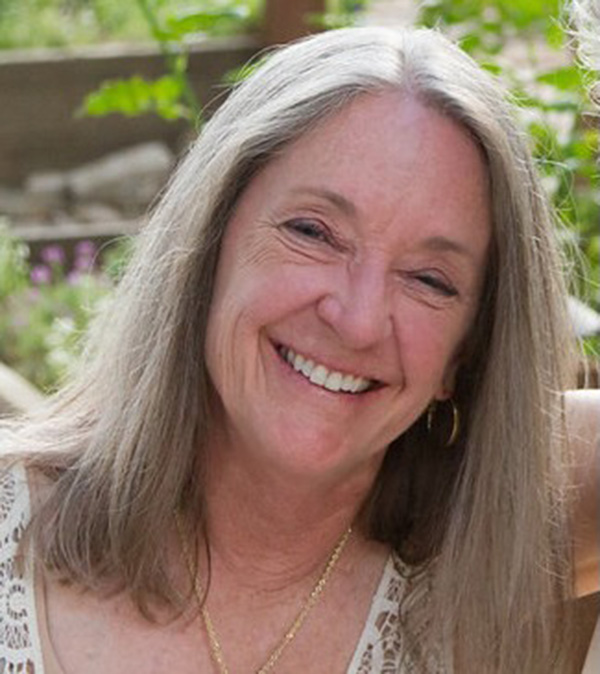
The garden currently contains 125 different native species, providing a good experiment to see what works best. Deborah’s favorite natural element of the garden is a Northern California black walnut tree (Juglans hindsii) with a 5-foot-diameter trunk and a 60-foot-diameter canopy. This giant shades a large portion of the backyard. She also loves her birdbath, made with recycled materials, which serves as a focal point for the best bird viewing.
Besides her volunteer work as a CNPS garden ambassador and Calscape Committee Member, Deborah is currently the coordinator of Altacal Audubon’s Neighborhood Habitat Certification Program. The program encourages gardeners in Butte, Glenn, and Tehama counties to remove their lawns and replace them with native plants to restore habitat and save water.
You can follow Deborah on Instagram @halfpenny_hort and @neighborhood_habitat

About the Garden
in Deborah’s words
Installation
Every designer I know says the same thing: Designing your own garden is the hardest job you’ll ever undertake!
Irrigation
Automatic sprinklers have been converted to drip and hand watering.
Maintenance
Done by me with help from Dan—and none from Grace, the dog.
Wildlife spotted
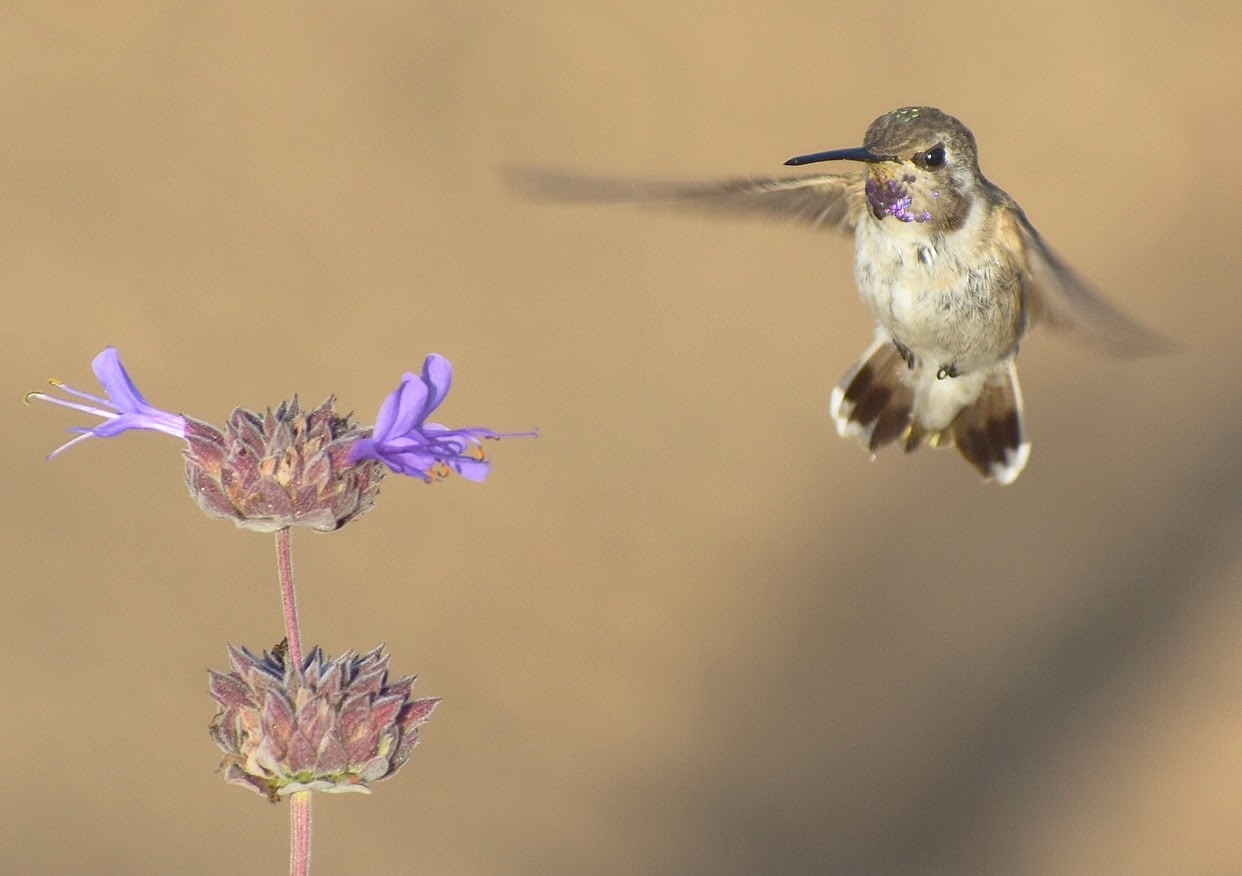
Over 60 species of birds, including resident red-shouldered hawks, as well as opossums, raccoons, gray squirrels, woodrats, skunks, alligator lizards, and chorus frogs. The garden is a breeding ground for tiger and pipevine swallowtails plus other butterflies, bees, wasps, and dragonflies.
Favorite native plants in the garden
My favorite plants are always the ones that grow the best on whatever site I’m working. For this locale, my favorites are local natives valley oak (Quercus lobata), toyon (Heteromeles arbutifolia), deergrass (Muhlenbergia rigens), Oregon grape (Berberis aquifolium) and soft rush (Juncus effusus). Non-local favorites are cultivars Rosada coral bells (Heuchera ‘Rosada’), Chisai field sedge (Carex praegracilis ‘Chisai’), and Roger’s Red grape (Vitis ‘Roger’s Red’), as well as shade-tolerant favorites California fescue (Festuca californica), evergreen currant (Ribes viburnifolium), Douglas iris (Iris douglasiana), and blue-eyed grass (Sisyrinchium bellum).
What are the biggest challenges in your garden?
Integrating native plants tastefully into an existing 60-year-old Asian-inspired ornamental garden. I am loath to remove any existing large tree or happy old shrub in this climate because shade is an existential imperative. So, I blend the non-natives with the natives in an artful way as an interesting challenge.
How do you like to spend time in your garden?
Most of all, I love the continued work, the learning, and the design tweaking. But when it’s time to relax, I love playing Frisbee in the shade of the walnut tree with our dog, Grace-the-Garden-Guardian. Finally, it is my joy after seven years of constant work to be able to sit at the patio table in the evenings, drinking wine with my friends and family, and enjoying the beauty, the bounty, the birds, and the butterflies.
What tips do you have for gardeners who want to start working with native plants?
Resist buying “just one or two” of every tempting plant at the nursery. Make a good plan and stick to it. Remember that a garden should be more than a collection of flowers: Be sure to include trees (both upper canopy and lower canopy, if you have the room), evergreen shrubs, grasses, and ground covers to ensure that your garden looks good throughout the seasons and you’re providing a range of habitats for many species of wildlife. Find a viewable place for a simple water feature and use only the most essential lighting.