Spring 2026
Interview by Stu VanAirsdale
Portraits by Alisha Jucevic
It’s no secret that even some of Earth’s most resilient landscapes—and the native plants that call them home—need a little help from their friends to keep their ecosystems thriving and sustainable.
Dr. Naomi Fraga knows this firsthand. As the Director of Conservation Programs at the California Botanic Garden in Claremont, as well as an associate professor at Claremont Graduate University, the lifelong Southern Californian has spent more than two decades working to expand the appreciation—and defense—of native plants. Her writings and public appearances have showcased the natural marvels of everything from wildflower superblooms to desert monkeyflowers to ancient groundwater. They’ve also underscored her advocacy of such marvels in the face of unprecedented threats to public lands and biodiversity. Meanwhile, her mentorship of graduate students and other young native plant enthusiasts continues to strengthen the foundation for facing biodiversity challenges in generations to come.
Fraga spoke to Flora about her unexpected introduction to botany, finding her voice as an advocate for native plants, the bustling beauty of her home garden, and why the desert continues to inspire her year in and year out.

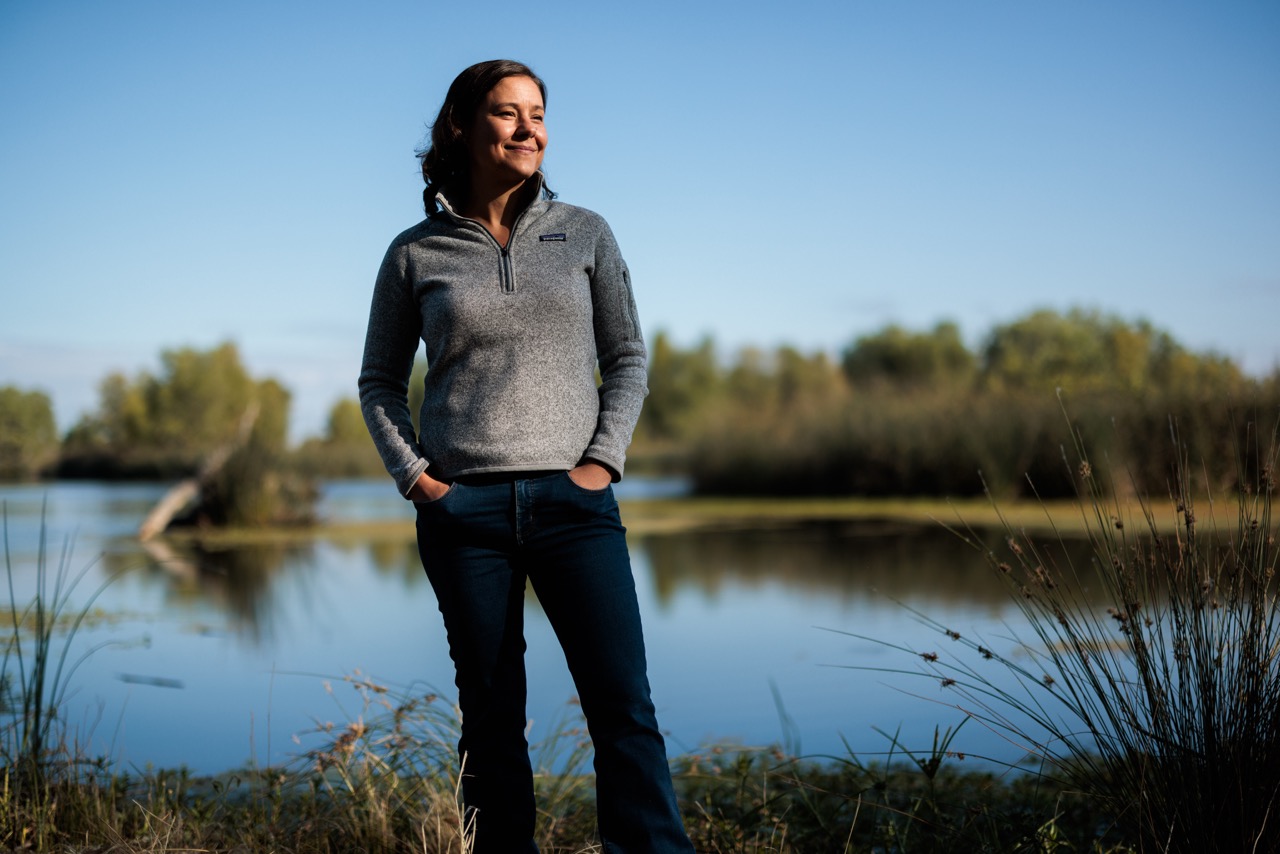
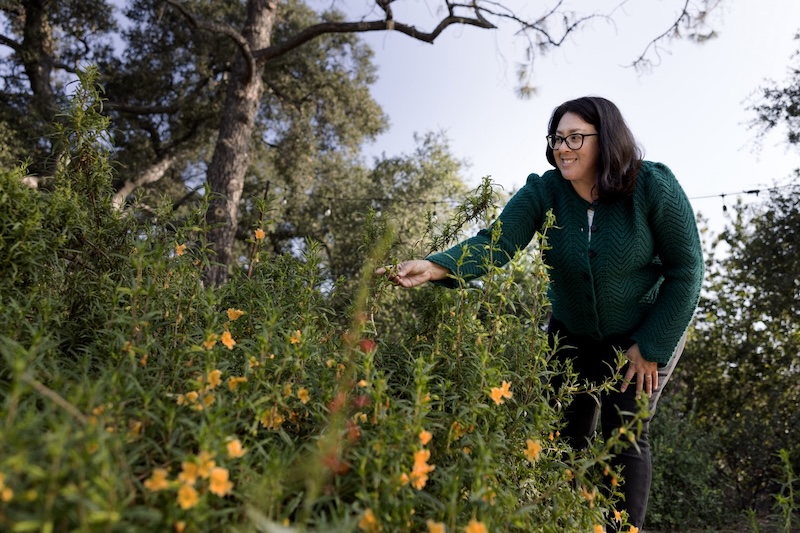
Dr. Naomi Fraga is pictured in the Joshua Tree Woodland area of the California Botanic Garden in Claremont, Calif., on March 5, 2026. Fraga serves as the Director of Conservation Programs at the garden.
Flora: You’ve noted previously that you didn’t become acquainted with California native plants until you were in your 20s, as an undergraduate majoring in biology at Cal Poly Pomona. What was that first encounter, and how did it change you?
Dr. Naomi Fraga: I remember taking a class called Chaparral Biology, with a lot of group projects. I remember we had to pick a plant that we wanted to study herbivory on, and we found yerba santa. None of us knew what the plant was. I had already started volunteering at the herbarium at the California Botanic Garden, so I brought in a piece of the plant [to research]. I just remember feeling like my eyes had been opened to the plant world. All of the sudden I saw this incredible diversity I didn’t know anything about. I remember feeling very overwhelmed that there was so much to learn, and where would I even start? How would I become a botanist if I don’t know these very common plants? That was around the same time I took California Flora and Vegetation, learning the skills of how to identify and key plants.
My very first plant collection was a very common plant—Heterotheca grandiflora, which is called telegraph weed. It’s a native plant, but it’s considered a weedy native plant. I have much fondness for it because it was the first plant I ever collected and identified and made an herbarium specimen of.
How and why did you become interested in biology and studying biology in the first place?
NF: I had an interest in environmental conservation in general. I actually was the kind of kid who worried about the problems of the world a lot. I would go to bed and lay there at night thinking, “Oh my gosh, the landfills are overflowing. What are we gonna do?” [Laughs] I became aware of ocean pollution because I had gone to the beach a lot as a kid; I would say the beach was my first understanding of natural ecosystems. I ended up going to the local state school, where I was a typical student in the Cal State system: A lot of the students there are first-generation, commuting college students. I thought I had to abandon my dream of being a marine biologist because I was going to Cal Poly Pomona. What famous marine biologist comes out of Cal Poly Pomona?
I thought I might become a social worker, but I quickly learned I didn’t like sociology or behavioral science. But I took a class called “Mind, Brain, and Behavior,” which was all about the biological workings of the brain. And I just knew I had to change my major to biology. I was very lucky that they had many plant classes and a whole botany major. The biology major’s core classes included many botany classes. I didn’t know what I could do with my degree, but eventually I found a volunteer opportunity at Rancho Santa Ana Botanic Garden—now California Botanic Garden, which is where I still work today.
You’ve since earned a Ph.D. and become a prolific and esteemed field botanist, documenting numerous interesting and scientifically significant discoveries. What are your favorite or most notable finds in recent years?
NF: Right now I’m engaged in research describing two new subspecies in the species Chloropyron tecopense—the Tecopa bird’s beak. I’ve been studying it since about 2016. It’s found in the Amargosa River basin and in Fish Lake Valley, Nevada. I knew there was a set of populations that occurred 150 miles north. I went to go check them out, and I didn’t see anything immediately discernible that looked different. But we’ve since gathered genetic data and a lot of ecological data, and they’re actually quite different. They’re very genetically divergent from the plants where they were originally described in Tecopa. It turns out there are plants that grow in the Ash Meadows area as well—about 30 miles north of Tecopa—that are also very different from the plants in Tecopa. So we’re describing two new kinds of bird’s beak—all very rare and highly threatened. I just think if botanists really drilled down into a specific plant group or area, there are so many opportunities for learning and peeling back all those layers of time and in geography. There’s a whole world there that we don’t understand.
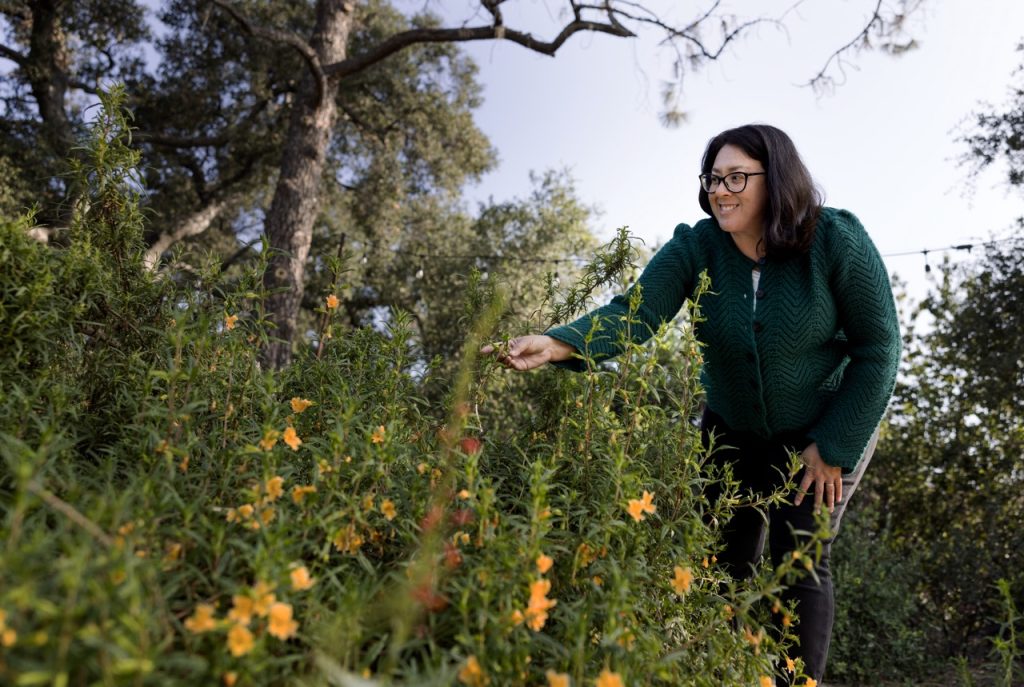
Dr. Naomi Fraga looks over the bush monkeyflower (Diplacus aurianticus) at the California Botanic Garden in Claremont, Calif., on March 5, 2026.
You’re an expert in monkeyflowers, having identified at least five new varieties in your career.
NF: I described five species for my dissertation, and there are others I haven’t yet described that I know about.
Let us know when you’re ready to break that news! What is it about these plants that so appeals to you?
NF: I just think of monkeyflowers as emblematic of the California flora. They occur in nearly every environment you could think of in California—from the coast to the desert, from lowlands to the highest elevations, on a diversity of soils. A high percentage of them are
rare. They’re particularly diverse—among the most species-rich in California. One of them should have been the state flower.
It can’t be the state flower, but maybe you have a favorite?
NF: I’d choose the Red Rock Canyon monkeyflower (Erythranthe rhodopetra), which is one of the species I described. It’s endemic to Red Rock Canyon State Park, with a very narrow range and a very specific habitat in these washes in the desert. It has incredible pink flowers; it’s just a vibrant, showy, delicate monkeyflower. It’s rare and unexpected, but it creates these abundant displays that are very accessible. If you’re driving up Highway 14, you could just park on the side of the road and see it.

Fraga in March 2005, backpacking in Short Canyon. The area was the focus of Fraga’s master’s thesis research. (Photo by Daniel Brock / courtesy of Naomi Fraga)
Accessibility seems like a cornerstone of your work. Your writings and public appearances in particular have earned you a following among non-academics. How do you think about your role as a communicator on behalf of plants?
NF: It’s very important to me, because I always remember where I started. I was very humble, and I didn’t know anything about plants, so I feel a sense of duty to help other people connect with plants. It’s a very primal part of human existence. We’ve relied on plants throughout civilization. They’re fundamental to all terrestrial life. But in our modern era, we’ve created these urban societies that have divorced us from the very nature that we rely on. That was me for my first 20 years: I didn’t know what was there and how it contributed to my everyday life, my health, my wellbeing, my sheer existence. I just want more people to be able to come to that realization and rebuild those connections.
What are some of the things you have learned as a mentor for early-career botanists?
NF: I love it. I work not only with graduate students, but also with interns who are very much like I was in my formative years: They’ve never been hiking or camping. It’s their first time driving away from cell phone service. I take them out to the desert in the summertime, and we get really early morning starts so they get to see desert sunrises. You can just see the wall sort of crumble down, where they’re able to see this whole new world.

“I always remember where I started. I was very humble, and I didn’t know anything about plants, so I feel a sense of duty to help other people connect with plants. It’s a very primal part of human existence.”
How and when did you find your voice as a conservationist, especially around desert plants and habitats? Was there a specific region or species that alerted you to the needs or challenges at hand?
NF: I grew up in Los Angeles, where [from some places] you have to drive into the mountains or several miles before you find a native plant. That contrast—my experience in those two areas—made me think about what was present in Los Angeles prior to urbanization and development and what had been lost that I never even got to know about. For example, the Los Angeles sunflower (Helianthus nuttallii ssp. parishii), which is presumed extinct. Now there’s a whole new wave of development and industrialization happening in the desert. People tend to see deserts as desolate wastelands. But I’ve been studying plants in the desert now for over 20 years, and I’ve seen the most amazing things and just incredible life there. Studying rare plants, recognizing their vulnerability, and seeing populations continue to decline with limited protections has compelled me to see what I can do to move the needle on conservation.
You’ve proven to be a compelling advocate on social media and in working with the media. What’s your approach?
NF: I think sometimes scientists have a view of themselves as very objective, wearing a white lab coat and collecting data. I like to break down that image and be personable and approachable. I had experiences as an undergrad where professors would explain things in more complicated ways than they needed. And to me, it presented a barrier to learning. In my advocacy, I try to explain the importance of plants in plain language—my enjoyment of them and the primal feeling of being connected to nature. If I’m the avenue for getting that message out, then I’m totally fine with that.
What or where are some of the biggest specific threats currently facing wildflowers and their habitats around California?
NF: Let’s take the Antelope Valley California Poppy State Reserve as an example. Out there, we have exurban sprawl encroaching all around, with industrial and solar [development] as well. These kinds of developments can enhance the spread of non-native plants, which can overwhelm and crowd out the native wildflowers. So here is this treasured resource stewarded by the state of California, but is it going to become a postage stamp surrounded by a patchwork of different land uses and designations? That could be the future: just these little postage stamp preserves. Carrizo Plain National Monument is fairly large, but it was much more expansive in the past. So how can we maintain what still exists, and also think about rewilding and bringing superblooms back closer to urban populations—less “urban vs. poppy preserve”?
Your work shows a deep love and appreciation for the Amargosa River basin. What is it about this area of California and adjacent Nevada, near Death Valley, that connects with you?
NF: Well, it is the hottest, driest place in North America. Yet in this place, there are these incredible, lush wetlands fed by ancient groundwater that originated as snow or rain during the last ice age. It filled up these extensive groundwater basins. That water takes a long time to cycle through the system, but as it expresses, it seeps out of the ground at springs. Some of that water is potentially up to 10,000 years old. So here are these very rare plants depending on ancient water, and that whole system just fascinates me. In a sense, I think about these ecosystems living on borrowed time because that water won’t last forever; the modern-day recharge into those groundwater systems isn’t sufficient to replace all the water that’s coming out of the system. Those plants are threatened by the extraction of groundwater for various uses, as well our drier era brought on by climate change.
If the groundwater wasn’t being withdrawn at an unsustainable rate, then as the habitats change into the future, the plants would have time to adapt. But the usage of the water could cause catastrophic change; once you’ve depleted the bank, that’s it. We can’t replenish it. They’re such special, unique plants that have really captivated me, and I keep going back.
As you elaborated on that ecosystem—particularly on the plants themselves—you had a big grin on your face. What about them makes you smile?
NF: It’s just fascinating and strange and so unique in this world. There are other places that have these groundwater-dependent ecosystems, like down in the Atacama Desert in Chile. It actually has plants that are relatives of the plants we find in this part of the Amargosa basin—the same genus and/or the same species—and they’re subject to similar threats. The water evaporates and leaves behind all these salts, so there’s been a lot of mining in these places. I guess I found a sufficiently unusual place that will keep me busy for the rest of my life.
You have quite a lovely native plant garden at home in Pomona. What are a few of your favorite plants there?
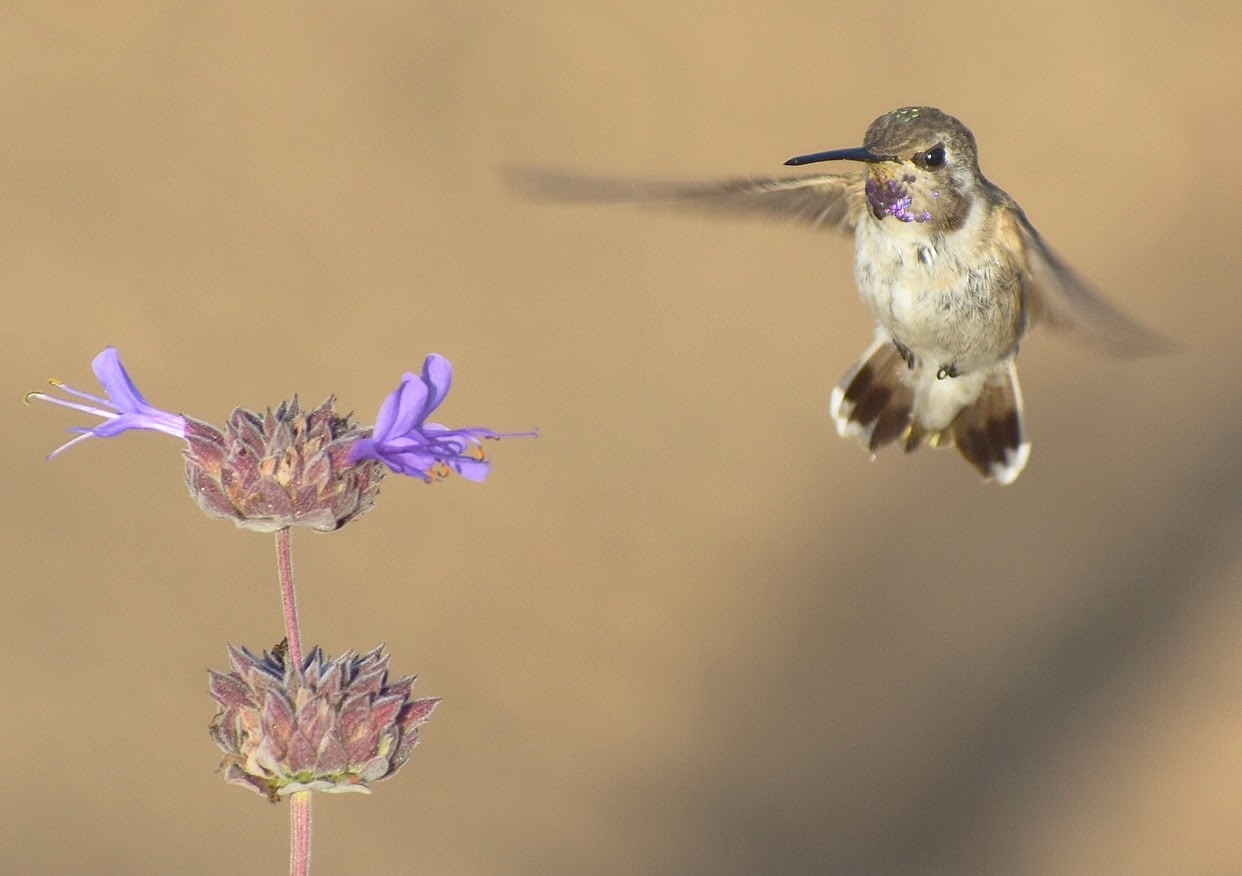
NF: You know, in the wild, I have a tendency to gravitate towards flowering plants—little annuals and herbaceous perennials. I’m not a woody-plant kind of person. Not that I have anything against woody plants! But my bigberry manzanita (Arctostaphylos glauca) has turned out to be one of my favorite plants. It has taught me so much about the life of a plant and all that it brings. It’s probably 7 feet tall and flowers fully every year. It produces fruit and hosts hummingbirds year-round. The native bees visit it. It calls life to it like a beacon. And then there are little lizards scurrying underneath; there’s like a whole ecosystem in its understory. I didn’t realize how important just a single manzanita can become. I expected to see more native life appear with the planting of a garden, but I didn’t expect this richness.

Dr. Naomi Fraga at the California Botanic Garden on March 5, 2026.
Does gardening with native plants at home help round out your research efforts in the field?
NF: It really does. It’s part of my continual development as a plant person and building my connection to place—maybe even a form of restoration. I love tending to plants as they mature and seeing their change through the years. Tending a garden is part of the continuing education of learning about plants and ecosystems. When I first came to plants, I was really focused on how I could become the best scientist. I read all the books and talked to all the scientists. But as you go along your career path, the plants become your teachers. The plants have always been our teachers.