Spring 2025
By Jun Bando & Stu VanAirsdale
Photographs by Bryce Craig
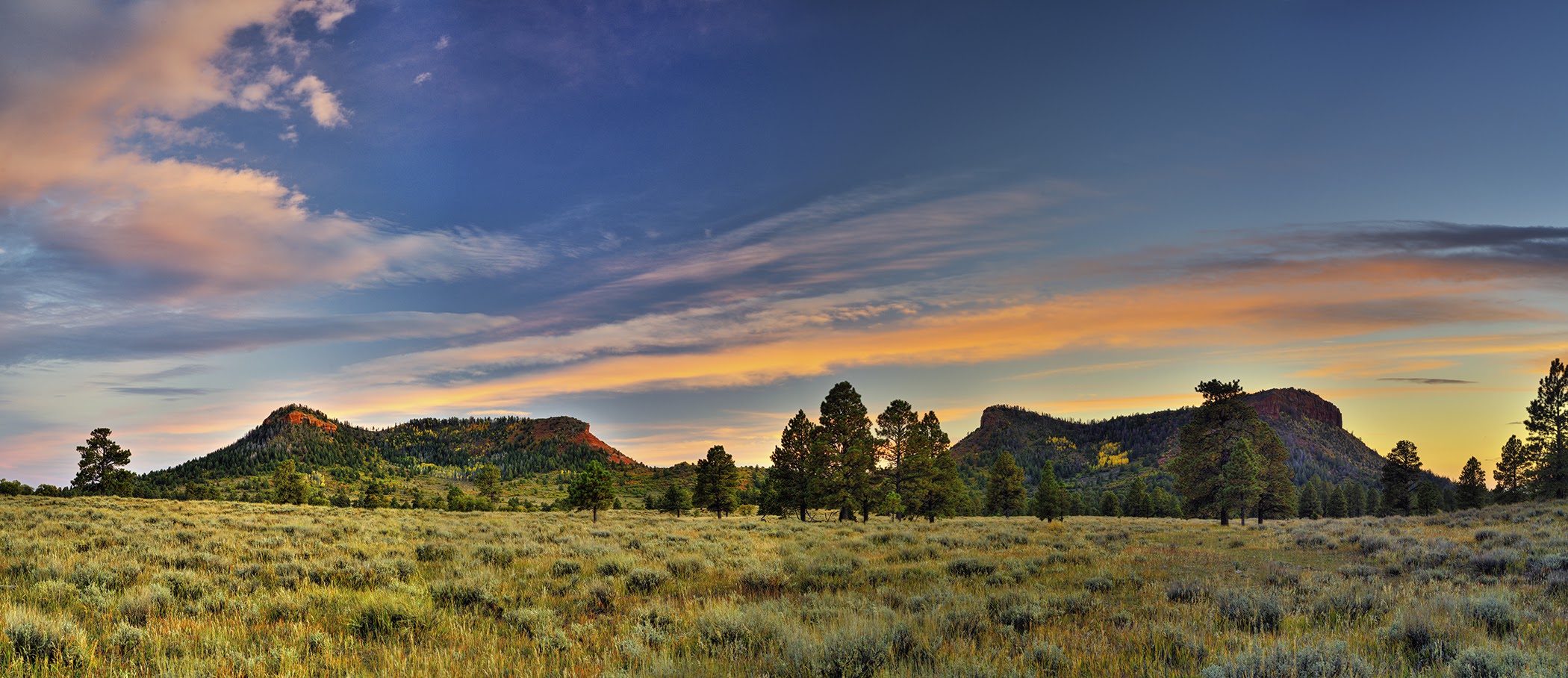
On a frigid January evening in Washington, DC, Radley Davis looked on as former President Joe Biden took the stage at the White House to officially designate two new monuments in California. In the south, Chuckwalla National Monument encompasses over 620,000 acres of desert ecosystem and lands sacred to the region’s Indigenous Peoples. In the north, Sáttítla Highlands National Monument preserves just over 200,000 acres of mountainous woodlands around Medicine Lake Volcano, containing more than 450 species of native plants and trees.

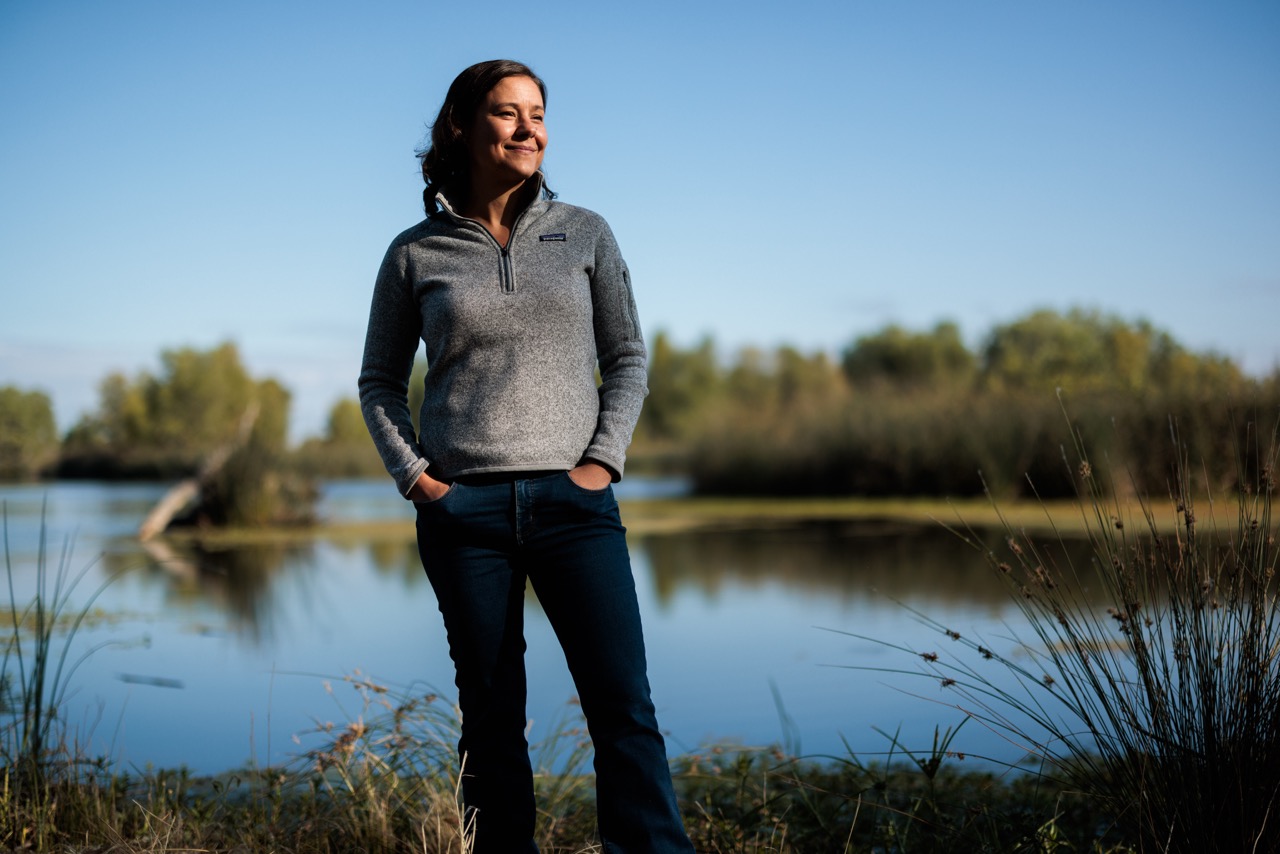
Radley Davis, of the Pit River Nation, photographed at Sáttítla Highlands National Monument on March 4, 2025. Davis is among the Tribal leaders who campaigned for the monument’s designation, which President Joe Biden signed in January.
Decades in the making, the moment held tremendous significance for Davis, the Pit River Cultural Advisor, and other Tribal members whose traditional homelands encompass Sáttítla Highlands. The area remains a site for ceremonies and activities practiced by Indigenous Peoples including the Pit River, Modoc, Shasta, Karuk, and Wintu nations, and its surroundings have nourished and inspired Davis for a lifetime. Working with a coalition of local officials, state agencies, and allies (including CNPS), Davis served among the Tribal leaders who campaigned to protect Sáttítla from geothermal development, poaching, and other incursions on the land.
After the historic designation, Flora spoke with Davis about the long road to Sáttítla’s monument status, the meaning of co-stewardship, the value of coalition-building, and the case for safeguarding nature in the months and years ahead.
First of all, Radley, congratulations, and thank you for your work to protect Sáttítla. The Pit River Nation worked for decades to protect the area from geothermal development, and both you and your wife Brandy McDaniels had vital leadership roles in seeking national monument designation for Sáttítla. How does it feel to know this area is finally protected?
RD: It feels very good. We have been part of building awareness of and protecting the area for almost 30 years. We’ve been advocating for the monument since the Obama Administration, and for the past two years, we’ve committed to the [monument] process. We’ve seen what the land means to our people and the Tribal people in the area, as well as to people who have had the honor to meet many of our elders. It feels really good that there’s a collective commitment to the future in protecting what’s at Sáttítla. It’s a good feeling to see something through, particularly working with folks who have historically disrespected us, such as the federal government, state government, county governments. It’s pretty exciting.
You alluded to the inseparable relationship between people and land. Can you describe your personal connection to Sáttítla Highlands, and why this area is so important to Pit River and other Indigenous Peoples?
RD: When we want to go up there upon the mountain, we learn that this mountain is connected to the meadow down below. It’s connected to another mountain, connected to the water. It’s connected to the plants and connected to the animals that live in the area. If we are going there to pray, that is a special place to go and feel this connection. We’re taught to fast, to stay awake, to eat the plants and drink the water. Everything’s connected—to the galaxies, to the stars, to the air, deep down into the Earth to the roots. Our connection is like a mother and a child. That’s why we don’t say we own the land. We say we belong to the land, just like a mom and a child. And that seems to help people understand that if you can go there, there are so many ways you could look at these connections.

“Our connection is like a mother and a child. That’s why we don’t say we own the land. We say we belong to the land, just like a mom and a child.”
Belonging, not owning—thank you for that, Radley. A broad coalition advocated for the establishment of this national monument, including other local community members, businesses, veterans, environmental groups, and others. What was it like to work with this diverse coalition?
RD: That’s a good question. Before we could have a partnership, I really felt like we needed to have a relationship. I wanted to be part of a group of people who worked on the monument with open minds, building relationships so that trust can be developed. Building relationships is so important, especially when one has been [excluded from] a system. I never considered us a stakeholder; I always advised my Tribe that we’re decision-makers. But it was all good. I saw who we could open up to. I could go back to my circle and say, “Hey, this is pretty good: The groups that we worked with are like-minded in needing to protect the Earth and its biodiversity. We trust each other. Our values are aligned, and they’ve worked with other Tribal peoples.”
What prompted the Tribe to pursue a national monument designation for Sáttítla? How and when did you become involved in that effort?
RD: Our attorney, Deb Sivas, asked if the Tribe would be interested in pursuing a monument designation [for Sáttítla Highlands] with some help. Simultaneously, we had been fighting this project in our homelands called Fountain Wind—a big wind turbine project covering about 30,000 acres in the Tribe Madesi Territories. We had been pretty successful in mobilizing our community and responding to the California Environmental Quality Act [CEQA] and the Board of Supervisors for Shasta County, and we got them to vote 4-1 against it. We demonstrated how to work with each other—a caring community, in our view.

Davis at the White House with (L-R) his daughter Harper Davis-McDaniels, CNPS Executive Director Jun Bando, and his wife and fellow Sáttítla campaign leader Brandy McDaniels. (Photo credit: Courtesy of Jun Bando)
How has the work to support a national monument designation changed your relationships with policymakers? The environmental community?
RD: It’s good for Pit River Tribe to be known to work with policymakers, conservation entities, environmental organizations, businesses, local folks, and surrounding Tribes. I would say that with the experience of seeing something through to the end—where we went to the White House and [saw] the President sign the monument designation—our Tribe and peoples got to see that we can work together and be part of change that is necessary and successful.
There are concerns that the new administration in Washington, DC, may want to walk back protections of some national monuments. Why should the continued protection of Sáttítla Highlands be important to all people, regardless of politics?
RD: Well, one big concern for all of us is fires. The [US] Forest Service has been attacked by everyone about forest management. The monument designation gives the Pit River Tribe some say in a plan for fire mitigation, and an opportunity to be at the table to [influence] different thinking in a place where we’ve never been included. We want protection of sacred areas for gathering medicinal plants, and the protection of the pristine, pure clean water up there. We need better education for people about the future of land use and [land] access up there. Based on the listening session that we had [in December 2024] in Weed, the majority has the same common interest in protecting and preserving this special area. Nobody wants a big industrial complex of geothermal development up there. We’ve developed trust with landowners and businesses. We’ve asked them, “When did BLM or the United States Forest Service come to your meeting and ask you what you wanted or needed? Pit River Tribe is here.”
That’s been a game changer for us, and we’ve honored that in listening and dialoging with our communities. We’ve been able to help each other out where the government doesn’t have an answer. Those are the kinds of things we would tell the administration about the importance of a community that is thinking about the future of their land and the grandchildren who will inherit this.
What are some of the notable natural features of this land, or specific places within Sáttítla that are particularly meaningful to you and important to your wellbeing?
RD: We have Glass Mountain and Little Glass Mountain, and Mount Hoffman is a spectacular place. It’s got a lot of medicine there—the “Indian Tea,” as we call it. Some place on Glass Mountain, you’ll see the features there that look like people—they’re frozen. At certain angles in the distance, they look like people. That’s a cool part about our narratives: When we talk about the land, the proof is in the land. Like, “That feature looks like a footstep,” you know? “That looks like a person, that looks like where the bear was clawing, that’s where the mountain lion was sliding in the mud when the world was being created…” There’s Mount Lassen, Soldier Mountain, Burney Mountain, Mount Shasta, and Medicine Lake—the waters in the caldera [volcano basin]. After all those steps, I like going to the water and washing my face.

Davis cites the Douglas-fir among the most versatile, powerful trees in the Sáttítla Highlands: “When it leaks with pitch, you can eat that. That’s actually healing.
We’re taught that the world is perfect. We are perfect. It’s made perfect. That place up there is perfect. That’s why I don’t want anything built there. When you go, you have this understanding of its creation, and you’re part of that creation. We say your path is already laid out when you’re born. You’ve just gotta find it. You’ve gotta find your mind, you’ve gotta find your eyes, you’ve gotta find your voice, you’ve gotta find your life. And one of the best places to find out who you are is the Highlands.
You mentioned “Indian Tea.” What are some other plants in the area that are also important to you?
RD: Tobacco—that’s a very special plant. We call it oop. You don’t hardly see it anymore because a lot of the livestock eat it. I remember picking this stuff back in the ’80s. You’ve got the Douglas-fir (Pseudotsuga menziesii). It has needles on it about that big [holds fingers roughly 5 inches apart] or bigger, and you can make hats out of it. You can make necklaces out of it. You can use the bark. When it leaks with pitch, you can eat that. That’s actually healing. So that’s a very powerful tree. And of course there are the cedars and the powerful medicine they hold. It’s definitely a good mindset to be in—I just get lost in that world.
Some of our readers may be unfamiliar with the concept of co-stewardship. What do you want people to understand about it and its significance for Tribes?
RD: I had mentioned earlier about being dispossessed from the land. It’s just missing from our people. All of our narratives—everything we have is about the land, about the water, about the river. But we’re not on it, because it’s not our land. It’s state park land, federal park land, United States Forest Service, or Bureau of Land Management, or it’s private land. So, we know about these places, but we didn’t have access, and we couldn’t use them. It was missing our knowledge. Co-stewardship, or co-management, [means] just being part of the decision-making [on] the land. It’s also about working with other tribes, who have similar [ideas] about the traditional use of fire. And we will see the land come back: getting rid of invasive species, bringing back springs, being able to tend the land the way it needs to be tended. It’s all interconnected. We have a long way to go, but it’s a good start.
California’s plan to protect 30% of its lands and coastal waters by 2030 (known as the “30×30” initiative) includes three core commitments, one of which is to strengthen Tribal partnerships. What positive changes are you seeing so far, and where would you like to see more progress or change?
RD: It was really good to go with a delegation of Californians, including Wade Crowfoot [Secretary of California Natural Resources] to Cali, Colombia, for the COP16 Biodiversity Conference. The State of California actually joined us in pursuing a national monument [designation] at Sáttítla, so I want to support them, too. We have to work together. We need to learn about each other’s resources and strengths and then figure out how we can be part of other networks that are pursuing the same causes worldwide. I felt like we gained partners. We really needed to see that there’s people who are saying the same thing we are.
But I know that if I’m going to make change, I need to be home to make change. I can’t be traveling all over the world or all over the state and telling other people to change when we have to change right here. But I like the messaging. I like the energy. I want to echo it with my other Indigenous folks on an international level. We have to be engaged and involved. How do we support responsible economic development and call out companies for [labeling projects] green energy when it’s not? It’s deep work, but it’s good work.
Many of our readers want to support Tribal efforts. Is there anything you’d like to ask supporters to do or think about?
RD: If we want to be in this work and have long-lasting effects then, then we’ve got to be well, too. We have to take care of ourselves. I’m part of a nonprofit, and we did a winter garden. We’re growing some onions and other stuff we can actually eat right now. And we’re inviting the community to come to learn: “If you can just do a space here, you could grow it at home.” It’s about investing in oneself and taking care of the environment. Go be a part of something in the community. Why not start talking to your neighbor and seeing if you could break bread with them? See if there’s some like-mindedness where your values are the same. It’s worth the work. And of course, support enjoying the Sáttítla Highlands National Monument—it’s a good place to find your life.
This interview was condensed and edited for clarity.