From Microbes to Resource Management
A conversation with Dr. Linh Anh Cat

Fall 2021 · By Emily Underwood | Photos courtesy of the National Park Service
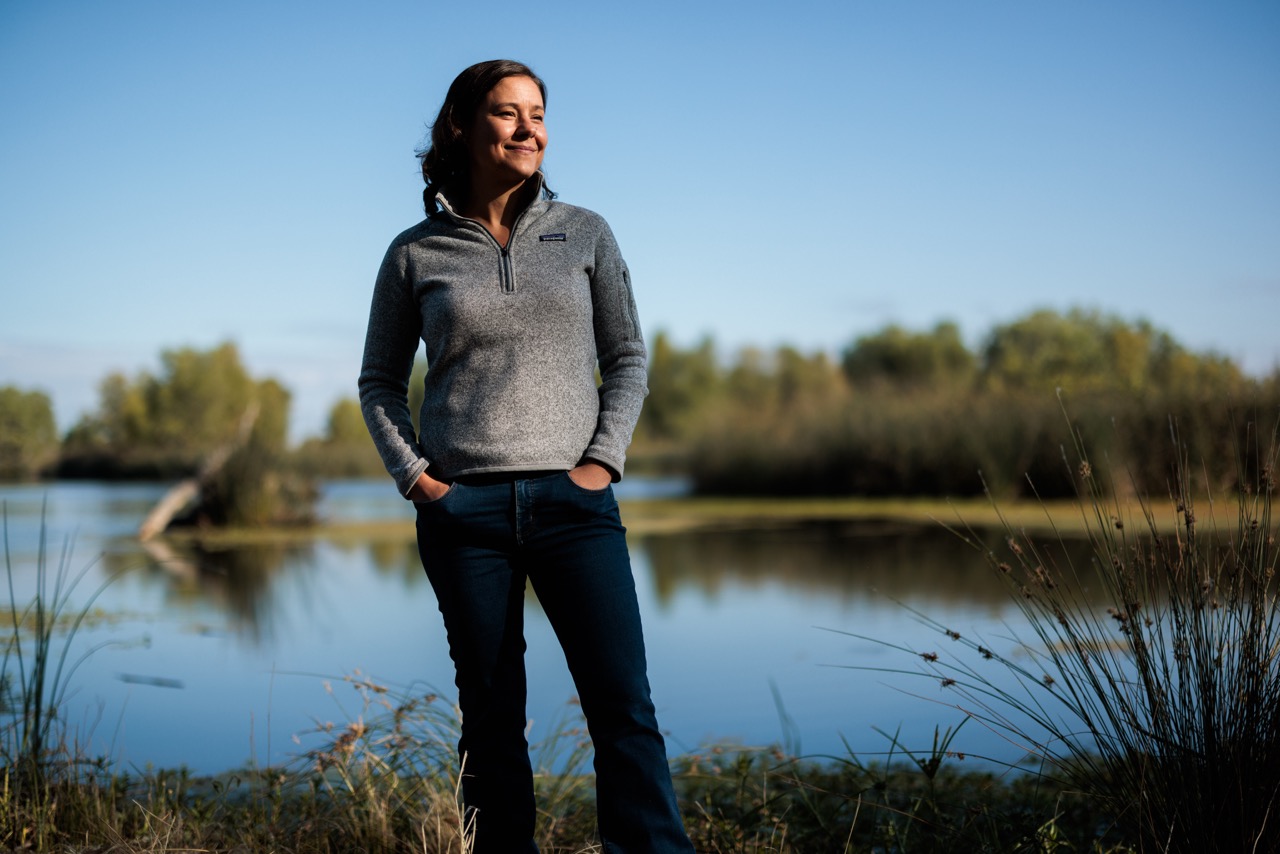
Dr. Linh Anh Cat with a nestling peregrine falcon.It’s tempting to describe Linh Anh Cat—microbial ecologist, Forbes science writer, and recently appointed chief of resources management and science at Cabrillo National Monument in San Diego—as “multi-talented.” But the word doesn’t quite do her justice. For one thing, many of the skills that prepared Cat for her current leadership role took many years of practice to master. Take her knack for science communication, which she honed while completing her doctorate in microbial ecology and evolutionary biology at the University of California, Irvine, and a postdoctoral position at the Scripps Institution of Oceanography. “A lot of people see really good science communicators and they assume it’s this natural, inborn thing,” she says. “But I took a lot of formal and informal training on public speaking, and training on how to communicate my research to diverse audiences, whether it’s someone who’s never done any science, a congressional staffer on the hill, or your family.”
At UC Irvine, Cat studied the dispersal of microbes in ecosystems and disease, including the airborne fungal pathogen that causes valley fever. A passionate advocate for representation in science and resource management, she also co-founded Reclaiming STEM (Science Technology Engineering and Medicine), now the non-profit Reclaiming STEM Institute, an organization and workshop dedicated to providing science communication and science policy training for scientists from diverse backgrounds. Recently, Cat has taken up surfing—that is, when she’s not at work managing rare coastal sagebrush scrub, monitoring lizard populations, or pushing for more equitable policies within the National Park Service. Before an evening surf session, Cat talked to Flora about her eclectic yet ambitious career trajectory, and how the study of tiny microbes can inform conservation.

Emily: Let’s talk about your first scientific passion: microbes. How did you end up studying these tiny organisms?
Dr. Cat: As an undergraduate I knew I wanted to do ecology, but I didn’t know specifically what I wanted to study. I applied to these flashy, cool summer research programs called Research Experiences for Undergraduates (REU) in Santa Cruz, California, Alaska, and Costa Rica, but they were super competitive. (That was one of the few times that I cried during my scientific career, because I wanted something so badly.) But then there was this last-minute opportunity to do an REU in South Dakota and I thought, I’m just going to apply for it. South Dakota definitely wasn’t my first choice, but it ended up working out because it was in a lab that studied microbes. I realized I really enjoyed the lab techniques used to study microbes—breaking open the microbes, getting their DNA, and then matching their DNA to their identities. Ultimately that led me to apply to PhD programs related to fungi, all in California.
Why California?
I grew up in Florida, and I appreciate Florida nature. But as I got older, I found I had an attachment to the West Coast. I love being able to see the mountains on the horizon. I ended up going to Orange County, California to study fungal ecology with Dr. Kathleen Treseder, professor at the University of California, Irvine. I was there for five years doing my PhD, focused on dispersal of fungi.
How do fungi travel, and what are some of the ecosystems you’ve studied them in?
Some fungi travel through the air just by floating, and some float further than others because they’re smaller. Other fungi are mostly dispersed either through soil or things living in this soil. I was comparing how different types of fungi—for example, the pathogen Coccidioides, which causes valley fever, those that are beneficial to plants, like mycorrhizae, and those that decompose organic plant matter— disperse differently. Out of those three groups, disease-causing fungi tend to be most air dispersed. In places like the Central Valley or the desert, whenever there’s dry or dusty conditions,it makes it easier for pathogens to get picked up.
The two [latter] groups of fungi [decomposers and mycorrhizae] are really key to plants, and to the carbon cycle. If we didn’t have the decomposer fungi, we’d be choked out from all the dead plants. We need the decomposer fungi to break down all that organic matter and put it back in the soil. The other half of the equation are beneficial fungi called mycorrhizae, which are very closely intertwined with plant roots. Mycorrhizae essentially expand the plant’s roots so that the plant can get more water, more nutrients. They also protect the plant from heavy metals and disease. In the Sierra Nevada, for example, there is a mycorrhizal fungi that we think helps plants get nutrients from pure rock, because the fungi are able to penetrate the rock with their little threadlike filaments. That’s a significant source of nitrogen to trees and plants in the Sierra Nevada, [according to] some really interesting new research coming out of a few different labs.
…larger patches of native habitat are healthier than the same amount of habitat broken up into smaller pieces.
How do land management practices affect these pathogenic and beneficial fungi?
Pathogenic microbes tend to disperse farther and faster [through the air] than the other groups. Where you have vegetation holding things down and cultivating other microbes that are beneficial, you probably see less of that. [Also, as] most people already know, larger patches of native habitat are healthier than the same amount of habitat broken up into smaller pieces.
If you have 100 acres of native habitat, and it’s all in one 100-acre patch, that habitat is going to be in much better condition than ten 10-acre patches, or even two 50-acre patches. The reason for that is that, as you have more fragmented patches, you have more edges. Those edges have less shade and less protection, so the edges of those patches will be less healthy. This is why how we design our cities is really important—we want to maintain larger, healthy habitats.
People often think about this in the context of plant and animal biodiversity. But it also holds true for microbes. One of my lab mates in the lab where I earned my PhD showed that smaller patches of habitat have less microbial diversity, so not only are you getting these edge effects with drier edges with less shade, which impacts the plants on the edges and makes them more vulnerable to invasive species, you have less microbial diversity, which is also going to impact the health of those patches.
Are you able to apply your knowledge of microbial ecology in your new job at the Cabrillo National Monument? What’s a typical day at work like?
I definitely think about the condition of the soil, how it’s been disturbed, and how that might impact microbes. But I don’t use it super directly in the work that I do. Most of the stuff that’s transferred over has been statistical analyses, understanding science, and being able to bring together a lot of ideas. I spend a lot of time in my office, probably 80-90 percent. But I still spend 10-20 percent [of my time] out in the field. Whether that’s rocky intertidal fieldwork, where I’m out getting my feet wet, or being on trails, listening and watching for birds, what I like about my job is that it’s extremely dynamic, and that I get to work with a lot of different types of people. In academia, you’re primarily working with scientists. But in the Park Service, you’re working with people in facilities and maintenance, outreach and education, law enforcement, administration. You work with all of those teams very closely, which I really enjoy. I’m always on my toes.
You can be an amazing scientist, but if you don’t know how to communicate your ideas and your findings in a compelling way, it’s going to get lost.
Did you always envision ending up in a leadership or resource management role?
It’s one of those things where the path is really winding, then you get to a higher viewpoint and turn around and you’re like, “Oh yeah, that path makes sense in hindsight.” One thing I always did was to think strategically about how I was spending my time. I knew that education [alone] was not going to get me where I wanted to be, because ecology is such a competitive field. I knew I needed to build skills, including both technical skills, and personal skills, to be successful. And I ended up being prepared for this job that I have now.
One of the skills you’ve honed is science communication, through writing for a popular audience in Forbes, public speaking and social media. Why did you make that your focus?
You can be an amazing scientist, but if you don’t know how to communicate your ideas and your findings in a compelling way, it’s going to get lost. There’s such a huge volume of research going on right now that everyone’s really saturated. Decades ago, you could keep up to date with all the journal articles in your subfield, but now, there’s a lot more going on. That’s why a lot more science is being shared on Twitter; people who know how to share their research effectively are going to have a bigger reach.

During grad school you also co-founded Reclaiming STEM, an organization and workshop series that focuses on science communications training for people who identify as BIPOC (Black, Indigenous, People of Color) and other underrepresented groups, like undocumented scientists. Was there a particular moment or conversation that spurred you to launch that program?
In grad school, [I was] talking with a colleague who had funding for science communication, and she expressed frustration that the people who are giving scientists from diverse backgrounds advice [in science communication] aren’t very diverse themselves. Realizing that there was a huge gap, we put [a workshop] together in like six weeks. We realized there was a huge demand for it, so we came back a second time and offered it on the west and east coasts. Then it became virtual because of COVID, and that helped us expand— that was really rewarding. It’s now a non-profit called Reclaiming STEM Institute.
It was a little bit of a culture shock coming to the National Park Service, seeing how not-diverse it was.
What’s it been like bringing that emphasis on diversity to your role at NPS?
It was a little bit of a culture shock coming to the National Park Service, seeing how not-diverse it was. Just look at the demographics of the Park Service. It’s not representative of America as a whole. Being in a leadership position where I am running a team, we’re doing a lot of different things. For example, we’re changing how we approach hiring to make it more equitable, and we don’t offer internships that are unpaid because that’s inequitable. I started a Diversity Committee at our park, and we’re making changes related to how we present ourselves to visitors and how we take care of staff. We set up a bystander intervention training for the whole park, for example [a training to teach people how to stand up for others when they witness hate or harassment.] My favorite thing is to give staff like all the tools they need to kind of pursue their dream projects—so many of my staff have things they wanted to do, whether it’s related to diversity or natural resources management. It’s important and rewarding for me to be able to say, “Here are the things you need,” or “I’m going to take away the things that have been holding you back.”