Summer 2025
By Aaron E. Sims, Kristen Nelson, and Adam Searcy
Among its vital scientific roles within the California Native Plant Society, the organization’s Rare Plant Program also bears a unique historical distinction: Launched entirely by volunteers in 1968, it was CNPS’s first standalone program. Today, as CNPS both reflects on 60 years and looks ahead to the future, the Rare Plant Program continues to inform and power conservation efforts with rigorous field research, strong collaborations, and rankings in its flagship Rare Plant Inventory.
In this edition of Flora Lens, we hear from Rare Plant Program Director Aaron E. Sims, Program Manager Kristen Nelson, and lead Rare Plant Botanist Adam Searcy about 10 native plant species that are emblematic of those on the brink of survival—and how CNPS’s work with peers and partners across the state is helping save what matters most. – Stu VanAirsdale
(Photo credit: Sharon Estrada)
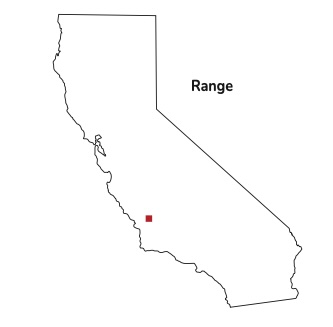
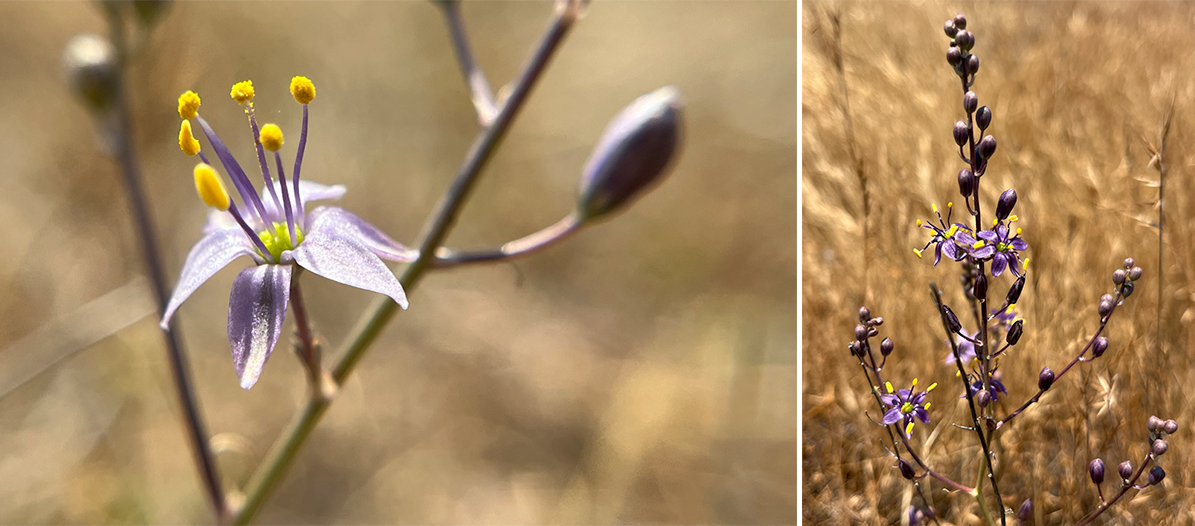
Camatta Canyon amole
(Hooveria purpurea var. reducta)
A new, previously unknown population of Camatta Canyon amole was discovered last year by CNPS staff at The Nature Conservancy’s Las Piletas Ranch. As a follow-up to that discovery and other collaborative work with TNC, we returned to Las Piletas this year to fully map the extent of this population. The fieldwork wrapped up this spring, and now we know that it’s an extraordinarily robust population. So, this is a great conservation win, because it’s on relatively newly conserved property. We are fortunate to have such a great collaboration opportunity with The Nature Conservancy, which is excited to have actionable data to inform land-management decisions to support this robust population long into the future. – Kristen Nelson

(Photo credit: Aaron E. Sims)
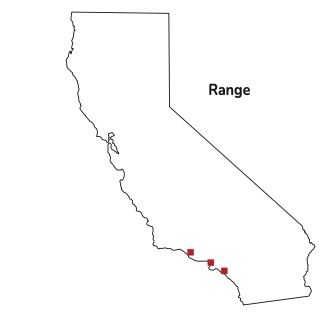
Ventura marsh milk-vetch
(Astragalus pycnostachyus var. lanosissimus)
This is a species that’s listed as endangered at both the state and federal levels. It was presumed extinct until its rediscovery in 1997, when biologists gathered samples of an unusual milk-vetch at a proposed development site in Oxnard. Since then, we’ve seen it reestablished or introduced into a few sites with some success, especially through the work of UC Santa Barbara students and faculty at the North Campus Open Space restoration site. Unfortunately, the special habitat where it occurs has been severely reduced and is extremely limited. With support from multiple partners at the US Fish and Wildlife Service and California Department of Fish and Wildlife, we determined potential suitable (re)introduction sites and collaborated with the Santa Barbara Botanic Garden to collect samples for a DNA study to help save this plant. Our research could also not have been completed without the support and insights of David Magney, Mary Carroll, Lisa Stratton, and Nick Jensen, who have thoroughly studied this plant and its special habitat and ecological requirements. – Aaron E. Sims
(Photo credit: Scott Jones)

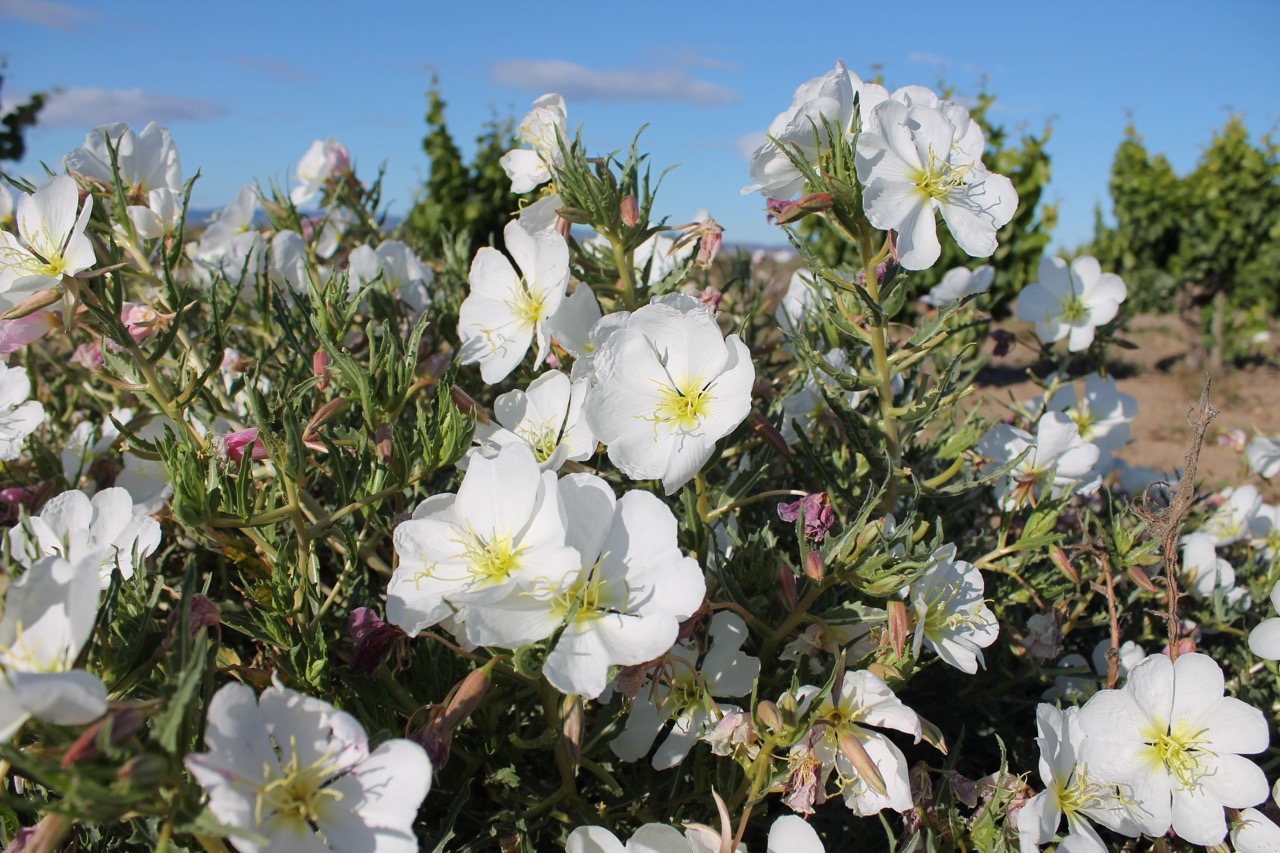
Bay Miwok evening primrose
(Oenothera deltoides subsp. julpunensis)
This new discovery was published last year. The subspecies name derives from “Julpun,” a Bay Miwok village site close to where the plants occur on the Antioch Dunes in the inland San Joaquin/ Sacramento River delta—an extremely small remnant of sandy habitat. It’s a highly local, very special plant that occurs in a really neat habitat that is also extremely imperiled: It’s known from very few sites, most of which are highly threatened by development. I’m sure this is going to be a seed-banking candidate in the future. – Adam Searcy

(Photo credit: Kristen Nelson)

Indian Knob mountainbalm
(Eriodictyon altissimum)
This is an exceedingly rare species with very few known individuals, putting it at risk for a genetic bottleneck (low genetic diversity in a really small population). It lives in chaparral, which is a notoriously challenging habitat type to walk through and find things in. To support conservation seed banking, we plan to collaborate with local volunteers to help find or relocate more individuals. Seed collection of very low genetic diversity is not ideal, so locating as many individuals as possible will maximize the genetic diversity of the seed collection. Our hope is that there are more plants than we know, and getting more eyes and boots on the ground may help find more. Even finding one or two or five more would be so significant—especially on public conservation land. – Kristen Nelson

(Photo credits: Adam Searcy)

Legenere (Legenere limosa)
(Legenere limosa)
When we talk about conservation and protecting rare plants, it’s really important to take a habitat angle—to identify important places where lots of rare species might occur. Vernal pools in California are highly imperiled, and they matter a lot because they’re extremely diverse places. And this is one of many rare and special and unique plants that are only found in California’s vernal pools. There is only one seed collection —from 1989—and this population hadn’t been seen since the 1990s. What I saw this year in Sacramento County was a relatively robust population, so just documenting that is important for us to know where these things are, which in turn helps us to figure out the places where we need to focus conservation attention. If we don’t know where things are, we can’t do that, and that population could be extirpated (locally extinct). Knowing about this plant—and protecting this plant—helps to also protect its habitat. It’s also super duper cute and weird. – Adam Searcy

(Photo credit: Aaron E. Sims)

Trinity lewisia
(Lewisia taylorii)
This is named after the late Dean Wm. Taylor, a well-known rare plant botanist and mentor to many budding botanists. It’s a rare plant known only from around the northern portions of Trinity Lake, in Trinity County, with one nearby location in Shasta County. It was previously identified as Lewisia kelloggii ssp. hutchisonii, but after close examination and DNA sampling, it was determined to be a new species just last year. All signs point to it being added to the Rare Plant Rankings’ 1B category, which then also makes it a candidate for California Plant Rescue seed collection. I actually tried to collect seed last year, but I didn’t know about it retreating under the ground after flowering. This year, now that we know about its underground retreat, I’ve “whiskered” them (with small survey whiskers in the ground) to mark individual plants so we know exactly where they are to collect their seeds. It’s nice to have another rare plant memorializing Dean. There are two other rare “taylorii’s,” and this makes the third; a Botanical Exploration Memorial Award was also set up in his name to provide grants for botanical exploration. – Aaron E. Sims

(Photo credit: Kristen Nelson)

California seablite
(Suaeda californica)
This one is a real underdog: a nondescript, gray-green shrub that inhabits a narrow band of highly niche habitat at the edge of coastal salt marshes in San Luis Obispo County and historically throughout the Bay Area. It gives off a pungent tar-like stink and has flowers barely big enough to notice. So why save it? Because each ecosystem is a web of life, and when you remove strands from that web, that ecosystem—that habitat, that vegetation community—becomes weaker. For example, Suaeda plays an important role in habitat for wildlife such as the imperiled California black rail and the salt marsh harvest mouse. Much of its habitat has been removed or threatened, with sea-level rise and climate change on one side and development and invasive species on the other side. CNPS staffers are working to track its remaining populations and make conservation seed collections, a tedious process that requires the patient removal of fleshy flower parts from each individual seed before they dry out and become permanently glued to the outer surface of the seed. – Kristen Nelson

(Photo credit: Matt Berger / CC-BY 4.0)

Chaparral ragwort
(Senecio aphanactis)
This is a good example of why it’s important for us to not just rank something and walk away from it. Twenty-five years ago, we weren’t as worried about this one, but our worry level is ratcheting up. Ellen Dean, Associate Rare Plant Botanist with CNPS, recently reviewed this plant and where it occurs in California, and she found good evidence that it’s disappearing from places where it used to be present. The rank changed very recently to the more highly imperiled rank of 1B.2. Responses from colleagues in the botanical community were unanimous: This plant’s not doing well, and we need to worry more about it than we did. Knowing what we need to focus on is part of this whole conservation process, and we need to bring attention back to this plant. – Adam Searcy

(Photo credit: Mark Elvin)

Gerry’s curly-leaved monardella
(Monardella sinuata subsp. gerryi)
For years, experts thought this plant was extinct. Various local botanists had been looking for it in Ventura County for a long time, and they found it in 2013. It’s an extreme conservation priority given that it’s known from two populations on private property, one of which is slated for development. This was a situation where the current California Environmental Quality Act (CEQA) protections would be inadequate, since project proponents could legally try and move the entire population to a new site as mitigation—an approach that has a very high failure rate. CNPS’s Conservation team wrote a California Endangered Species Act (CESA) petition this past February, to which we contributed input. CESA is one of the strongest protections we can get for plants, and it now has the protections of being listed as a candidate and will hopefully be listed as endangered by the summer. – Adam Searcy and Aaron E. Sims

(Photo credit: Matt Berger / CC-BY 4.0)

Panamint desert-aster
(Xylorhiza panamintensis)
This is a great story because it’s a brand-new discovery—a really neat thing out in the desert that Western scientists had never seen before. It’s in an area of Death Valley that has other limestone-endemic plants, and it’s a distinctive, big, showy plant, with large purple flowers. This kind of new discovery is exciting and reminds us that there are still lots of unknowns in the California flora. It’s not highly imperiled as far as we know, but it could be declining just due to the long-term trend of desert drying and warming in California, which is now being exacerbated by climate change. Getting it on our radar for conservation and potential seed-banking is important. – Adam Searcy