CNPS members offer 50 hopes, resolutions, and actions for native plants in 2025
Winter 2025A new year brings with it new beginnings and new opportunities for experiencing native plants in California. It also gives us a chance to explore new ways of thinking about that experience—how to expand the presence of native plants in our communities, for instance, or how to sustainably build visibility for plants, partners and our respective projects across the state. In that spirit, Flora asked CNPS chapter members and staffers about their resolutions and intentions for native plants in the year ahead. Read on for 50 inspiring ways to find hope, take action, and keep growing in 2025. – Stu VanAirsdale, Publications Editor
Submissions have been lightly edited and/or condensed for clarity and space

“What are your personal resolutions on behalf of native plants in 2025?”
1. This year I’m focusing on getting the word out about native plants. I plan to use social media a bunch and also set up a little booth at some events to chat about why native plants are so awesome and what we can do to help them thrive. I also want to get my friends involved, so I’m planning some outings to places with amazing native oak woodlands and other cool plant life. It’s all about appreciating what we have and thinking about the kind of world we want to leave for future generations. — Steven Orr, Riverside-San Bernardino Chapter
2. My resolution is to set up a small propagation space at my home and try my hand at starting native plants from seed. I’ve been inspired by the many chapter leaders and volunteers I’ve met who grow native plants at home. — Desirae Cogdell, major gifts officer, CNPS

3. In 2025, I’m excited to focus on enhancing my coastal redwood landscape with two key goals: supporting biodiversity and incorporating more food-producing plants. I plan to add mint, sages, and yarrow to my entryway. These additions will provide fresh herbs for my kitchen while creating a vibrant space for pollinators. By exploring Calscape.org for regionally appropriate edible native plants, anyone can bring the beauty and benefits of California natives into their landscapes—or even grow them in container gardens on a sunny kitchen windowsill. — Ann-Marie Benz, Horticulture Program manager, CNPS
4. I am personally planting and helping with as many native plant gardens in my community as possible—a new garden for a friend in Ojai, 100 native plants for another friend’s backyard in Ventura, a dozen native plants at my favorite brewery, and another dozen natives in my yard. In 2025, I am committed to maintenance of all these gardens so that they thrive. — Terri Burgess, Channel Islands Chapter
5. I will convert the last bit of conventional landscaping at my home—the land I have the privilege to tend—to fully native, irrigation-free, chemical-free landscaping that will support native pollinators, birds, and other critters. I also resolve to continue documenting the biodiversity that thrives in this habitat using iNaturalist and share information with neighbors and via social media to encourage and support others who resolve the same. — Kristen Nelson, Rare Plant Program manager
6. My personal resolutions are all about helping the public become aware of the beauty and vital benefits of native plants. For example, our Homegrown Habitat committee is collaborating with the Sacramento Municipal Utility District (SMUD) to provide native plants for their Orangevale Substation Pollinator Garden. We plan to include plant information signage for the garden as well. — Chris Lewis, Sacramento Valley Chapter
7. My personal resolution for 2025 is to become reasonably able to propagate shrubs, which also means developing skill with propagating from cuttings. This is my fourth season of propagating native plants for our local chapter sales and for myself. So far, I’ve mostly propagated from seed. With rare exception, I’ve mostly done perennials, plus a few tree species. The mystery of creating new plants is awe-inspiring. — Chrissy Freeman, Redbud Chapter

8. I want to get more folks interested in California’s special microflora, including the smallest of our plants like mosses, hornworts, and liverworts (collectively called bryophytes). I want to lead hikes and give people the tools to be able to love these little guys just as much as I do. — Jordan Collins, lead field botanist / Rare Plant Program, CNPS
9. I intend to push back against the steady erosion of protections and shortsighted money grabs at the expense of California’s environment, while also engaging more at the community level to support local conservation and stewardship projects. — Mike Heine, lead field botanist / Vegetation Program, CNPS
10. I resolve to reconnect with native plants, with curiosity, rather than thinking I know everything. My negative bias always tries to convince me that everything is dying and invasive, but actually, things are often dormant or I am missing more positive, gentler cues or ecosystem interactions like gophers churning up fresh soil and clearing weeds out, or bumblebees sleeping on phacelia. I need to remind myself that I have a lot to learn. — Jessica Woodard, Calscape product manager
11. I resolve to improve general understanding on what is considered “native,” with species-specific genetic recommendations for restoration seed species. — Caroline Martarano, senior restoration coordinator, CNPS
12. I resolve to bring a more diverse group of people into the native-plant world. Specifically, last fall we started running our chapter’s monthly webinars in a hybrid English/Spanish mode to better serve our region’s Hispanic residents, who make up nearly half of the area’s population. — Cynthia Typaldos, North San Joaquin Valley Chapter
13. My resolution is to amplify, support, and partner with local organizations and individuals who are doing incredible work to support biodiversity and help people connect with and access native plants. — Sarah Barnes, Education and Stewardship Program director, CNPS
14. In 2025, my resolution is to keep spreading the word about California native plants—both through my role at CNPS and in my personal life. Whether it’s sharing tips, showing how beautiful and low-maintenance native plants can be, or just sparking conversations, I hope to inspire others to join in creating healthier, more sustainable landscapes. — Caty Franco, strategic communications specialist, CNPS
15. I resolve to participate in land-conservancy stewardship and urban garden efforts to expand access to native plants in urban-suburban zones, increasing benefits for people and wildlife to enjoy and nourish them. — Julie Evens, Vegetation Program director, CNPS
16. My resolution is to influence wildfire mitigation regulations statewide to protect oaks and other native horticulture and habitats near people’s homes. — Alice Cantelow, El Dorado Chapter
17. My personal resolutions for native plants in 2025 are to be more involved in my local native plant society, convert my front lawn into a native pollinator garden, and continue expanding my knowledge of conservation of native plants. — Mara Huang, associate vegetation ecologist, CNPS

“What gives you hope about advancing the cause of native plants in 2025?”
18. I find hope in the educational programs and immersive experiences that our chapter offers school groups, 4H clubs, Girl and Boy Scout troops, homeschooling families, and others. For decades we have nurtured and utilized the Martha Walker Native Habitat Garden in Skyline Wilderness Park in Napa, where we welcome visitors throughout the year. Recently, young children learned about “leaving the leaves” and the role that leaf cover plays for specific creatures’ overwintering needs, while the older kids examined flowers and practiced reading field guide descriptions. All of them joyfully explored the garden and got their hands dirty planting young monkeyflowers. We recognize that these joyful experiences sow the seeds of wonder and engagement in today’s youths and tomorrow’s leaders and decision makers. — Christine Waskowiak, Napa Valley Chapter
19. It has been exciting to watch the huge increase in the public interest in native plant gardens since the pandemic. I am thrilled to have many years of experience gardening with native plants that I can share with others—and I do that every opportunity I get! — Deborah Halfpenny, Mount Lassen Chapter
20. What gives me hope is that I know I am putting 100% of my effort towards a cause I care so much about. I surround myself with other like-minded people who also want to plant native species in their gardens and participate in large-scale native plant conservation. — Mara Huang, associate vegetation ecologist, CNPS
21. Working with our project collaborators and enthusiastic young people gives me hope! Our community enrichment and tending project with Sacramento County Regional Parks and the City of Rancho Cordova is designed to introduce people to wildflowers along the American River Parkway—as well as how to “tend” the land. — Chris Lewis, Sacramento Valley Chapter
22. Our local Public Works Department has started including some native plants in their public plantings, which our chapter is teaching them how to combine and maintain. We also had a record plant sale last fall. Clearly there is interest in and need for good quality and variety of native species. Word is getting out that they are critical for providing the biodiversity we need. — Laura Lovett, Marin Chapter
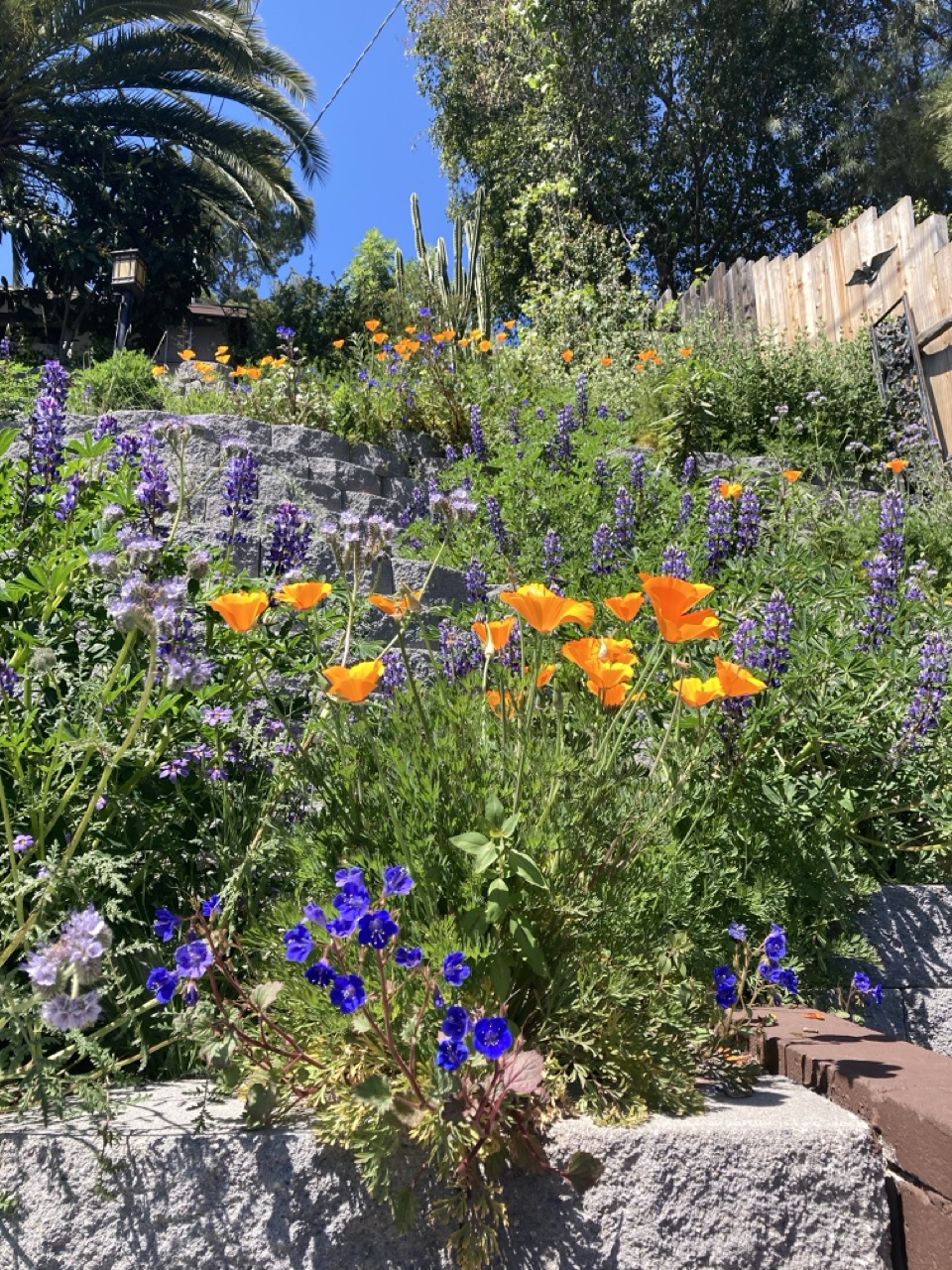
23. What gives me hope is the ever-growing group of neighbors in my urban community who claim a block for stewardship. At first, they ask for permission, then for instructions. Before you know it, they have created their own ecosystem that stretches our pollinator corridor one block further with native annuals, perennials, trees, shrubs, and plant identification signs. — Sophie Constantinou, Yerba Buena Chapter
24. Seeing folks recreating in nature gives me hope that people still care and cherish the natural world around us—and that it’s a priority to protect. — Jordan Collins, lead field botanist / Rare Plant Program, CNPS
25. What gives me hope is seeing the growth in public interest in and adoption of using native plants for landscaping. I see home gardening with native plants as a gateway to greater care for the environment, and of native plants specifically.— Chrissy Freeman, Redbud Chapter
26. It gives me hope to see how parks in San Francisco are incorporating so many more native plants in new and old spaces. It’s also great to see more native plants in nurseries—and people’s growing excitement around native plants in general! — Maya Argaman, senior horticulture coordinator, CNPS
27. What gives me hope is that our chapter’s hard work of planting the seeds for civic success has finally started to bear fruit. After several years of attending commission meetings, sending comment letters, showing up at community meetings, bringing in other non-profit partners into the fold, and donating plants to schools and city gardeners, the native plant wins are starting to come without a fight. And the wins are multiplying. It’s satisfying to drive around the city and be able to point to where CNPS had an impact. — Bob Hall, Yerba Buena Chapter

28. The movement is growing! More and more people are realizing the importance of native plants in their gardens and in the wild. My own little garden gives me so much hope, too. When the world feels overwhelming, I can look at my garden and see its growth, beauty, and all the life it supports. — Caty Franco, strategic communications specialist, CNPS
29. I am amazed—and reassured—by the huge number of native plant enthusiasts who suggest unique, implementable ways to raise the visibility of native plants, and to extend their reach into neighborhoods, schools, municipalities and state and federal areas. — Cynthia Typaldos, North San Joaquin Valley Chapter
30. The sheer number of native plant advocates involved with CNPS and partner organizations across California gives me hope. Each member and supporter I meet is making their community and home gardens a better place for people and wildlife. How can you not be hopeful with so many tenacious advocates in our midst here at CNPS? — Desirae Cogdell, major gifts officer, CNPS
31. We have an ongoing weekly ice plant removal project at a local beach, and it is great! We work with the regional and state parks and have 15-20 people each week. It feels like a club. It fills our lives and gives us positive contact with other like-minded people—so much more than just pulling ice plants. — Jan Lochner, Milo Baker Chapter
32. What gives me hope in 2025 are the diverse ways that people are expressing their love for native plants—through art and cultural practices, for example, and with unique programs to increase native plants in urban environments. — Sarah Barnes, Education and Stewardship Program director, CNPS
33. I am thankful to live in a vibrant, diverse state like California, where native plants and landscapes are valued, conservation initiatives are strongly supported, where Tribal knowledge and land-back efforts are valued, and climate adaptations are materializing. — Julie Evens, Vegetation Program director, CNPS

“What actions can Flora readers take to support native plants in 2025?”
34. Anyone who wants to support native plants should consider volunteering with their local CNPS chapter. Our CNPS chapters have so many more members than volunteers. Your participation and skills are welcome, in areas as diverse as planning, organization, technology, social media, photography, design, planning, writing, editing, publicity, finance and accounting, marketing, fundraising, local politics, education, translation and interpretation, and working with children and families. — Chrissy Freeman, Redbud Chapter
35. To support native plants in 2025, start documenting critters you see to learn more about the diversity of life that can thrive in your yard, neighborhood, or community—whether urban or rural. Also: Discontinue the use of pesticides and herbicides on your property. — Kristen Nelson, Rare Plant Program manager, CNPS

36. Plant an oak tree! It brings me such joy to see our oak saplings springing up and to focus my thoughts away from the dreary political news to the positive impact these baby trees will have for biodiversity in my yard. If you have the space, I bet planting an oak will bring you joy, too! — Desirae Cogdell, major gifts officer, CNPS
37. Our chapter has an annual Plantsgiving, which some years is a big plant giveaway and other years is a big seed giveaway. We host this event with a speaker series or a walk. All it takes is a package of Clarkia to excite and invite inspiration. And then people come back for more. — Sophie Constantinou, Yerba Buena Chapter
38. I encourage readers to act by learning from—and supporting—local organizations and individuals working to support biodiversity. There’s unprecedented enthusiasm for native plants and great need to take this action. I look forward to doing the same. — Sarah Barnes, Education and Stewardship Program director, CNPS
39. Communicate to governmental agencies the importance of preserving native plants and wildlife habitats. If they don’t hear comments, they can only assume what they are doing is fine with their constituents. I have been to many planning commission meetings, city council meetings and board of supervisors, and often I am the only one making comments. Sometimes I can get five or 10 other people to comment. It makes a difference. — David Ledger, Shasta Chapter
40. Engaging in comment periods for projects and sharing your expertise on native plants can help to reduce impacts—and improve the outcome—of land development. Other impactful ways of advancing our goals for native plants include educating the public and policymakers about the importance of California’s botanical diversity, as well as increasing the visibility and accessibility of native plants in landscaping. — Brendan Wilce, Conservation Program coordinator, CNPS
41. Californians who value the environment can create little ecosystems in their yards that act like islands of biodiversity—much like an archipelago, where organisms can jump from one island to another, thus creating a place for gene flow and strengthening biodiversity in the area. Every yard can make a difference. Start small, and think big. — David Popp, Mount Lassen Chapter
42. We need more fire-adapted communities. People can create ecologically sound defensible space in their own yards and harden their homes with native plants. — Alice Cantelow, El Dorado Chapter

43. Introduce your friends and loved ones to a native plant on a local hike! We protect the things we love, so getting others interested in our native flora can have rippling effects that will ultimately benefit native plants (via education, awareness, outreach, etc.). — Jordan Collins, lead field botanist / Rare Plant Program, CNPS
44. Just do it—whatever “it” is that you are good at. Planting, advocacy, outreach/tabling, plant sales, sharing… redouble your efforts in 2025. Do twice as much and more—and keep doing it! — Terri Burgess, Channel Islands Chapter
45. Education about native plants is so important. Attending talks about native plants and finding people to teach you about growing native plants is immensely helpful. Finding a sense of community is a good way to start taking action without feeling overwhelmed. — Mara Huang, associate vegetation ecologist, CNPS
46. Know where your plants come from to help them thrive. Know their correct taxonomy, their natural range, and any available genetic recommendations on how to best use and sustain them. — Caroline Martarano, senior restoration coordinator, CNPS
47. Attend public meetings to support restoration/conservation policy. (And kill your lawn!) — Mike Heine, lead field botanist / Vegetation Program, CNPS
48. Visit your local botanic garden, and encourage nurseries to supply native plants! — Maya Argaman, senior horticulture coordinator, CNPS
49. If your neighbor likes succulents, introduce them to a dudleya. If they love the spring flowers, give them a few poppy seeds. Converts are easy—the plants speak for themselves. — Sophie Constantinou, Yerba Buena Chapter
50. Find ways to share your love of native plants with the general public, from neighbors to libraries to schools. Everyone can benefit when they connect with the natural world. — Chris Lewis, Sacramento Valley Chapter